Consider a payment that begins on a laptop and ends in an envelope. A customer opens online banking, enters an amount, clicks pay, and gets on with the day. The business receiving the money may still wait for a paper check. When the biller is outside the relevant electronic network, the digital instruction can take a postal detour. Someone must open the envelope, capture the payment, and work out which account it belongs to.
- CheckAlt handles incoming payments and the information needed to post them.
- Its territory spans mailed checks, electronic bill pay, ACH, cards, and deposit capture.
- The useful question: how much work remains after someone clicks pay?
That detour is a useful introduction to CheckAlt. The company supplies payment processing and receivables tools to banks, credit unions, fintechs, and businesses. Its specialty is the awkward coexistence of paper and electronic money movement. A treasury team needs both the funds and an intelligible record of what those funds settle. CheckAlt works on bringing those pieces together.
The internet has a mailroom
In a traditional lockbox arrangement, customers mail checks and remittance documents to a designated address. The processor handles receipt, scanning, and payment data. CheckAlt offers that service through a nationwide network, with full-service, software, and hybrid options. A bank can offer the capability under its own brand; a software platform can connect through APIs or secure file exchange.
Electronic Lockbox, also known as Catch!, tackles an earlier handoff. It connects businesses to biller networks so eligible online banking bill payments can arrive through ACH. The customer keeps using the bank’s bill-pay service. The business gets a route that avoids an unnecessary check.
Hiveage, the invoicing platform, illustrates the need. CheckAlt’s published account describes small businesses issuing invoices electronically while receiving payments offline. Embedding Electronic Lockbox into the invoicing workflow gives enrolled businesses another way to receive bill-pay funds electronically. The interesting intervention happens behind the invoice, where a customer would rarely think to look.
Remember the mistake, once
Sometimes the payment arrives with the wrong instructions. A large Texas credit union changed its account numbers, but members continued paying loans with their old numbers. Staff repeatedly identified the correct account and keyed the payment. The institution had updated its records. Its members’ saved instructions had not caught up.
CheckAlt’s Electronic Lockbox includes a feature called “Remember Me.” An employee reviews an exception, identifies the correct information, and retains the correction. Future payments carrying that known information can be corrected automatically. The company’s September 2026 case study reports a 90% reduction in exceptions within three months. The credit union is unnamed, and the result comes from CheckAlt’s own account.
The lesson travels beyond banking. If someone fixes the same instruction every month, the correction belongs in the process. Otherwise, experience accumulates in employees’ heads while the system continues making its original mistake.
The spreadsheet was the warning
At PECU, a Central Texas credit union serving more than 20,000 members, the trouble involved indirect borrowers. They needed to repay loans without opening a checking account and enrolling in online banking. PECU’s in-house web form left staff downloading Excel files, copying information, transferring files, and resolving formatting problems. Missed or mismatched files pulled IT and accounting into the same routine.

PECU selected LoanPay, CheckAlt’s branded loan payment portal, with guest payments and ACH and debit options. CheckAlt’s April 2026 case study reports at least three staff hours saved per week across the two teams and a payment cutoff extended by three hours. Guest access addressed borrowers’ wish to pay and leave. Automation addressed the work their payments created.
“LoanPay has been a big improvement for us operationally.”Bill Collard · CFO, PECU
CheckAlt customer case study, April 2026
A business assembled around the handoffs
CheckAlt dates its founding to 2009. Co-founder Shai Stern helped build the business through acquisitions: ERAS from Diebold in 2014, Klik Technologies from MUFG Union Bank in 2016, and U.S. Dataworks in 2020. The sequence helps explain a product range stretching from physical processing to receivables software. Patrick Law now leads the company as president and CEO.

Today, FinCapture Desktop brings check and full-page remittance scanning on-site. FinCapture’s mobile API lets institutions embed deposit capture in existing applications. Online Payments accepts ACH and cards; ATM and branch capture address other deposit entry points. Integrated Receivables supplies a common portal, with products added over time.
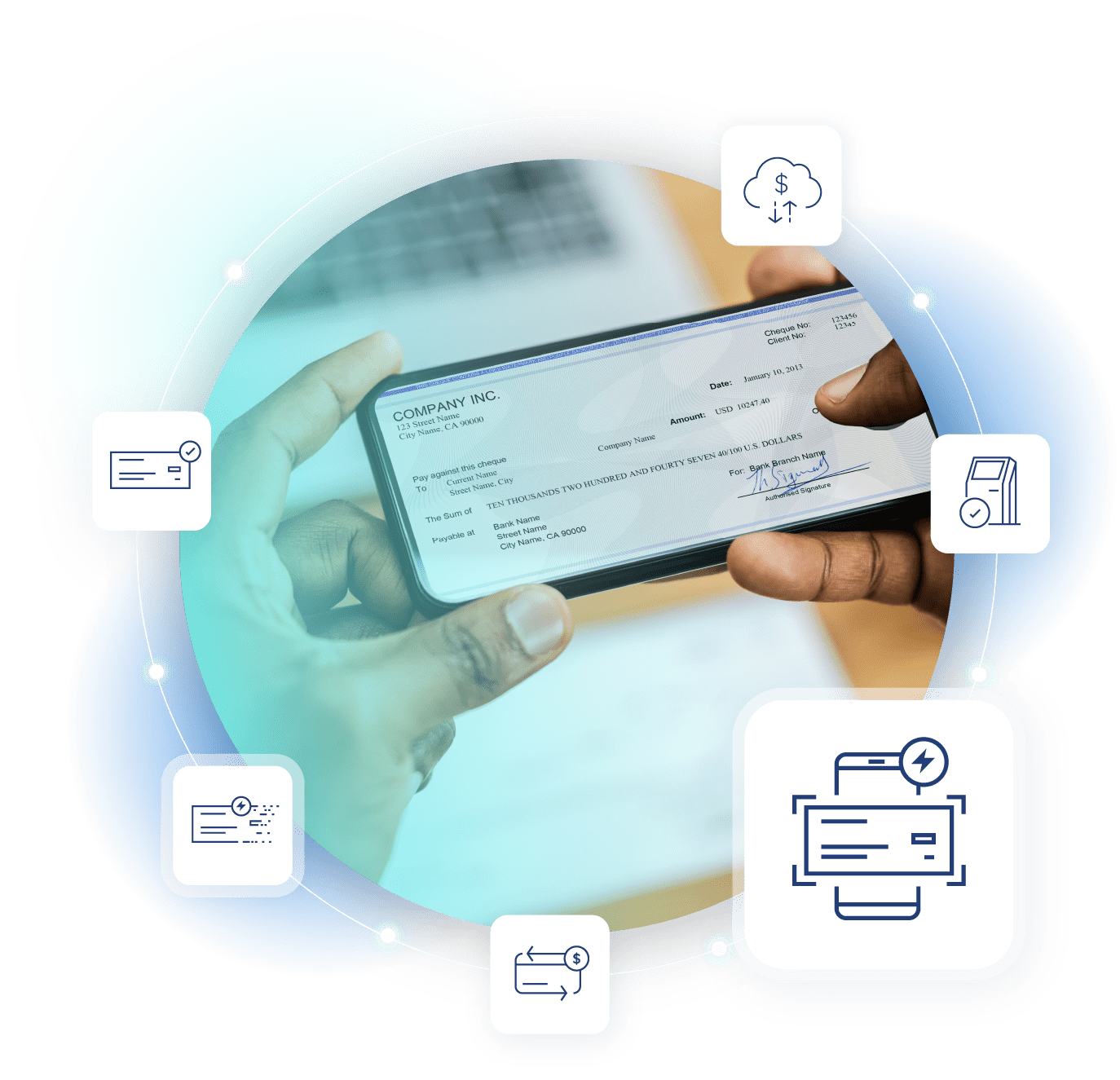
Distribution follows existing working habits. In 2026, CheckAlt announced integrations with community-management platform FRONTSTEPS and lending platform LoanPro, and joined U.S. Bank’s Connected Partnership Network. Its 2025 Iron Mountain expansion paired CheckAlt software with digital mailroom operations; CheckAlt said this doubled its US processing capacity.
This is an established market. Deluxe and Fiserv also offer lockbox and receivables services. CheckAlt’s proposition centers on combining processing, electronic delivery, capture, and shared access across channels. Buyers still need to compare integration work, exception handling, service commitments, and the payment mix each provider can actually support.
Count the work before buying the fix
A practical evaluation starts with a week of incoming payments: envelopes opened, files transferred, corrections repeated, and hours spent reconciling. CheckAlt’s regional utility case reports eliminating 25 weekly processing hours and accelerating $175,000 in cash flow. Earlier cash availability is distinct from additional revenue. Any savings calculation needs that distinction.
Fit depends on the mess being solved. Electronic Lockbox requires eligible payments and network enrollment. A business already collecting electronically with clean posting has less physical work to remove. For a mixed-channel operation, the opportunity is more concrete: follow a payment until the account is credited, then count how many people had to help it get there.