Matt Graham has watched founders change the same button three times before letting anyone use their product. Three revisions to a button, while the larger question - whether anybody wants the thing - waits politely outside. For the co-founder and CEO of RapidDev, this is a particularly expensive form of tidiness. A button can be moved after launch. The weeks spent debating it are harder to retrieve.
He tells that story with the impatience of someone whose business is supposed to make building faster. RapidDev grew around visual software development, helping clients turn ideas into working applications. Yet the tools can only remove so much delay. Eventually a founder has to release something and risk discovering that the customer had a different idea.
“You don’t need perfect. You need feedback,” Graham writes. It is a useful introduction to his temperament: direct, commercially minded, suspicious of preparation that never meets reality. It also raises a question about his own career. How does someone trained in engineering, the Navy and business school end up preaching the virtues of getting an imperfect thing out the door?
A long way from the lab
Graham grew up in rural upstate New York, near the Canadian border. In his telling, the local balance favored cows over people. He remembers limited economic opportunity and an early desire to get somewhere else. College offered a route out; he chose a school far from home that still came with in-state tuition.
His early experiments were quite literal. He worked in a research laboratory, met his future wife there and eventually switched into engineering. The laboratory also helped him discover something about himself: a quiet, methodical research career did not appeal. An internship at a Fortune 100 company supplied another useful elimination. He could picture a future in a cubicle. He did not fancy the picture.
So he joined the Navy. The choice makes his later career less tidy than the usual school-to-startup progression, and more interesting. Before he was asking customers to launch applications, he had tried several versions of a working life and found reasons to change course. His account of those years includes confusion alongside ambition. The polished retrospective has room for a few fingerprints.
An operator’s education
His formal education spans chemical and molecular engineering at Stony Brook University, operations research at Columbia University and an MBA at Harvard Business School. The combination is unusually apt for an agency founder: physical processes, systems and business decisions, all eventually squeezed into the same working day.
He served as a Navy instructor before moving into entrepreneurship. His professional record also includes co-founding delivery startup Veho and serving as its chief operating officer. He later held operations roles at CozyKin and Higher Ground Education. These were businesses with people, schedules and real-world delivery problems. A plan had to survive contact with the day’s work.
That background helps explain the questions he now brings to technology. Who will use it? What process will it change? Does the business work better afterward? An operator has little use for software that makes an impressive entrance and then spends the rest of its life requiring supervision. Graham’s career gives those questions a practical setting, rather than leaving them as agreeable advice on a conference slide.
Two people, then a company
RapidDev took shape around a frustration Graham already knew: commissioning traditional software could be slow, expensive and awkward for a founder still learning what customers wanted. Visual development offered a shorter route between an idea and something usable. He saw a business in helping other people travel that route.
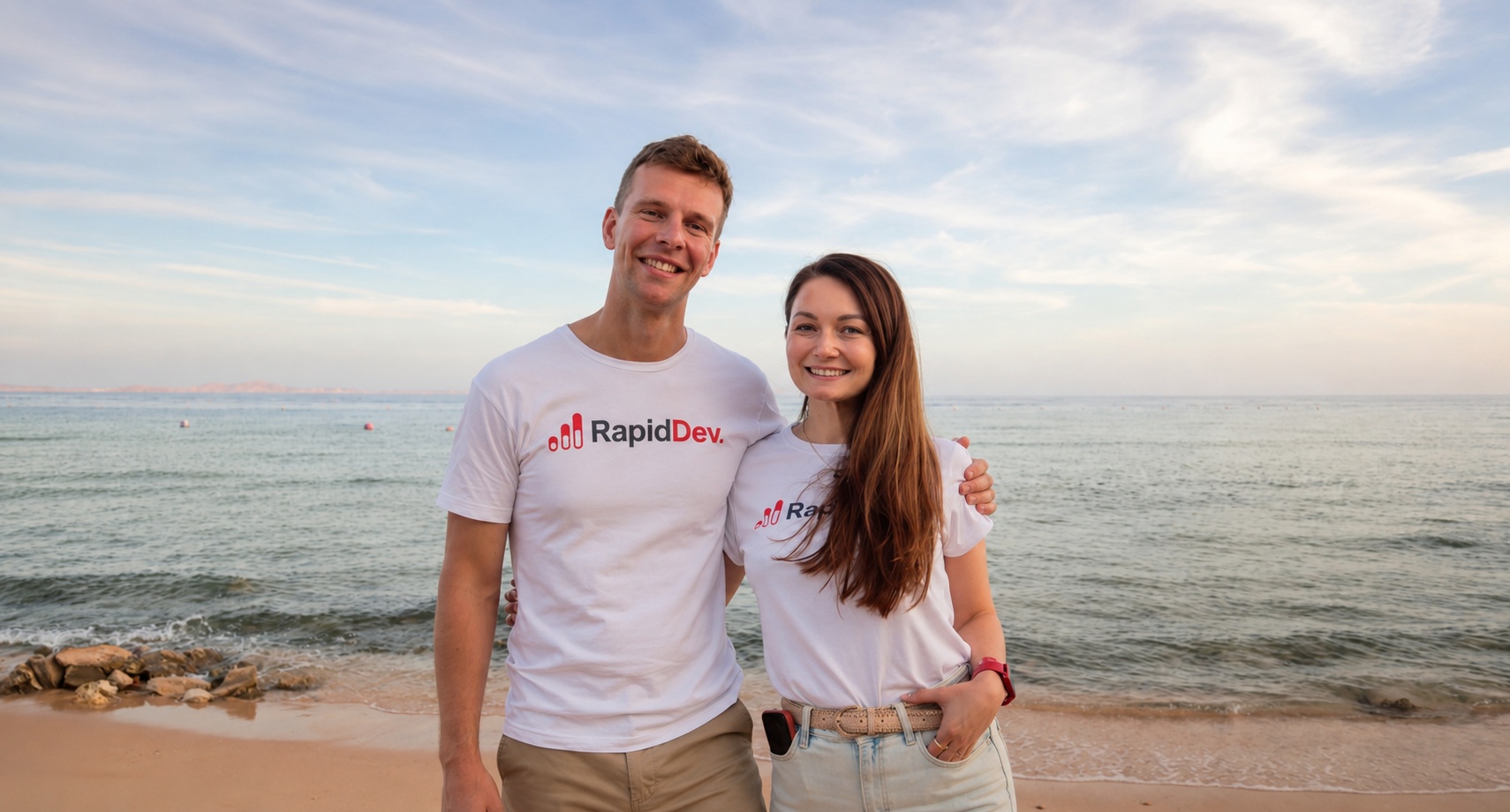
With co-founder Anna Gafurova, now the company’s COO, he built an agency around that opportunity. RapidDev dates its operating story to 2021. Early client work came through personal connections, LinkedIn, Upwork and Bubble’s request-for-proposal system. The glamorous origin story, if one insists on having one, involved finding people who needed work done and persuading them to trust a small team.
The service expanded beyond its original footing. By 2024, RapidDev was adding capabilities in AI, custom software, cloud infrastructure and automation. Growth services became part of the offering too. For Graham, each expansion brought the same underlying challenge: a client buying a technical project still needed someone to understand the commercial problem. The software could be delivered quickly and still miss the point.
RapidDev’s operating story begins
Bubble Community Award: Agency of the Year
No. 573 on the Inc. 5000
The business he wanted to keep
By March 2026, Graham was describing an agency built from a two-person freelancing operation into a business of 220 people, without raising outside capital. He had experienced the venture-backed startup world. This time he wanted a company he could keep building over a long period.
One decision he credits is putting earnings back into the business. Hiring people to take work off his plate gave him time to address the next set of problems. That sounds simple until the money is available and the choice becomes personal. Reinvestment means postponing some of the rewards that made starting a business attractive in the first place.
His appetite for services follows the same logic. Companies need advice about technology as well as access to it. A business owner may be skilled at running an operation and have little experience managing a software team. Graham wants RapidDev to become the partner that owner calls again. “Do the first project right, and you’ve earned the next one,” he writes. Repeat business gives his ambition a unit small enough to act on.
“Do the first project right, and you’ve earned the next one.”
Matt Graham
A remote company needs a meeting place
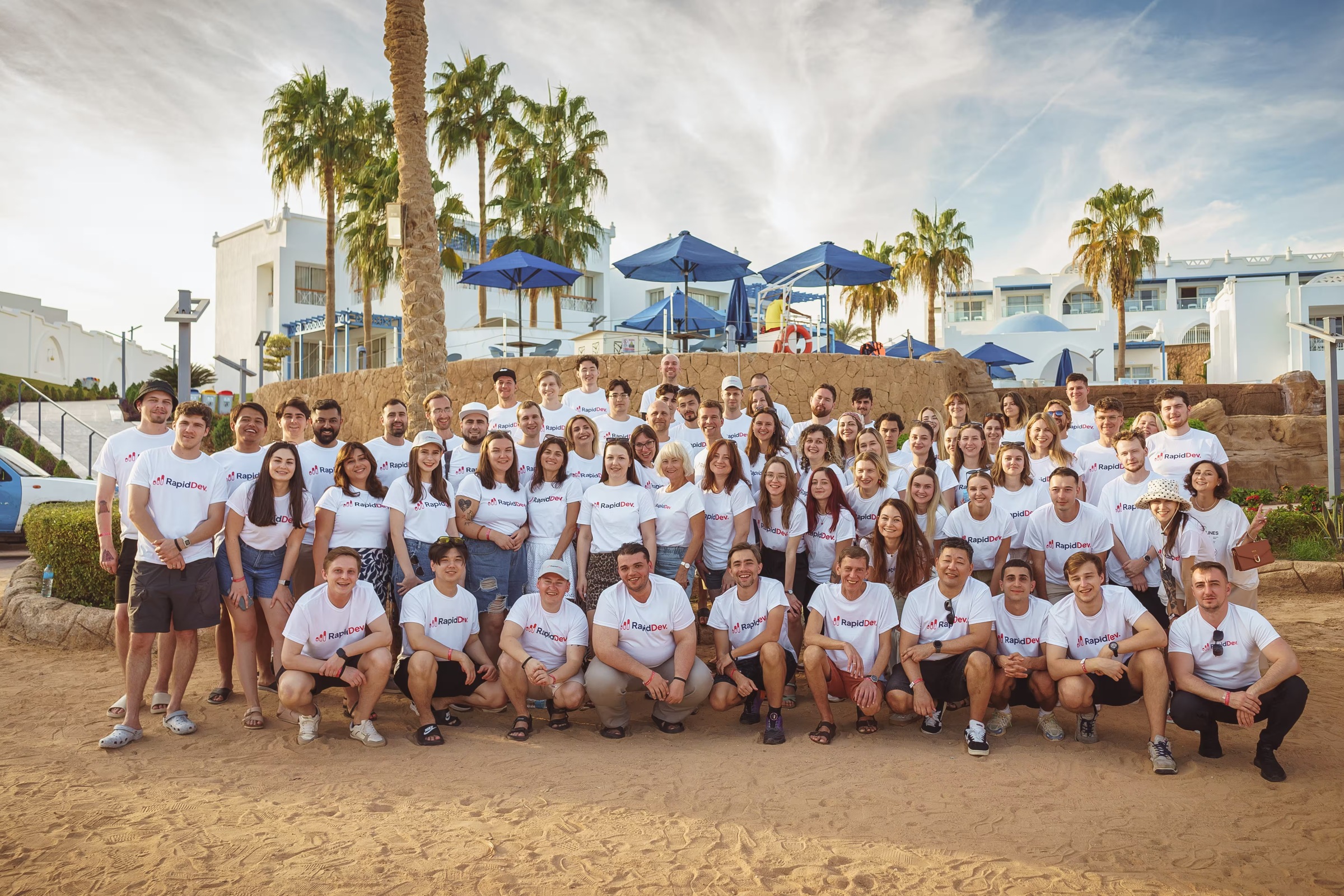
A company spread across countries can look wonderfully efficient on an organizational chart. The chart omits the awkwardness of working with people one has never met. Graham has made team gatherings part of RapidDev’s life, sharing trips to Baku, Egypt and Istanbul and arguing that familiarity makes collaboration easier.
The photographs have a pleasingly ordinary quality: colleagues together outdoors, away from the small rectangles in which remote work usually takes place. They suggest a mundane expense with a serious purpose. Travel buys time together. A conversation can wander beyond the task that caused it.
Graham admits he once dismissed culture as a soft management subject. As the agency grew, he began to see the limits of procedures. People needed a shared understanding of quality, clients and urgency, including when the founder was absent. That is a different job from checking every piece of work himself. The agency’s scale made his own attention insufficient. He had to help other people make decisions he could live with.
When faster tools change the agency
AI presents Graham with an uncomfortable version of his own argument. If better tools let a team build faster, the company selling that work has to reconsider how it operates. The pressure reaches beyond a developer’s screen to staffing, pricing and the promise made to a client.
In a recent public account, he says RapidDev reduced its team from 220 people to 160 while reorganizing around smaller teams and AI agents. He describes the transition as difficult and says output increased. Those are his claims about the business, and they give the growth story a sharper edge. Technology that helps win work can also change who does it.
Alongside that account sits a separate measure: RapidDev’s 2026 Inc. 5000 listing places it at No. 573. A ranking records one dimension of a business. Graham’s account of reorganization describes another. Together they make a less comfortable, more useful portrait of growth than a steadily rising headcount would. The founder who sold speed has had to absorb its consequences inside his own company.
A place for people who get stuck
RapidDev’s acquisition of Ambitious Labs extends that interest in what happens after someone starts building. The education business teaches people to create applications using tools including FlutterFlow and Lovable. Graham’s rationale centers on a recognizable customer: someone who has made progress, reached a technical obstacle and cannot finish.
He announced the deal as RapidDev’s tenth acquisition. Later, he named Ethan Halfhide to lead Ambitious Labs, pointing to Halfhide’s work since RapidDev acquired his company, Lean Discovery Group. The sequence adds another role to Graham’s working life: buying businesses, bringing their people into the group and deciding who should run what comes next.
There is a connection here to the founder revising that button. Easier tools invite more people to begin. Finishing still requires decisions, expertise and sometimes another person’s help. Graham has built services around that gap, then added education to address it from another direction. The invitation to create is growing. So is the queue of unfinished projects.
Leave something for tomorrow
Outside work, Graham says he enjoys hiking, biking, reading and following new gadgets. He talks about delegating, taking vacations and making time for family and friends. These are modest details beside the company figures, but they make his preference for a durable business easier to understand. A company built to last also has to leave its founder a life.
His ambitions remain large. He has publicly described a goal of building RapidDev to a billion dollars in revenue. That is an aspiration, with years of decisions between the statement and the result. The interesting part is the work he proposes to repeat: understand a customer, deliver something useful, earn trust and return for the next problem.
The button can move later. Someone has to press it first.