Borya Shakhnovich once went looking for business advice with a German shepherd in tow. He arrived at the door of Vadim Yasinovsky, a software entrepreneur in Boston, with a scientific career behind him and a startup that needed help. It is a pleasingly unceremonious beginning to a partnership that would eventually involve a billion-dollar valuation. Before the investors and the awards, there was a visitor, a question, and a dog.
The venture he wanted to build connected scientists. The business he eventually helped grow let people edit PDFs. On a list of romantic entrepreneurial ambitions, making an obstinate document behave would probably finish somewhere below space travel. Yet the PDF had an advantage over a grand idea: people already knew why they wanted to fix it.
Shakhnovich’s career turns on that distinction. He brought a researcher’s appetite for complicated systems into a market full of ordinary frustrations. Along the way, he discovered that a disappointing company could contain a useful invention, and that the invention might have been working on the wrong problem.
A scientist leaves the campus
He moved from Russia to the United States with his family in 1990, when his father took an academic position at Harvard. His own route initially stayed close to the university. He studied computational biophysics at the University of Illinois Urbana-Champaign, earned a doctorate in bioinformatics at Boston University, taught there, and did systems biology research at Harvard.
That background matters beyond the pleasing novelty of a scientist selling office software. Bioinformatics asks how patterns can be extracted from complicated biological information. His later work would involve finding patterns in a different kind of population: people arriving at websites, trying products, paying, leaving, or returning. The objects of study changed. The attraction of a measurable system remained.
Academic work also gave him experience with the less scholarly business of getting something done. A research group needs resources, people and a convincing reason to exist. Leaving the university did not mean encountering every organizational problem for the first time. It meant meeting customers who could decline to fund the experiment with a single closed browser tab.
The invention inside the disappointment
His early venture, Orwik, was a network for researchers. It struggled. Looking back in 2022, Shakhnovich described building around his own preferences and failing to test the product sufficiently with its intended market. A scientist can know the importance of evidence and still become attached to a hypothesis when the hypothesis is his company.
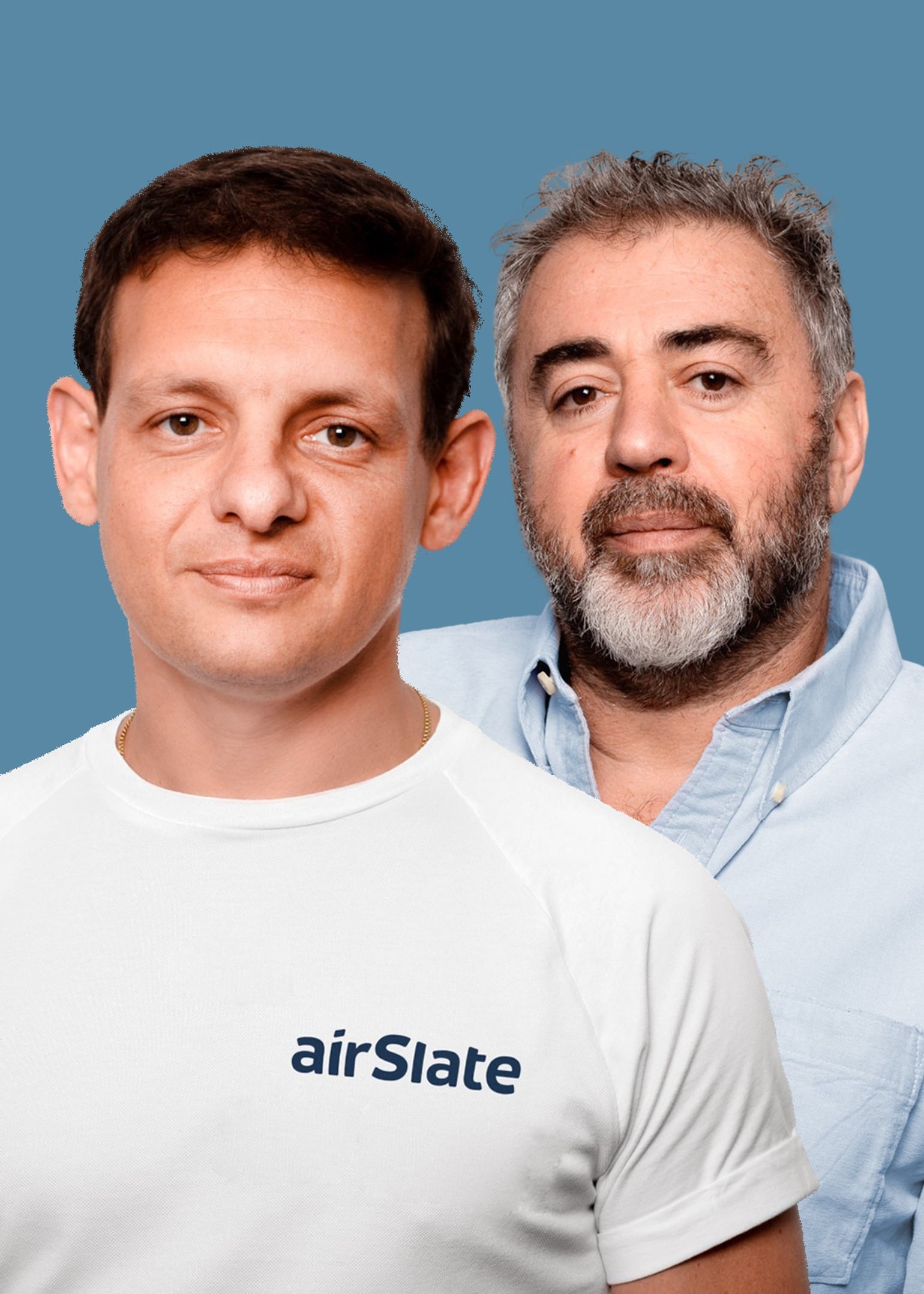
Yasinovsky had invested in that venture. He also had pdfFiller, a business built around editing documents online. Shakhnovich proposed applying his marketing technology to it. The conversation became an invitation to work together. By 2012, he had joined the business that would become airSlate.
The useful residue of the earlier venture was its performance marketing capability. It could help a product reach prospective users. Pair that capability with a tool people were already looking for, and a failed attempt at one business becomes preparation for another. Nothing about the first disappointment becomes more pleasant in retrospect. Its equipment simply finds employment.
Sixty million ways to be found
In a 2016 interview, Shakhnovich described a marketing system operating across roughly 60 million keywords and bringing about four million website visits a month. He discussed an internal customer-management system with A/B testing, semantic search, and technology developed in-house. The numbers belonged to a specific stage of pdfFiller’s life, but they show where his attention went.
A business could own an excellent document editor and still remain invisible to the person searching for help with a particular form. Distribution required its own engineering. The work involved anticipating how people described their problems, reaching them at the right moment, and learning which visitors became customers.
There is something refreshingly literal about that approach. A person types a question into a search box. Software offers an answer. The commercial experiment begins when the visitor decides whether the answer is worth paying for. Every stage gives the operator another opportunity to discover that a confident assumption was expensive.
“That doing is more important than knowing”
His advice to his younger self, in a 2016 interview
His answers to the same interview’s quick questions were appropriately practical: Guerrilla Marketing for a favorite book, Google Analytics for an online tool, and Salesforce’s Marc Benioff as a CEO he followed. The taste runs toward reaching customers, measuring behavior and studying someone who had already built a software business.
The investors could wait for the announcement
General Catalyst invested $40 million in 2017. Shakhnovich and Yasinovsky wanted to wait before making a public announcement, until their broader product plans were ready. The investor agreed. For a business whose growth depended on online customer acquisition, publicity could follow the product work rather than set its timetable.
That decision gives the partnership some texture. Yasinovsky had built the document tool; Shakhnovich had helped build the means of finding its users. Together, they were considering how much more of a customer’s working day they could serve. A company announcement is over quickly. The consequences of a product decision tend to linger.
Editing a document sits inside a longer sequence. Someone prepares information, sends it to someone else, asks for approval, collects a signature and puts the result somewhere it can be found. Improving just one step leaves plenty of opportunities for the rest of the process to misbehave.
- 01Prepare
the information - 02Route
for approval - 03Collect
the signature - 04Store
the result
A PDF acquires a larger family
The resulting airSlate portfolio brought together PDF editing, electronic signatures and workflow automation. pdfFiller served the document itself; signNow handled electronic signing; the broader automation offering connected tasks. The proposition was understandable to anyone who had ever downloaded a form merely to print it, sign it, scan it and send it back.
In July 2022, airSlate added DocHub, extending its presence in online document editing and signing, including the Google Workspace environment. Acquisition made it possible to bring an existing team and product into the group. It also introduced a different kind of operating problem: helping useful products fit together while continuing to serve the people who already depended on them.
Shakhnovich’s public explanation of no-code tools concentrated on the employee using them. A marketer, administrator or business analyst should be able to automate work without becoming a programmer. In discussing APIs, he emphasized straightforward onboarding and the business problem being solved. A connection between two systems has limited appeal if establishing it becomes another department’s unfinished project.
The valuation arrives during a war
In June 2022, airSlate announced a $51.5 million financing led by G Squared, with UiPath participating, at a $1.25 billion valuation. The company reported more than 100 million users across its products. Those figures describe the company at that moment; a valuation is a financing term, and a user total is different from a paying-customer count.
The round closed while Russia’s full-scale invasion of Ukraine was disrupting the lives of colleagues in a country central to airSlate’s operations. Shakhnovich described having a business continuity plan before the invasion and moving about 40 people to the company’s Wrocław office in advance. Experience of disruption in Donetsk in 2014 had shaped that preparation.
Such work gives the familiar language of contingency planning a human dimension. Keeping a service available involves people who must be able to work, communicate and move. The funding announcement and the continuity arrangements belong in the same account of his leadership. One concerned capital; the other concerned whether the organization could keep functioning.
That June, he was also named an EY Entrepreneur Of The Year New England award winner. Later that summer, airSlate reported 198 percent revenue growth over three years in connection with its second consecutive Inc. 5000 appearance. Recognition accumulated around a business whose daily subject remained the paperwork people wanted to finish.
The next experiment is already under way
His preference for iteration appears throughout his account of building software. In a 2022 podcast, he discussed kaizen, the practice of continuous improvement, and argued for improving an imperfect idea rather than waiting for a perfect one. It is an appropriate philosophy for someone whose route to a successful product began with finding a use for part of an unsuccessful venture.
The CEO chapter at airSlate ended in July 2025, when Yasinovsky returned to the position. Shakhnovich remains part of its founding history. Pergola Studio now lists him as CEO, setting the vision and research direction for work on specialized AI models for marketing and search optimization. Its portfolio includes AlpacaRelay, an AI email marketing product.
His recent public writing about AI keeps the experimental habit in view. He favors careful direction, intermediate checks and explicit validation when organizations put AI to work. He has also questioned the economics of depending on large models where smaller ones may suffice. These are arguments about making a system perform a job, with cost and reliability included in the definition of performance.
Back in 2022, he described an ambition to train a million people to use automation to increase their value at work. That was a stated goal, rather than a completed result. It gives his enthusiasm for technology a practical destination: an employee who can do something useful that previously required specialist help.
The through-line is the search for a working arrangement between a technical invention and a person with a problem. The researcher’s network struggled to find it. The PDF business did. His current work asks the question again, with different software and another set of experiments. By now, he has had considerable practice letting the customer grade the paper.
Follow the experiments
- Pergola Studio - current work
- airSlate - document and workflow software
- Borya Shakhnovich on LinkedIn
- Borya Shakhnovich on X
- Watch: the IT Visionaries conversation on incremental improvement (2022)
- Listen: the pdfFiller interview with Nathan Latka (2016)
- Read: the founder interview on his scientific and entrepreneurial career (2022)
- Read: General Catalyst on the pdfFiller partnership (2021)
- Read: his account of airSlate’s continuity planning (2022)
- Read: airSlate’s leadership transition (2025)
- Read: his API and no-code interview (2022)