At twelve, Jeff Lawson started an event video business. Before the APIs, the public company and the lasers, there were weddings and bar mitzvahs, with a young operator carrying a camera. It was a fairly direct introduction to commerce: somebody had an occasion worth remembering, and he had equipment, time and a reason to learn how it worked. The customer expected a finished film. An interesting technical problem, by itself, would not do.
He grew up around Detroit and later went to the University of Michigan, where he also worked as a DJ. That combination makes a certain kind of sense. Writing software and keeping a room entertained both require attention to what happens after you press a button. He graduated in computer science in 2003. By then, he had already been doing rather more than collecting course credits.
In college he founded Versity, a website for student notes. He became StubHub’s founding chief technology officer, co-founded the sporting-goods retailer NineStar, and worked as an early product manager at Amazon Web Services. Those jobs crossed an unusually broad stretch of business: student content, tickets, physical retail and computing infrastructure. They also gave him repeated encounters with the same awkward dependency. At some point, every business needed to talk to its customers.
A skateboard is a poor office companion
Lawson’s early ventures did not deliver a tidy sequence of revelations. At Versity, he found himself watching an executive commission focus groups to discover what college students wanted, while he was still a college student. At StubHub, he helped build a business around live events, then recognized that he barely attended them himself. Technical involvement and personal conviction had turned out to be different things.
NineStar supplied an especially vivid lesson. The retail concept made surfaces skateable, grindable and jumpable. An office surrounded by skateboard tricks sounds appealing until the work involves concentrating on code. Lawson later described trying to program amid the slams and chatter. A shop can be an excellent place for its customers and a terrible place to finish a software project. The distinction becomes audible fairly quickly.
What held his attention was the communications problem running through these businesses. Software let a team try an idea and change it. Connecting that idea to the telephone network could involve specialist hardware, long projects and budgets a startup could scarcely contemplate. He was a developer who wanted to build a feature; the answers kept arriving in the language of infrastructure procurement. Twilio grew out of the irritation.
“Developers are creative problem solvers.”
Jeff Lawson, 2021
The developer gets a seat at the table
In 2008, Lawson, Evan Cooke and John Wolthuis started Twilio. Its practical proposition was to let developers put communications into their own applications. A programmer could build around calls and messages without first becoming a telecommunications company. The significance was in how much work disappeared between having an idea and letting a customer try it. That was the experience Lawson had wanted in his previous jobs.
He carried the same preference into management. “Developers are creative problem solvers,” he said in 2021. If a business leader hands over a fully specified solution, much of that creativity has already been excluded. Give the technical team the problem, his argument goes, and it can help decide what to build. It is an appealing idea with an uncomfortable requirement: the executive must surrender some authorship.
His book, Ask Your Developer, appeared in January 2021. It asked leaders to bring developers into business decisions, let them experiment and keep them close to customers. The proceeds were committed to organizations widening access to technology careers. The title had also served as Twilio’s billboard message. Three words were enough to send a chief executive down the corridor to somebody who might have a useful answer.
For Lawson, the builder remained a recognizable identity underneath the executive job. He also made time for software and hardware projects; photography was another interest. The camera from his first business had acquired some company. He had built a career around tools, yet his argument kept coming back to the person holding them and whether that person had been trusted to make a decision.
A pizza box meets the public markets
Twilio went public in 2016. When Lawson left the chief executive role and the board on January 8, 2024, he recalled the original to-do list on the back of a pizza box. He said the company was then handling more than 1.7 trillion interactions a year for more than 306,000 customers. The makeshift stationery had survived, at least as an origin story, into a business with over $4 billion in annualized revenue.
He has also been willing to describe what he got wrong. In 2021, he said Twilio had invested in its sales function too late. Developers could discover a tool and start using it, but larger customer relationships involved other people, budgets and decisions. In October 2026, he returned to the lesson on Grit: “Don’t go public without understanding your go-to-market.” A good product still needed a company capable of selling it.
That admission matters when considering his next venture. His software career had rewarded making a useful building block available to other builders. It had also taught him that availability alone would not finish the job. The company around the product needed its own design. Going from a delighted early user to a dependable business required work that a clever demonstration could easily conceal.
An interlude from the department of satire
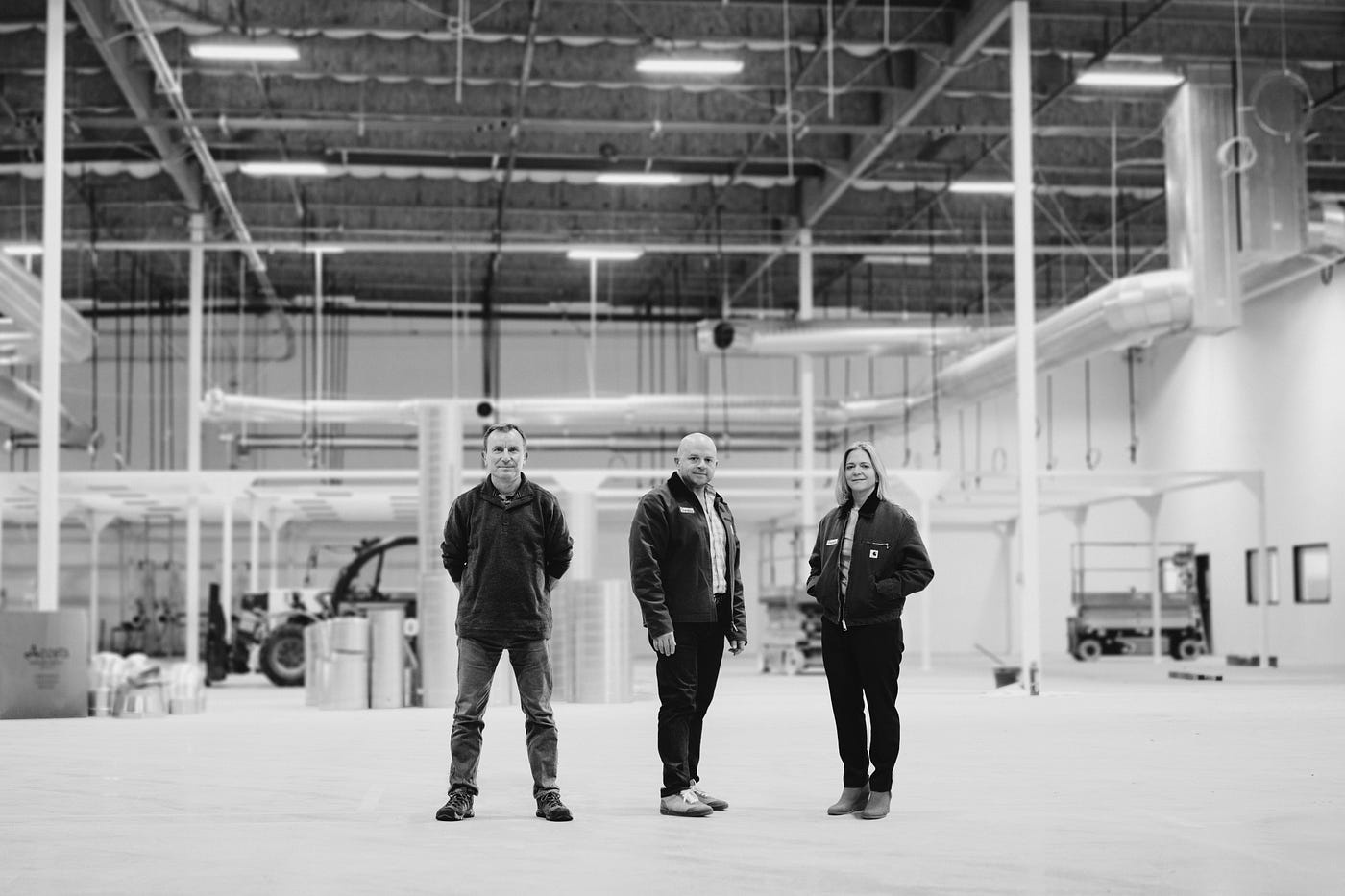
After leaving Twilio, Lawson helped buy The Onion. In April 2024, Global Tetrahedron acquired the publication from G/O Media; Lawson became its majority owner and chairperson, with former NBC News reporter Ben Collins as chief executive. The buyer’s name came from The Onion’s own fictional corporate universe. Even the acquisition vehicle arrived with a punch line, which is more than most acquisition vehicles manage.
Collins said the new owners were keeping the staff and bringing back the Onion News Network. The transaction put Lawson’s money behind a creative institution rather than another software service. It also makes a wonderfully inconvenient addition to a conventional executive biography. The line from communications software to fabricated newspaper headlines is easy enough to explain. The next line, to fusion energy, requires rather more paper.
There was a broader commitment alongside the commercial projects. In 2019, Jeff and Erica Lawson joined the Giving Pledge, committing at least half their wealth to charitable purposes. It is a stated obligation extending beyond the success of any single company. Taken with the book’s proceeds, it gives a concrete account of how he has chosen to direct some of the resources that building Twilio made available.
Now the customer is a power grid
Inertia was founded in 2024 and publicly launched in August 2025. Lawson joined two people with experience far closer to the experiment: Annie Kritcher, whose design work helped enable ignition at the National Ignition Facility, and Mike Dunne, who had led a program to design a power plant around that approach. Lawson brought company-building experience to a founding group with scientific and large-facility expertise.
The starting event happened on December 5, 2022. At Lawrence Livermore National Laboratory, a laser experiment delivered 2.05 megajoules to a target and obtained 3.15 megajoules of fusion energy. That comparison measures energy at the target. It does not include all the electricity needed to run the facility. A commercial plant must clear a much larger accounting exercise before it can export power to the grid.
Inertia’s wager is to build on that demonstrated approach while changing the equipment and manufacturing economics. In February 2026 it announced a $450 million Series A led by Bessemer Venture Partners, with GV among the participants. In April it announced research agreements with Livermore and a license covering nearly 200 patents. Decades of publicly funded research are part of the starting equipment, and the partnership makes that inheritance operational.
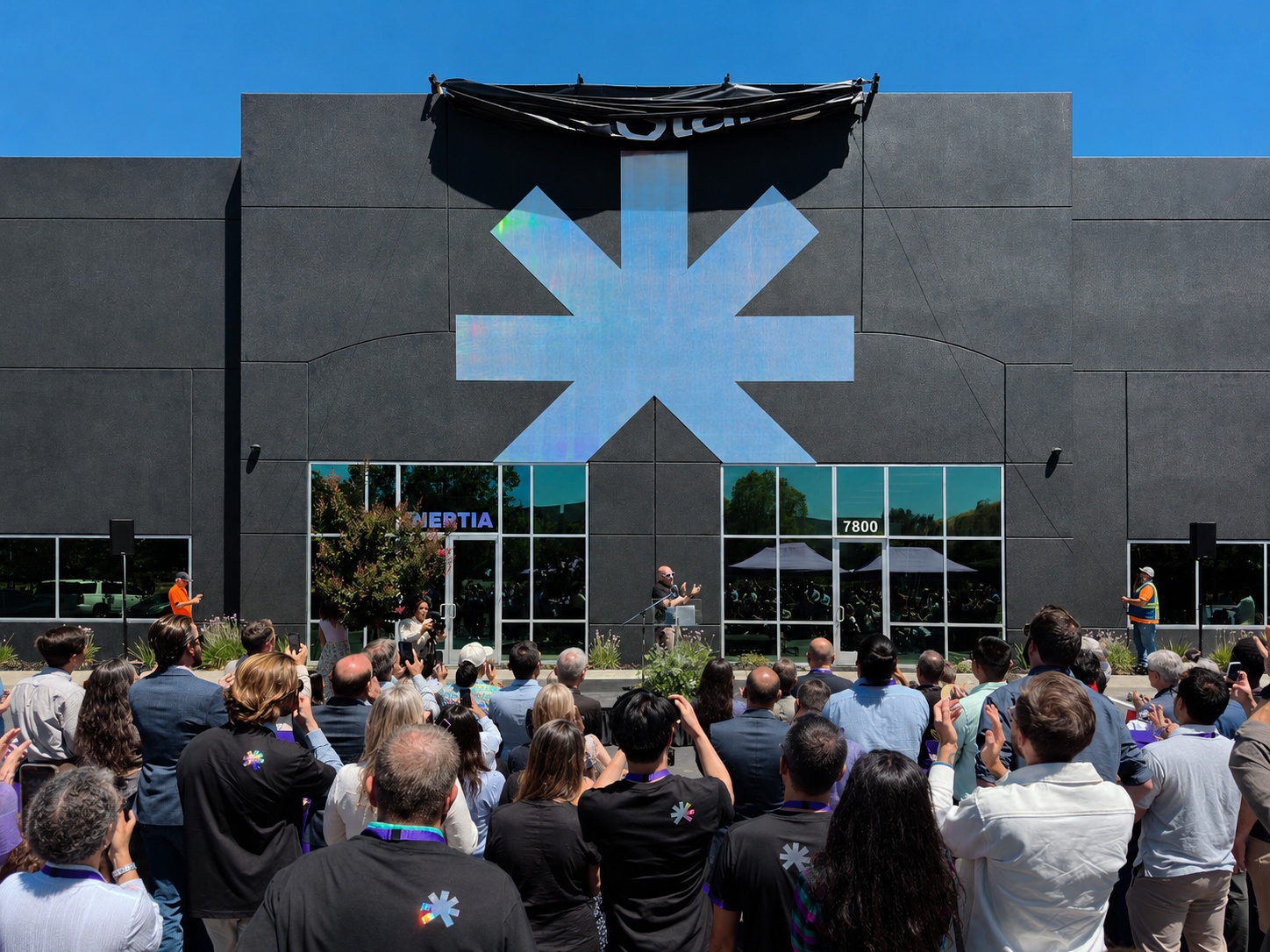
In July, the company opened a 50,000-square-foot headquarters in Livermore. It described labs for making and measuring fuel targets, work on target injection and tracking, and facilities for laser development. Lawson said the building had gone from a derelict factory floor to the new facility in six months. There is a satisfying literalness to that change: a company promising industrial scale has to begin acquiring industrial space.
Ten times a second is a business problem
The planned plant has to fire repeatedly, with a fresh fuel target for every shot. Inertia describes a rate of ten shots a second and a target price below a dollar apiece. Multiply the firing rate through a full day of continuous operation and the requirement becomes 864,000 targets. The arithmetic turns a remarkable experiment into a question about output, tolerances, handling and cost. Nobody can handcraft tomorrow’s supply over lunch.
The laser introduces a second manufacturing challenge. In September, Inertia announced collaborations with Coherent, Laserline and Leonardo. Its estimate was that a commercial 10-megajoule laser could require about 100 million semiconductor diodes. Buying components from today’s supply chain at today’s prices would defeat the proposal. Lawson’s team needs suppliers capable of changing the cost and volume of production, as well as equipment that performs.
Also in September, Inertia reported a simulated target gain above 25 times the laser energy delivered. It used codes benchmarked against the ignition experiments. The result helps test a design, but it remains a simulation; Inertia has yet to demonstrate a commercial plant delivering electricity. Lawson’s October conversation on the Inevitable podcast emphasized manufacturing and factory economics. Those are the subjects that stand between the calculation and the customer.
His career gives that choice of subject a particular resonance. At twelve, the assignment ended with a video somebody could watch. At Twilio, a developer needed a call or message to work inside an application. At Inertia, success eventually has to arrive as usable power. Lawson has changed industries and acquired some unusual equipment along the way. He is still responsible for what happens after somebody presses the button.
Follow the calls, the jokes and the lasers
- Inertia: the company and team
- Jeff Lawson on LinkedIn
- Jeff Lawson on X
- Ask Your Developer: the book
- Twilio’s beginnings: Lawson’s early ventures
- Lawson on developers, customers and sales
- Twilio: January 2024 leadership transition
- Inside The Onion’s 2024 acquisition
- Inertia: the $450 million funding announcement
- Inertia and Livermore: research partnership
- Inertia: the September simulated target result
- Inevitable: factory economics with Jeff Lawson
- Grit: The 20-Year Bet to Make Fusion Energy Work
- Watch: Nuclear Fusion is Closer Than You Think