A power plant that fires ten times a second has an appetite. In one ordinary day, it would eat 864,000 fuel targets. Each target is a tiny, carefully made vessel of frozen hydrogen isotopes; each is destroyed in an instant. If the fuel is expensive, the electricity will be, too. If the supply line stalls, the plant stops. This is the arithmetic at the center of Inertia, a fusion company in Livermore, California. Its scientific inheritance is a famous success. Its commercial assignment is a production schedule.
- Inertia is developing a laser driven fusion power plant based on the indirect drive method demonstrated at Lawrence Livermore National Laboratory.
- Its planned system needs ten shots per second, modular lasers and fuel targets that cost less than $1 apiece.
- It announced a $450 million Series A in February 2026 and a formal research partnership with the laboratory in April.
- Faster fuel preparation and promising simulations are milestones. No Inertia plant is delivering electricity yet.
The experiment that changed the question
In December 2022, the National Ignition Facility, or NIF, struck a target with 192 laser beams and produced more fusion energy than the laser energy delivered to it. The distinction matters. It was an extraordinary result at the target, not a demonstration of a power station that produces more electricity than it consumes. The giant research facility was designed to learn how fusion behaves, not to sell power. Inertia’s founders made a business out of that gap.
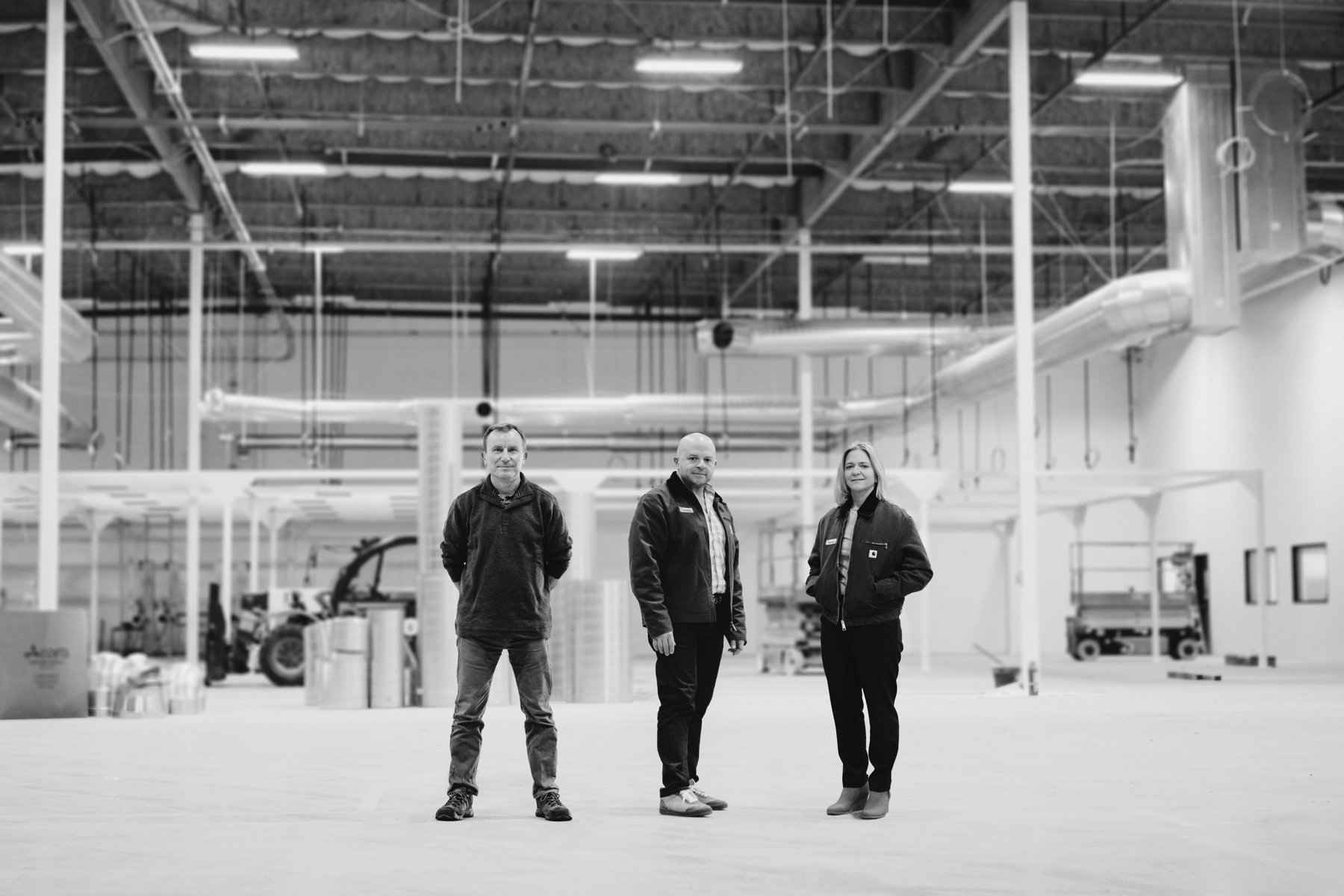
Jeff Lawson, the former Twilio chief executive, joined Annie Kritcher, who led the NIF ignition target design, and Mike Dunne, a physicist who worked on a NIF based power plant design. Their wager is unusually narrow for an industry of rival machines: keep the laser indirect drive physics that reached ignition, then make the equipment and supply chain economical. Other fusion developers are pursuing magnets, direct laser drive, and different pulsed systems. Inertia has chosen a known experiment and an unknown factory.
The early stumbling block for laser fusion was ignition itself. NIF finally crossed that line after a long search. The obstacle now is the research setup: a handful of elaborate shots a year, individually crafted targets, and a laser built for science rather than efficient repetition. Inertia’s founders say they would rather spend capital making a working regime affordable than ask investors to underwrite another basic physics discovery. That is a thesis, not a guarantee.
The disposable heart of the machine
A NIF target is the sort of object that rewards patience. Its frozen deuterium and tritium layer must be smooth enough to implode symmetrically. Inertia says that, with manual work and retries, forming that layer can take days. Such care is perfectly sensible when a few experiments must answer big questions. It becomes absurd when a plant needs another target before this sentence ends.
In August, Inertia and Lawrence Livermore National Laboratory reported a new layering process that takes roughly two to three hours for the sensitive frozen fuel step. The result does not mean a finished target rolls off a line every tenth of a second. It does show the kind of measured process improvement a line would require. Inertia also proposes a larger target driven by a more energetic laser, giving the implosion more room to tolerate manufacturing flaws. Its planned metal enclosure uses lead in place of the exotic materials found in some NIF targets. Every one of these moves exchanges laboratory perfection for repeatable throughput.
“Success in scaling to mass production is measured by the performance of the billionth target, not the first.”Inertia, on its fuel manufacturing work
Thunderwall and the price of repetition
The other half of the machine is the laser. Inertia calls its planned beamline Thunderwall. Rather than one immense, fixed piece of equipment, the company describes many smaller, replaceable beamlines assembled into a laser system. It is developing a prototype beamline rated for a 10 kilojoule pulse ten times per second. The proposed plant would use a 10 megajoule laser system and convert the heat of repeated fusion shots into steam, then electricity. For all the exotic physics at the front, the last step is a turbine.
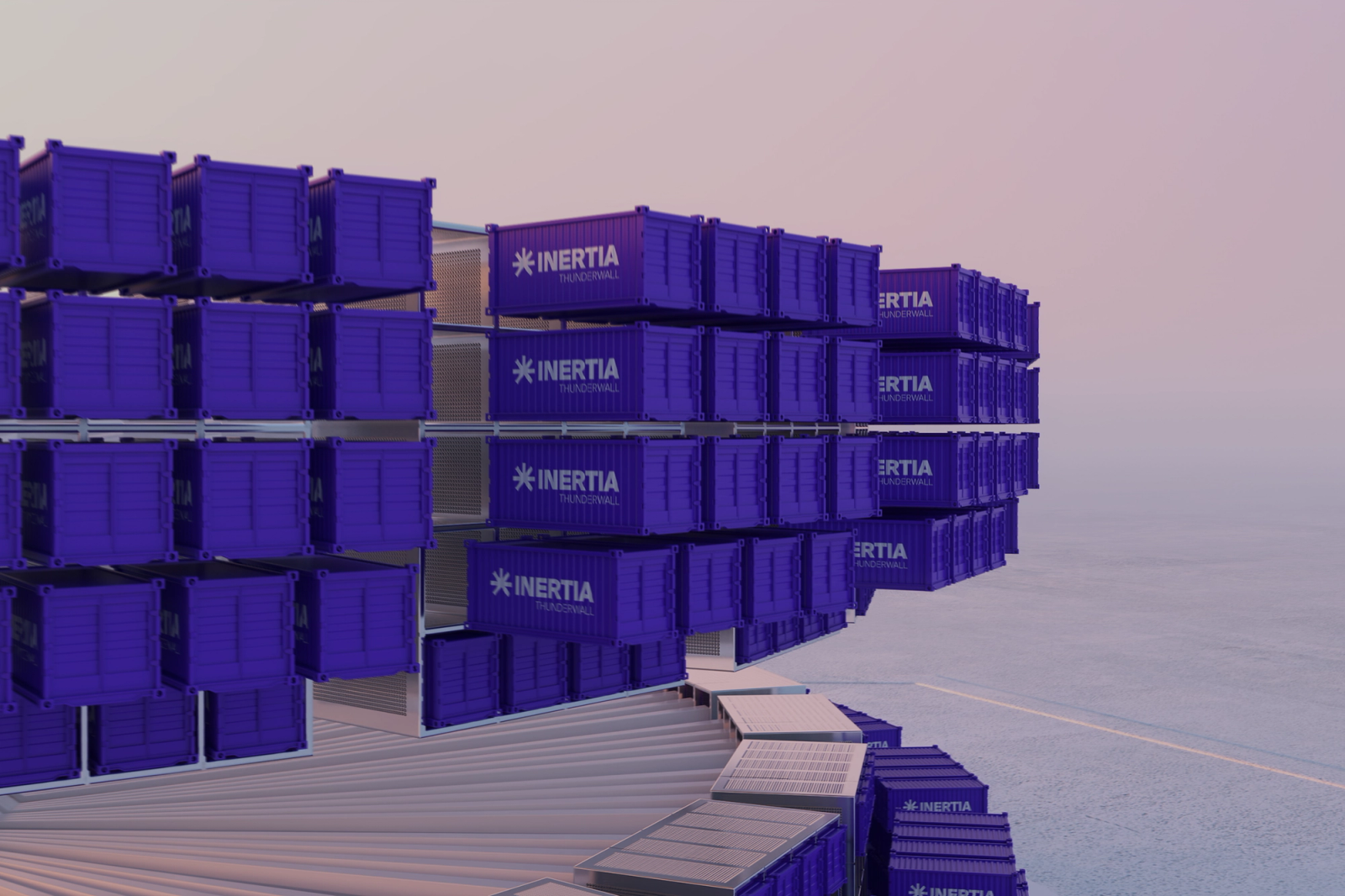
The laser supply problem has a startling price tag before a single power plant is built. In a September announcement, Inertia estimated that a commercial 10 megajoule laser could need about 100 million semiconductor diodes. At current supply and prices, the company says procurement would cost tens of billions of dollars and take centuries. That is its own estimate, but the implication is clear: a fusion developer cannot merely place an order. Inertia has announced work with Coherent, Laserline and Leonardo on diode performance, cooling, manufacturing methods and a cheaper supply chain. The $450 million Series A, led by Bessemer Venture Partners with investors including GV, funds this development path, not a completed plant.
A model is a map, not a meter
In September, Inertia published the result of a “virtual shot” using simulation codes benchmarked against NIF ignition work. Its baseline commercial target design produced a modeled gain above 25 times the laser energy to the target. The company says that would be enough to export electricity in its proposed plant architecture; higher modeled gains could support more output. This is useful design evidence, especially because it includes some manufacturing and delivery imperfections. It is still a simulation of a machine that has not been built. The laser, target factory, injection system, chamber and turbine must work together before the estimate becomes a utility bill.
The partnership with Lawrence Livermore is unusually deep: a cooperative research agreement on lasers plus projects on target design and fabrication. It gives Inertia access to expertise and validated tools developed with public investment. It also makes clear where the company fits in the market. Its prospective buyers are utilities and large users seeking firm power, perhaps industrial heat as well. There are no announced commercial power customers because there is no operating plant. The business model is to build an expensive new source of electricity and eventually sell its output, not to sell people a fusion gadget.
What can be copied from Livermore?
The transferable idea is almost prosaic: begin with a demonstrated result, write down the rate and unit cost a power plant would require, and work backward through every component. Inertia has made its arithmetic public. Ten shots per second forces a target factory. A one dollar target forces batch processes and tolerance for imperfection. A power plant laser forces a new diode supply chain. A neutron battered chamber forces a maintenance plan. A plausible physics result does not settle any of those accounts.
It may turn out that the target is cheap enough but the laser is not, or that a promising simulated gain proves fragile in an actual plant. The company’s own recent announcements put those risks in daylight. That is why the small victories - hours instead of days for frozen fuel, a code based target design, suppliers at the table - are more informative than any promise of limitless energy. Inertia’s wager will be judged less by its best shot than by the millionth one on a Tuesday.