The first useful fact about Zabrina Johal is that she did not grow up expecting to run nuclear reactors. Billings, Montana, offered wilderness close to the backyard and a local economy of farms and small businesses. Science and engineering were not obvious professions there. She had never been on an airplane before she was 18. Then came Santa Clara University, a study-abroad term, Officer Candidate School and, with the brisk logic of an improbable life, responsibility for a reactor aboard the USS Carl Vinson.
A nuclear-powered carrier is a stern tutor. Its reactor does not merely keep the lights on. It moves the ship, supports flight operations and makes the floating city function. Power rises and falls as the vessel changes speed; steam catapults demand more of the plant when aircraft launch. Repairs, maintenance and drills are not interruptions to the job. They are the job. A young officer learns that reliability is made of thousands of small, unromantic decisions, most of them taken before anything goes wrong.
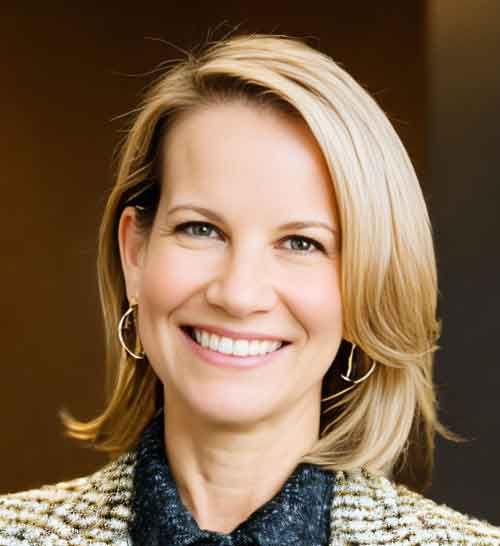
That distinction - between an impressive machine and a dependable system - has followed Johal ever since. In April 2026, she became chief executive of Zap Energy, an Everett company founded around a compact approach to fusion. She arrived with a second technology added to the brief: fission. Her assignment is to help a research-driven startup become a company that can deploy power, while keeping its longer and stranger wager alive.
“Fission gives us a path to deploy. Fusion gives us a path to transform. Bringing them together is how we do both.”Zabrina Johal, on Zap Energy's integrated strategy
The reactor was the beginning, not the metaphor
Johal had applied to only two colleges. Her plan was simple: attend whichever one accepted her. Santa Clara did. She began on a pre-med path, taking physics, biology and chemistry in Silicon Valley. Studying abroad during her senior year widened her view of the world and sharpened her interest in service at home. A Navy recruiter supplied the unexpected next sentence.
The training was technical, but the education was social. On her first ship, Johal was one of very few women. She has spoken plainly about the difficulty of gaining trust as a young female officer leading teams unaccustomed to working under one. There was Officer Candidate School, including the memorable indignity of getting her head shaved. There were Tomahawk strike operations during the wars in Iraq and Afghanistan. And there were two years operating the carrier's reactors, where authority without competence enjoys a very short half-life.
When she left the Navy in 2006, Johal joined General Atomics. Two years later, the company's owner asked a team to design a reactor that could compete on cost. It was an early encounter with the stubborn arithmetic of nuclear energy. A reactor may be elegant, safe and low-carbon; if its financing, construction and operating expenses do not work, the grid will admire it from a distance.
She stayed at General Atomics for 19 years. Her remit expanded from business development into strategic development and moved across civilian energy, defense, advanced materials, robotics, additive manufacturing and artificial intelligence. She learned the dialects spoken by laboratories, military customers, corporate planners and governments. In nuclear work, translation is not decoration. The scientist, regulator, financier and operator can all be correct and still fail to build the same thing.
Two clocks, one company
Zap's original idea has an appealing economy. Most fusion machines use enormous magnets or high-powered lasers to confine and compress plasma. Zap's sheared-flow-stabilized Z-pinch sends an electric current through a column of plasma. The current creates its own magnetic field; carefully arranged flows are intended to suppress the instabilities that have historically made Z-pinches misbehave. Fewer magnets and fewer heroic pieces of machinery could mean a smaller power plant with lower capital costs. The conditional tense is doing honest work there.
The two-clock strategy
Compact, modular fission for grid, industrial and data-intensive customers on a nearer commercial timetable.
Z-pinch fusion and hybrid systems developed alongside shared materials, supply chains and nuclear engineering.
The company now argues that fission and fusion are not separate industries but neighboring engineering disciplines. Both must handle neutrons, extreme conditions, difficult materials and exacting safety requirements. Both need specialized supply chains and patient institutions. Develop them together, the argument goes, and knowledge can cross the aisle. Fission can also produce nearer-term revenue and operating experience while fusion matures.
It is a practical answer to fusion's notorious calendar problem. For decades the field has been teased as always being decades away. A company cannot pay today's machinists with tomorrow's electricity. Johal must preserve enough urgency for a startup without pretending that physics will respect a board meeting. The fission program gives Zap a second clock, one whose ticks can be heard by customers and capital providers.
The arrangement creates its own risk. Two ambitious nuclear programs can share lessons; they can also share distraction. Fission has licensing, fuel and construction challenges. Fusion has unresolved physics and power-plant engineering. Hybrid systems add another layer. The CEO's work is less like choosing a winning horse than running a stable in which every animal eats rare metal and requires federal paperwork.
“You have to get inside the nucleus to harness the energy required to change the course of humanity.”Zabrina Johal, explaining the stakes of nuclear energy
The difficult middle
Johal's year at AtkinsRéalis supplied a concentrated view of that middle ground. As senior vice president for nuclear strategy and commercial, she worked across a $2.2 billion portfolio in North America, Europe and the Middle East. Large nuclear projects teach an unfashionable lesson: scale does not forgive muddle. Contracts, public-private partnerships and regulation have physics of their own. Her election to the Nuclear Energy Institute board in 2025 placed her among executives responsible for the industry's operating and commercial realities.
She also completed doctoral work in organizational leadership at the University of San Diego, focusing on leadership, strategy and innovation in highly regulated sectors. The pairing is revealing. Johal's subject is nuclear energy, but her recurring problem is the institution around the machine. How does an executive create trust when mistakes are expensive? How does a research culture acquire a deployment culture without strangling curiosity? How does a company explain risk without either hiding it or turning it into theater?
Her experience as a young officer gives those questions a personal edge. Technical rank told the sailors who was in charge; it could not make them trust her judgment. That had to be earned in the daily grammar of a ship: knowing the plant, making the call, admitting what needed checking and appearing again for the next watch. Johal later described the process as one of the defining leadership challenges of being among the first women in that environment. A startup lab is not an aircraft carrier, but expertise still has to become confidence before a group can move together.
Billings childhood, then physics and chemistry at Santa Clara University.
Strike operations and reactor duty aboard the USS Carl Vinson.
Nineteen years turning technology into programs at General Atomics.
Global nuclear strategy and commercial leadership at AtkinsRéalis.
One company, two nuclear timelines and a mandate to deliver.
Her public argument for nuclear power begins with human consequence. “Electricity equals prosperity,” she said in a 2019 conversation, connecting energy access to education, security and economic development. The line can sound almost too neat until placed beside the carrier. When the plant stops, the ship stops. On land the effects are less theatrical, but factories, data centers, hospitals and homes make the same bargain with the grid every minute.
This helps explain why Johal resists the sport of pitting fission against fusion. Fission works now but remains costly and politically fraught. Fusion promises a different fuel cycle and plant architecture but has not yet become a commercial source of electricity. Treating either one as a tribal identity makes for lively conferences and a thin power system. She prefers a continuum: use what can be deployed, learn across programs, keep improving the machine.
There is a trace of Montana pragmatism in that formulation. The childhood Johal describes was not organized around grand technology, but around small businesses, agriculture and the outdoors. Utility was visible. Things had jobs. The same test now hangs over a field rich in exquisite experiments: what work can this machine do, for whom and when? Her answer is not to lower the ambition of fusion. It is to give ambition an operating schedule.
Bringing the atom outside
A CEO cannot personally stabilize every plasma or close every contract. The job is to decide what the company will attempt, in what order, with whose money and by which evidence. Zap is participating in the U.S. Department of Energy's milestone-based fusion program and working toward a pilot-plant design later this decade. It is also targeting modular fission applications for industrial, distributed and data-intensive customers. Each claim will eventually meet a meter, a regulator or a balance sheet.
Johal has arrived at the point where her career's separate rooms connect. The Montana student who had barely traveled learned physics. The Navy officer learned consequence. General Atomics taught her how advanced technology becomes a program. AtkinsRéalis taught her the scale and geography of the nuclear market. Doctoral research gave her a language for organizations that must innovate while the public watches carefully.
Now comes the outside world. Fusion companies are often judged by the beauty of the plasma and fission companies by the gravity of their promises. Zap will be judged by whether either technology becomes useful on time and at a price somebody will pay. Johal knows the distance between a reactor and a functioning system. She first measured it on a ship, where the answer was immediate and the ocean offered no extension. The new voyage is longer. The standard is much the same: the power has to work.