The long road to one small reactor
At 16, Isaiah Taylor had a plan to start a nuclear company and a problem with the plan: he did not yet know how to run a company. His solution was wonderfully indirect. He and two friends opened an auto repair shop in Moscow, Idaho. For a young programmer who had spent his childhood reading about reactors, a garage was a place to learn what spreadsheets leave out. People need paying. Equipment breaks. An optimistic starting budget can disappear with astonishing speed. The reactor would have to wait.
The shop began with about $20,000 from Taylor and his friend Kip Mock. They thought that would be enough. It was not. Taylor kept a software job while Mock ran the business through its early stretch, and the venture eventually required hundreds of thousands of dollars. It also worked: Erber Auto continued after the pair sold their shares. Taylor later described the experience as a "mini MBA." The phrase is modest; the tuition, apparently, was not.
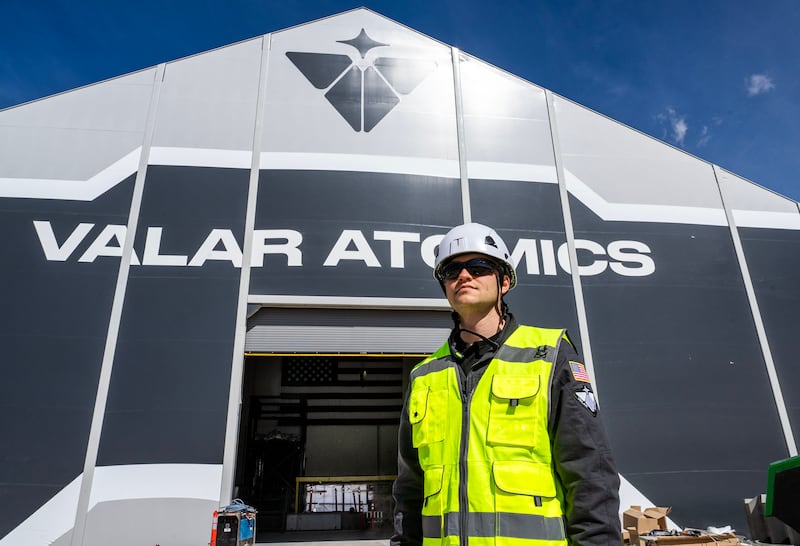
That detour is a useful way into Taylor's larger ambition. Valar Atomics, the company he founded on July 4, 2023, wants to turn nuclear power from a succession of custom construction projects into a repeated manufacturing process. Its first operating reactor demonstration, Ward 250, reached zero-power criticality in Utah in June 2026. In August, Valar announced a $1 billion financing round. The money can help build a factory. It cannot, by itself, prove the factory thesis. The proof will come from making the next reactor, then the next, with less time and expense each time.
A childhood full of code and reactors
The nuclear interest arrived long before the investment round. Taylor's great-grandfather, Ward Schaap, was a physicist on the Manhattan Project. Schaap and his wife moved to Oak Ridge, Tennessee, soon after marrying; Taylor's grandmother was born there. Taylor grew up reading encyclopedias about nuclear power. Around age 10, a software engineer at his church showed him a programming language for children. Coding felt like a game, he recalled, and he followed that curiosity into software work.
By his mid-teens, Taylor had decided that reactors ought to be smaller and made repeatedly. He left high school at 16 and pursued programming, then business. He has described himself as someone inclined to read until he can work out a problem. It is an appealing trait in a founder, though nuclear engineering also demands the judgment of people who have spent careers on it. Taylor's eventual company would recruit those people. The childhood fascination gave him a direction; the organization had to be built separately.
“I’ve always just kind of known what I wanted.”Isaiah Taylor
There is a second early decision in his story that gives his sense of time a personal dimension. Taylor had known Sophie since first grade. They married when he was 19 and she was 18, and later had four children. In a 2026 interview, he connected his desire to build a stronger industrial future to thinking beyond his own lifetime. His ambition for energy is expressed in factories and fuel, but its horizon is measured in generations.
A concert ticket and an operating partner
Taylor met Kip Mock in an apartment hallway in Moscow, Idaho. Mock had a spare ticket to a Jon Bellion concert after a friend backed out. The venue was five hours away, and he asked Taylor to come with roughly 15 minutes' notice. Taylor said yes. They became friends on the drive, helped by a shared interest in cars: Taylor drove a Fiat, Mock an Audi. Their mechanic friend Jonathan had been working on those cars outside in an icy driveway. The three realized there might be a business in giving that work a proper shop.
The garage made Taylor and Mock partners before the reactor did. It also exposed them to acquisitions, management and the ordinary arithmetic of a small employer. Taylor then tried a software startup in the automotive field; it failed. He treated that experience as useful rather than terminal. Afterward, he briefly worked for a hedge fund and did engineering work for the Department of Defense. By the time he started Valar, his preparation had been a sequence of ventures with very different outcomes, each closer to the kind of organization he thought the nuclear problem required.
Mock joined Valar about six months after its founding and now leads operations. The friendship that began in a borrowed concert seat became one of the company's working relationships. It also illustrates a less photogenic part of any industrial venture: a reactor needs a team that can hire, buy, ship, assemble and maintain things. Ideas travel easily. Heavy equipment is less obliging.
The first heartbeat, and its limits
Valar's early technical work took it to Los Alamos National Laboratory's critical experiments facility at the Nevada National Security Site. In November 2025, the NOVA core achieved zero-power criticality there. That means a controlled, self-sustaining chain reaction without producing operating heat or power. The experiment gave the team measurements against which to test its reactor models. Taylor called it a reactor's "first heartbeat." It was a meaningful technical threshold, and it was one step in a much longer sequence.
The next visible step had an unusual mode of transport. In February 2026, U.S. Air Force C-17 aircraft carried Valar's reactor equipment from California to Utah. It was unfueled for the flight. The demonstration showed that the hardware could be moved in that fashion; it did not settle questions of routine deployment, operation or cost. Those distinctions matter because nuclear projects attract both large hopes and close scrutiny. A founder's timetable and an engineer's test result answer different questions.
In June, Ward 250 completed a zero-power fueled criticality demonstration at the Utah San Rafael Energy Lab. The Department of Energy described it as the first DOE-authorized reactor built outside a national laboratory. Valar subsequently demonstrated electricity from Ward 250 powering an Nvidia computing device and announced a collaboration around a proposed 30-megawatt AI facility. The demonstration made the project more tangible. It did not yet show a commercial fleet running for years, or settle the economics of making one.
The factory is the argument
Taylor's proposed answer to nuclear power's costs is repetition. Valar is pursuing a standardized, high-temperature gas-cooled reactor and a company structure that takes responsibility for design, construction and operation. The plan is to cluster many reactors at large sites and use their output for data centers, industrial power, hydrogen and fuels. In the company's telling, each completed unit would supply operating data and practical lessons for the next. That is a manufacturing argument applied to a field better known for singular megaprojects.
The design work belongs to a team with deeper nuclear pedigrees than Taylor's. Valar recruited Mark Mitchell, formerly president of Ultra Safe Nuclear Corporation, as chief nuclear officer. Sonat Sen led core design for the NOVA work. Muhammad Shahzad, with experience at Relativity Space, joined the executive group. Taylor has been candid that self-study alone was not enough to design a reactor. His job has been to persuade specialists to work inside a young company pursuing an unusually compressed schedule.
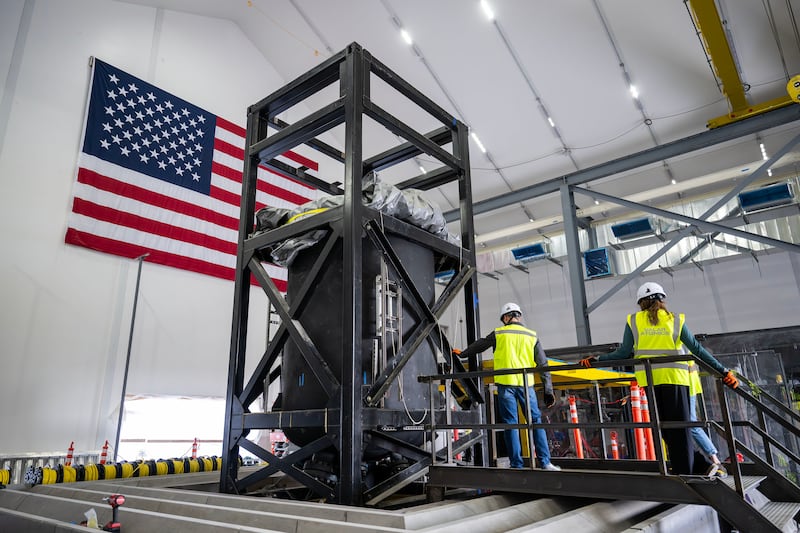
One detail at the Utah site captures the mixture of new ambition and physical constraint. Valar designed large concrete shielding blocks that stack around the reactor and reinforce one another by their weight. They are made in Salt Lake City and assembled with a crane. The idea may look like an elegant shape on a drawing, but its value depends on the mundane sequence of casting, transporting, lifting and fitting each block. Nuclear power happens in matter, not only in models.
In August 2026, Valar announced a $1 billion Series B led by Sequoia Capital, alongside a $200 million credit facility. Taylor framed the financing as a way to move from demonstrating one reactor to manufacturing fleets. That is a change in scale and in the kind of evidence people should ask for. A first reactor tests whether a design can be assembled and operated. A fleet tests supply chains, maintenance, staffing, repeatable quality and price. An investor can fund the attempt; customers and operators will judge the result.
The next unit is the real sequel
Taylor has spoken about wanting cheap energy for heavy industry: metals, manufacturing, computing and fuels. It is a broad vision, one that reaches beyond the Utah reactor site. Yet the most revealing part of his story remains the unlikely route to that site. The teenager who thought reactors should be made differently first learned how a shop stays open. He learned that a failed startup can be instructive. He found an operations partner on a long drive to a concert. Then he gathered people who knew the nuclear work he could not do alone.
Ward 250 gave that group a concrete milestone. The financing gave it room to attempt a larger one. Taylor's factory answer will be tested by the ordinary verbs that made the auto shop useful schooling: hire, buy, build, inspect, repair, repeat. A reactor is a striking thing to make once. The company's ambition is to make the second one less extraordinary.