The scarce-pound strategy
For a company that sells uranium, Cameco has spent a surprising amount of time explaining why it will not produce more of it. In January 2018, the Saskatoon company suspended McArthur River and Key Lake, one of the finest mine-and-mill combinations in the business. Uranium prices had fallen more than 70 percent after Fukushima. Cameco had inventory, expiring legacy contracts and no appetite to manufacture extra pounds for a glutted market. The company expected its share of care-and-maintenance costs to run C$6.5 million to C$7.5 million every month. About 845 workers and contractors were affected. The dividend was cut. It was an expensive refusal.
That refusal is the cleanest way to understand Cameco. This is a nuclear energy company built around uranium mining, but its operating philosophy resembles a patient market maker. It supplies utilities from a mix of its own mines, a Kazakhstan joint venture, inventory, market purchases and product loans. It signs contracts years into the future, often with pricing that can move with the market. Then it decides which physical pounds should satisfy those commitments. Capacity is an option, not an obligation.
What the company actually sells
Start underground. Cameco operates Cigar Lake and McArthur River in northern Saskatchewan, holds a 40 percent interest in the Inkai operation in Kazakhstan, and keeps other mines and projects in reserve. Its share of tier-one licensed capacity exceeds 30 million pounds a year. At the end of 2025, those operations were backed by more than 433 million pounds of attributable proven and probable reserves.
The business does not stop at yellowcake. At Blind River, Ontario, the world's largest commercial uranium refinery turns concentrates into uranium trioxide. Port Hope converts that material into uranium dioxide for heavy-water reactors or uranium hexafluoride, the feedstock sent for enrichment before it becomes light-water-reactor fuel. Nearby factories in Port Hope and Cobourg make CANDU fuel bundles, specialty components and reactor hardware.
Then comes the 2023 plot twist: Cameco paid US$2.1 billion for 49 percent of Westinghouse, while Brookfield took 51 percent. Cameco used US$1.5 billion in cash and US$600 million of term loans. Westinghouse supplies reactor technology, nuclear fuel, parts, engineering and maintenance. Its technology touches 57 percent of the 417-reactor global operating fleet, according to Cameco's 2026 second-quarter disclosure. A miner that once ended its story at the fuel plant now owns a piece of what happens inside and around the reactor.
The first thing that failed was the ground
Cigar Lake contains extraordinary ore in an extraordinarily awkward place. Mining happens roughly 480 metres below the surface, beneath water-bearing sandstone. During construction in 2006, a rock fall preceded a major inflow that flooded underground workings. More inflows followed. A mine expected to start producing in 2007 at a projected cost of about C$450 million did not begin ore production until 2014. Aggregate construction and related costs reached roughly C$2.6 billion.
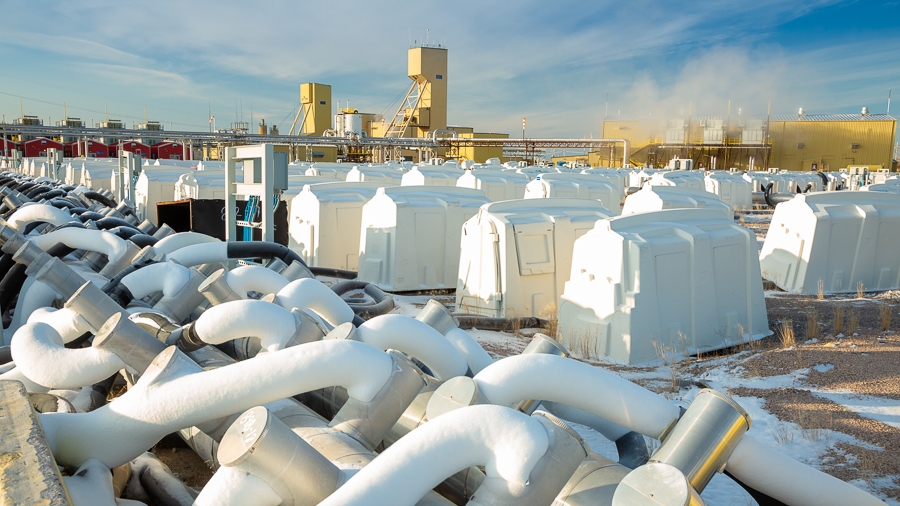
Cameco's response was physical, not rhetorical. It expanded ground freezing, moved the production level farther from the water-bearing formation, increased dewatering and water-treatment capacity, and developed jet boring for the deposit. Operators work from a protected tunnel above the ore and use a high-pressure water jet to cut it from below. The resulting slurry is collected and pumped away while frozen ground helps hold water back.
The moat is not simply owning rich ore. It is knowing how to reach it without inviting the lake downstairs.YesPress analysis
The episode reveals both the advantage and the hazard. Permitted, operating, high-grade mines in stable jurisdictions are hard to copy. They are also mines. Roads flood. Mills stop. Development falls behind. In May 2026, flooding in northern Saskatchewan disrupted access to McArthur River and Key Lake. In July, Cigar Lake paused for two weeks because of operational trouble at Orano's McClean Lake mill, 70 kilometres away, where its ore is processed. Production resumed and annual guidance stayed intact, but scarcity does not cancel logistics.
What changed Cameco's mind
McArthur River and Key Lake stayed down for roughly four years. The restart was announced in February 2022 after uranium market conditions improved and long-term contracting activity added meaningful volumes to Cameco's portfolio. Russia's invasion of Ukraine soon sharpened the concern: western utilities relied on Russia for important portions of uranium conversion and enrichment. Energy security joined decarbonization as a purchasing motive.
Cameco did not simply switch everything back on. It upgraded automation, replaced control systems, recruited and retrained workers, and planned to operate below licensed capacity. Initial production returned in November 2022. The phrase executives used was revealing: they had built “homes” for those pounds in the contract book before bringing them back.
By the end of 2025, Cameco had about 230 million pounds committed under uranium contracts, including average annual deliveries of roughly 28 million pounds over the next five years. Fuel services held about 83 million kilograms of UF6 conversion commitments. Five customers represented 56 percent of uranium commitments, a reminder that this is concentrated enterprise selling, not a consumer market. A missed shipment matters. So does a bad price formula signed for a decade.
A mine-to-reactor business - with seams showing
Vertical reach is Cameco's sharpest distinction. Kazatomprom dominates uranium production. Orano spans mining, conversion and fuel-cycle services. Urenco is formidable in enrichment. Reactor vendors and service groups compete with Westinghouse. Cameco's particular bundle is high-grade Canadian production, scarce western conversion capacity, CANDU manufacturing, a development-stage enrichment interest and a large stake in an established reactor franchise.
The Westinghouse deal makes that bundle more valuable if new nuclear construction accelerates. In 2025, the United States government, Brookfield and Cameco announced a framework around at least US$80 billion of new Westinghouse reactor construction. Westinghouse also participated in the Czech Republic's Dukovany project, which produced a large 2025 revenue benefit for Cameco's share. In July 2026, Westinghouse confidentially submitted paperwork for a proposed IPO. These are opportunities, not operating reactors. Permits, financing, supply chains and construction still have to cooperate.
Cameco's own numbers show the tension. It produced 21 million attributable pounds in 2025 but delivered 33 million, bridging the difference with purchases and inventory. In the first half of 2026, operational disruptions reduced output at points, yet full-year production guidance remained 19.5 million to 21.5 million pounds. Flexibility works because there are several supply levers. It becomes expensive when too many fail together.
The playbook worth stealing
Nobody reading this should rush out to freeze an ore body. The portable idea is to separate capacity from obligation. Cameco treated production as something to earn through contract quality. It kept customer commitments sacred, but it did not insist that every delivered pound come from a running Cameco mine. That distinction protected optionality when the spot market was weak.
Copy the logic, not the mine
- Secure demand before scaling supply. A signed home for new output is better evidence than a fashionable forecast.
- Build several fulfillment paths. Inventory, partners, purchases and flexible capacity can absorb a single operational miss.
- Preserve exposure to upside. Long contracts are useful only if their pricing does not permanently surrender a changing market.
- Buy downstream when it deepens the customer relationship. Westinghouse matters because reactor service can pull fuel demand through the stack.
- Design around the ugly failure. Cigar Lake's engineering starts with water, not with a perfect-case production target.
When the strategy does not work
Supply discipline fails when a producer needs immediate cash, lacks a low-cost inventory position, cannot afford idle assets, or has competitors eager to replace every withheld unit. A contract-first strategy also fails when contracts are mispriced, customers concentrate too heavily, or inflation makes the promised delivery uneconomic. Cameco survived the shutdown because it had strong assets, inventory, established utility relationships and access to capital. A junior miner with one deposit and no revenue cannot imitate the move safely.
The downstream bet has its own conditions. Westinghouse creates follow-on work when reactors are built and existing fleets keep operating. It disappoints if projects stall, costs overwhelm economics, governments reverse policy, or an IPO changes incentives without unlocking useful capital. Uranium demand can look inevitable on a conference slide and still arrive years late.
Cameco's interesting achievement is not predicting the nuclear revival. It is staying solvent, credible and operationally relevant long enough to meet it. The company endured a mine that filled with water, a commodity market that emptied of enthusiasm and a shutdown that cost real money every month. Today it sells to utilities across three regions, owns more of Cigar Lake and sits beside Westinghouse at the reactor table. The next test is less cinematic: ship the pounds, keep the plants running and make the long contracts pay.