A quieter kind of fusion
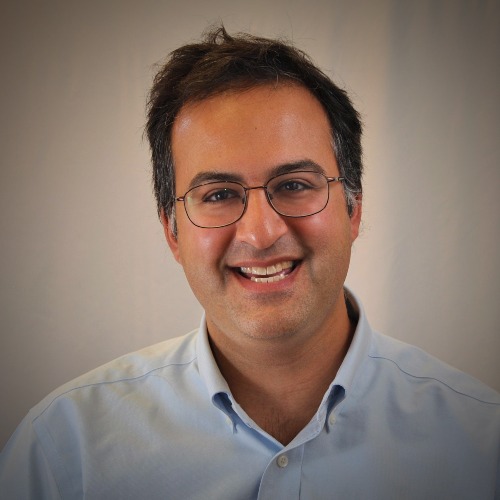
Most fusion companies are in a temperature war. They build machines to hold plasma at 100 million degrees Celsius, hotter than the core of the sun, long enough to squeeze hydrogen into helium. Ara Knaian took the opposite exit. His company, Acceleron Fusion, aims for something closer to the inside of a pizza oven - around 1,000 degrees C.
The trick is a particle called the muon. It behaves like a heavy electron, roughly 200 times the mass. Drop one into a cloud of deuterium and tritium and it pulls the nuclei so tightly together that they fuse without the ferocious heat. Physicists have known this since the 1950s. The catch has always been arithmetic: each muon has to trigger enough fusion reactions to pay back the enormous energy it costs to make one. For decades the books never balanced, and muon-catalyzed fusion became a famous cul-de-sac.
Knaian's argument is that the numbers moved. Accelerator efficiency has climbed from about 20 percent in the 1980s to roughly 50 percent today, with the Department of Energy chasing 75 percent. High-strength materials are better. Simulation is cheaper. A dead end from thirty years ago, he thinks, is worth a second walk.
Before the reactor, the resume
Knaian earned his Ph.D. at MIT in electrodynamics and energy systems, finishing in 2010. Along the way he became the sort of engineer other engineers call when a problem crosses too many disciplines to name. He co-founded NK Labs, a Cambridge product-design firm, and spent years making unglamorous things work.
He architected Google's modular Project Ara phone - the concept, the chipset architecture, the connectors. He developed the drive waveforms and display-controller architecture behind Amazon's Kindle and E Ink screens, which is to say he is partly responsible for the crisp way the page turns in your hand. He built the electrical systems and firmware for a Formlabs 3D printer. He invented a wireless magnetic traffic sensor that ended up buried in the streets of Palo Alto, telling traffic lights when cars arrive. He worked on the world's smallest modular robots for DARPA.
That range is the point. Fusion is not a physics problem so much as a stack of engineering problems - vacuum, magnets, materials, power electronics, controls - and Knaian has already shipped in most of those categories.
The robot that folds itself
In 2012, working at MIT's Center for Bits and Atoms with Neil Gershenfeld and Kenneth Cheung, Knaian built the Milli-Motein. The name mashes together "millimeter" and "protein," because the device folds itself the way a protein does - a chain snapping into a programmed three-dimensional shape.
The clever part is the motor. Knaian used electropermanent stepper motors that draw power only while they are changing state. Fold the chain into a shape, cut the power, and it holds that shape forever, using nothing. A four-segment version could go from a straight line to a target form in about five seconds. It reads like a metaphor for how he works: spend energy only at the moment of change, then let the structure carry the load.
Diamond anvils and a $24 million bet
Acceleron spun out of NK Labs in 2020, co-founded with Seth Newburg, after the pair won a $2 million grant from ARPA-E to investigate whether muon fusion could be made efficient. A further $500,000 followed in 2023. Then, in December 2024, the company closed a $24 million Series A led by Lowercarbon Capital and Collaborative Fund.
Two engineering ideas sit at the center of the work. The first is a dense fusion cell, where fuel is compressed inside diamond anvils to somewhere between 10,000 and 100,000 PSI, far beyond earlier experiments, so each muon can catalyze more reactions before it decays. The second is a more efficient muon source that uses electrical and magnetic fields to collect and focus particles, cutting the energy cost of making the muons in the first place. That second piece, Knaian says, is where his team can matter most.
The company has already run its machine at record pressures for muon-catalyzed fusion and collected data from more than 100 hours of continuous operation at the Paul Scherrer Institute in Switzerland. The number Knaian keeps in front of him is a levelized cost of electricity around $0.025 per kilowatt-hour - fusion that is not just possible but cheap.
The person, not the pitch
For someone building a reactor, Knaian keeps a low profile. There is no torrent of hot takes, no manifesto. The public record shows an inventor on dozens of patents who, off the clock, gardens and does carpentry projects with his kids. It is a fitting image for an engineer whose signature move is patience - build the thing, hold the shape, let it carry the load.
Whether muon fusion finally balances its books is an open question, and Knaian would be the first to say the physics owes no one a favor. But the bet is refreshingly concrete: not a hotter star in a bottle, but a colder, simpler machine, and an engineer with a long track record of making stubborn hardware behave.