arpa-e
(7)
Addis Energy
Addis Energy is a Somerville, Massachusetts climate-tech company turning the Earth's subsurface into a chemical reactor to make ammonia. By injecting nitrate-bearing water into iron-rich underground rock, its process uses natural heat and pressure to convert nitrogen into ammonia without hydrogen feedstock, added electricity, or CO2 emissions. Spun out of MIT research and paired with deep oil-and-gas engineering experience, the company aims to produce clean ammonia - a fertilizer and potential fuel behind more than 1% of global emissions - at a fraction of conventional cost.
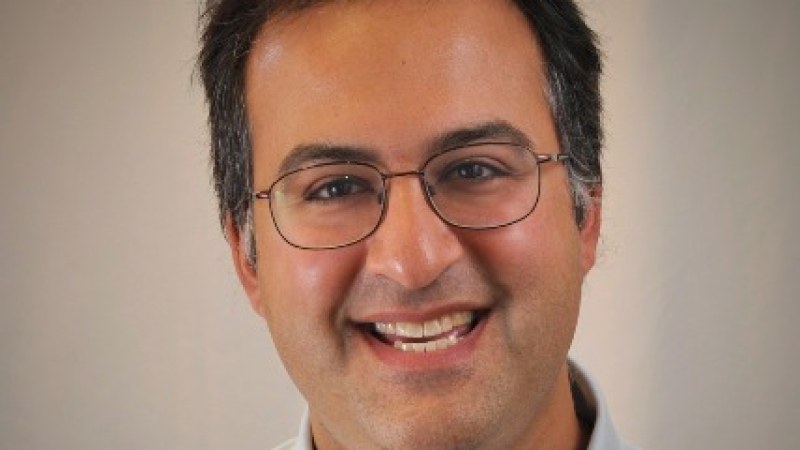
Ara Knaian
Ara Knaian is an MIT-trained electrical engineer and inventor on more than 36 U.S. patents who now runs Acceleron Fusion, a Cambridge company chasing energy from muon-catalyzed fusion - a route that runs closer to 1,000 degrees C instead of the 100-million-degree plasmas everyone else fights. Before fusion he co-founded the product-design firm NK Labs, architected Google's modular Project Ara phone, tuned the drive waveforms behind Amazon's Kindle, and built the Milli-Motein, a self-folding robot chain at MIT's Center for Bits and Atoms. Acceleron raised a $24M Series A led by Lowercarbon Capital and Collaborative Fund and logged over 100 hours of continuous fusion at the Paul Scherrer Institute in Switzerland.

Michael Alexander
Michael Alexander is the co-founder and CEO of Addis Energy, a Somerville, Massachusetts startup turning the Earth's crust into a chemical reactor to make clean ammonia. A chemical engineer who spent more than eight years refining oil at Shell and Marathon Petroleum, he discovered geologic hydrogen at Harvard Business School and teamed up with classmate Charlie Mitchell and MIT professors Iwnetim Abate and Yet-Ming Chiang to commercialize a process that stimulates ammonia production from iron-rich rock underground. In December 2025 Addis raised an oversubscribed $8.3M seed round, bringing total funding to $17.3M.

Acceleron Fusion, Inc.
Acceleron Fusion is a Cambridge, Massachusetts deep-tech company reviving muon-catalyzed fusion, a phenomenon first observed in the 1950s, as a path to abundant clean energy. Instead of confining a 100-million-degree plasma, Acceleron fires a beam of muons - subatomic particles roughly 200 times heavier than electrons - at highly compressed deuterium-tritium fuel, triggering fusion at temperatures closer to 500-1,000 C. Founded in 2023 by NK Labs veterans Ara Knaian and Seth Newburg and backed by a $24M Series A from Lowercarbon Capital and Collaborative Fund, the company is building two core technologies: a high-efficiency muon source and a high-density fusion cell, with the goal of a fusion power plant that beats natural gas on cost.

Tal Sholklapper
Tal Sholklapper is the CEO and co-founder of Voltaiq, the company that coined the term 'battery intelligence' and built the de facto standard software for making sense of battery data. A UC Berkeley-trained materials scientist who once finished an engineering PhD in two and a half years, he started Voltaiq in 2012 after years designing batteries and fuel cells convinced him the hardest part wasn't building cells - it was figuring out, fast, whether they were any good. Today his platform analyzes data from manufacturing and validation labs at Toyota, Mercedes-Benz, Meta, and Amazon.

Tim Heidel
Tim Heidel is the co-founder and CEO of VEIR, a Massachusetts startup building overhead superconducting transmission lines that can carry five to ten times the power of conventional lines on roughly the same footprint. An MIT-trained electrical engineer who ran the research behind MIT's Future of the Electric Grid study, then steered a portfolio of grid projects at ARPA-E and vetted climate bets at Bill Gates' Breakthrough Energy Ventures, Heidel concluded that the grid's biggest bottleneck was transmission itself - too slow, too costly, too ugly to permit. VEIR is his answer: black pipes carrying superconducting tape bathed in liquid nitrogen at -321F, aimed squarely at AI data centers, utilities and renewable developers.
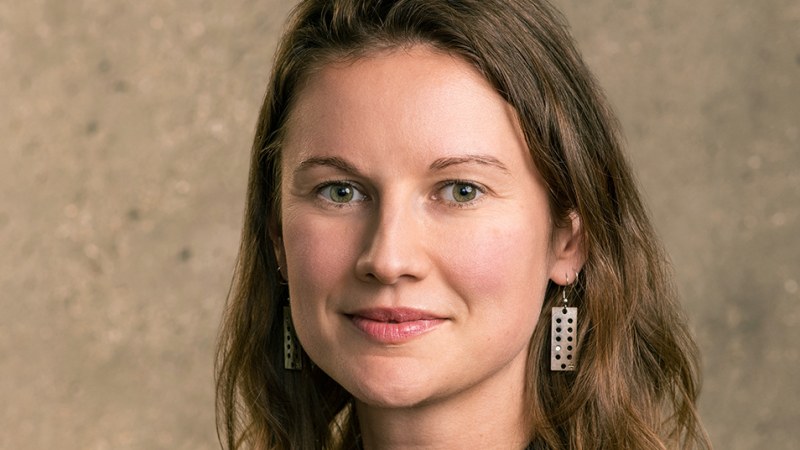
Rachel Slaybaugh
Rachel Slaybaugh is a General Partner at DCVC, the deep tech venture firm, where she leads climate, sustainability, and energy investments. A nuclear engineer by training - she once operated a reactor as an undergrad at Penn State - she spent eight years as a tenured Associate Professor at UC Berkeley, ran the Cyclotron Road accelerator division at Lawrence Berkeley National Laboratory, and served as a Program Director at the U.S. Department of Energy's ARPA-E, where she created the nuclear fission program and helped fund over 30 companies. She co-founded the Good Energy Collective and the Nuclear Innovation Bootcamp, and now backs companies like Fervo Energy, Brimstone, Radiant Industries, Zap Energy, Fourth Power, and Equilibrium Energy at DCVC.