In 1940, the U.S. Army wanted a small reconnaissance vehicle. The specifications described something that could carry men and equipment over awkward ground without becoming another logistical headache. American Bantam, Willys-Overland and Ford brought competing answers. They also brought a problem: every prototype was heavier than the Army wanted.
- A job before a lifestyle. An Army requirement.
- Escape, with room for groceries. Cherokee broadened demand.
- Affection has a budget. Capability must earn its price.
The Army revised its weight limit. Willys kept revising the vehicle. By July 1941, it had a contract for 16,000 MBs at $738.74 apiece. That price belongs to a wartime procurement contract, not a modern showroom comparison. The useful detail is the compromise: the machine became valuable because testing improved the brief. Obedience alone would not have built it.
Jeep’s origin therefore resists the tidy founder story. There was no solitary visionary in a garage. There were rival manufacturers, government requirements and engineers working against physical limits. Willys carried the name into civilian life with the CJ-2A in 1945. A tool for soldiers became a tool for farmers. Eventually, the workhorse acquired weekend plans.
02The $250 million permission slip
The consequential leap came when Jeep learned to carry a family without asking the family to live like an expedition. After the 1979 energy crisis, American Motors pursued a smaller wagon. Its market research pointed toward compact SUVs. According to Jeep’s history, AMC put $250 million into designing and producing the XJ Cherokee and related Wagoneer.
The Cherokee arrived in 1984. Compact dimensions and a lighter structure offered a different bargain: useful space and four-wheel-drive capability without the bulk of the older wagon. Jeep was expanding the number of days on which its product made sense. The school run and the muddy campsite could now belong to the same purchase.
The Grand Cherokee pushed further toward comfort. At its Detroit introduction in January 1992, the SUV famously came through the convention center’s glass. Subtle? Hardly. Effective theater? Certainly. The 1993 model’s proposition was more durable than its entrance: a roomier, more comfortable vehicle that still had a reason to wear the Jeep badge.
03The hardware earns the daydream
Today, Jeep is a Stellantis automotive brand selling SUVs and the Gladiator pickup through dealers around the world. Its customers range from people who actually pick routes over rocks to families who want room, winter traction and an outdoorsy identity. Those buyers share a badge, but they do not need the same machine.
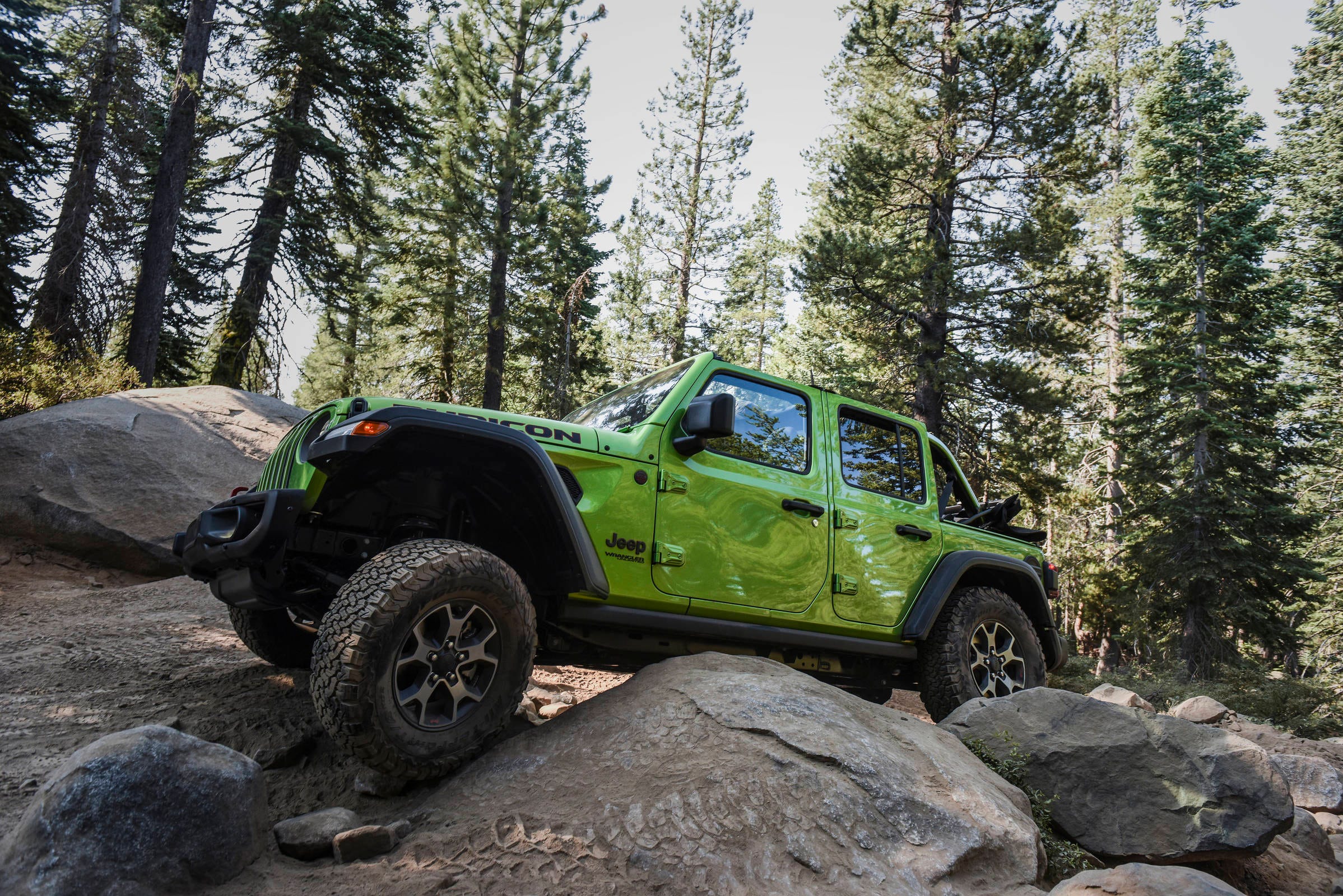
The Wrangler is the clearest expression of the specialist end: an upright shape, removable roof and doors, and hardware built around rough terrain. The Gladiator adds a pickup bed. Compass and Cherokee address smaller SUV needs; Grand Cherokee offers two- and three-row choices; Grand Wagoneer serves larger households. Electric models include Wagoneer S, while Europe also gets the smaller Avenger.
Jeep’s Trail Rated badge makes its engineering argument in five parts: traction, water fording, maneuverability, articulation and ground clearance. Think of articulation as the suspension’s ability to keep wheels useful when the ground stops being level. Equipment and limits vary by model. A familiar grille cannot tell you which differential, tire or transfer case you are buying.
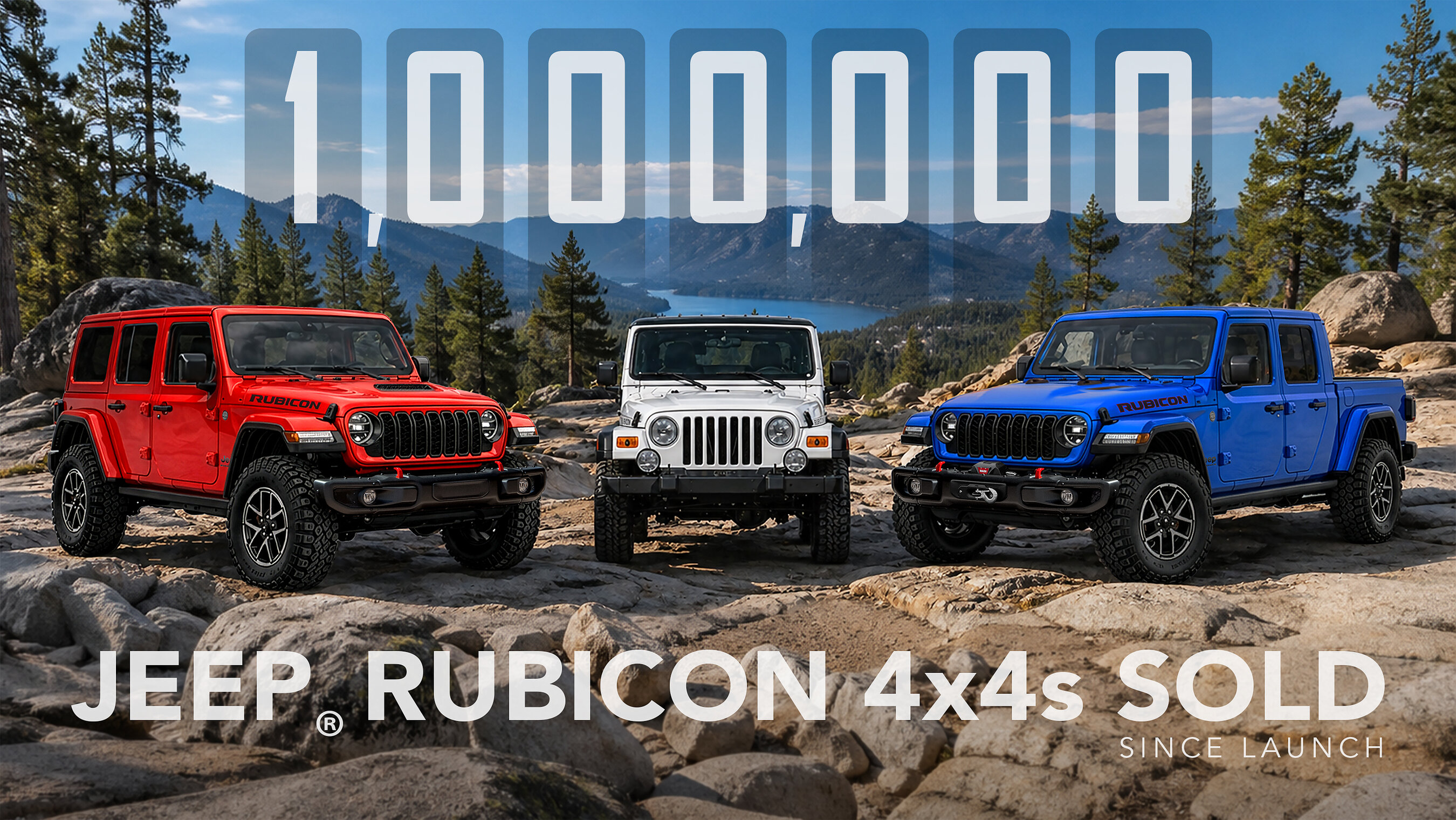
The Rubicon package illustrates the value of asking enthusiasts precise questions. Engineers heard demand for greater capability, built prototypes and won approval after executives saw the difference. The 2003 model launched at $24,995. By April 2026, Jeep reported one million Wrangler and Gladiator Rubicons sold worldwide. A specialist requirement had become a substantial business.
04A rubber duck does some of the selling
Then there is the accessory no product planner needed to engineer. Canadian Jeep owner Allison Parliament left a rubber duck on another Wrangler, added a friendly message and shared a photograph. Other owners copied her. Ducking spread across borders, turning a parked car into an invitation to a tiny social exchange.
In a company blog account, Parliament recalled writing “Cool Jeep” on that first duck. The scale matters less than the mechanism. Recognition was cheap, participation was easy, and the car made strangers legible to one another. Jeep could support a ritual that owners already enjoyed. Trying to manufacture the same affection by decree would be a tougher assignment.
The company supplies more structured occasions through its Badge of Honor trail app and its association with Jeep Jamboree events. Mopar parts and accessories offer ways to personalize the vehicle. Dealers sell and service it; apparel extends the identity beyond it. The business earns from vehicles and related products while owners provide much of the conversation.
“Cool Jeep”
Allison Parliament’s remembered message on that first duck
05The monthly payment gets a vote
That affection has limits. Jeep recorded 587,725 U.S. sales in 2024 and 593,401 in 2025, a gain of roughly one percent. The broader Stellantis business struggled in 2024 with expensive vehicles accumulating on dealer lots. Jeep lowered 2025 Wagoneer-family prices. An adventure story still has to survive a household budget.
The returning 2026 Cherokee offers a revealing answer: a conventional hybrid that requires no plug, with a published launch starting price of $36,995 including destination and an estimated 37 combined mpg. Those are launch figures, not a dealer quote. The pitch makes everyday running costs part of the adventure proposition. It also puts Jeep alongside hybrid SUVs from Subaru, Toyota and Honda.
For demanding trails, buyers can compare Wrangler with Ford Bronco or Toyota’s off-road offerings. For a commute, compare comfort, equipment and total ownership cost before paying for capability you may rarely use. Battery-electric models add a separate question: whether charging fits your actual routes. Jeep’s range contains several answers because the customers’ problems differ.
06Keep the promise. Rework the machine.
The useful lesson is to preserve a recognizable purpose while changing the engineering and price around it. A maker can copy the habit: watch customers use the product, identify the expensive workaround, then make that job easier. Jeep’s history supplies both halves of the bargain: recognizable escape and repeated accommodation to ordinary life.
It also supplies a warning against reading loyalty as unlimited willingness to pay. Branden Coté became Jeep CEO in August 2026. His assignment inherits an old question: how much everyday usefulness must a vehicle deliver before its promise of somewhere else becomes worth buying? The duck on the dashboard helps. The monthly payment still clears the bank. Customers experience both together.