A hunting shack is a surprisingly good place to begin a manufacturing story. To reach one in northern Minnesota, you first had to negotiate the snow. The men behind Polaris repaired farm machinery. They understood engines, metal and the inconvenience of a landscape that refused to cooperate. A machine that could cross that landscape had a customer before it had a category.
- Polaris builds machines for outdoor work and recreation, from RANGER utility vehicles to Bennington boats.
- Dealers, accessories and rentals extend the business beyond the factory.
- The company has paid dearly for expansion and safety failures. Its latest chapter is about focus.
A hunting shack at the beginning
Polaris dates its business to 1954. Its snowmobile history places the first machine in late 1955. The founders were Edgar Hetteen, his brother Allan and David Johnson. Their advantage was proximity: they knew the people, the winter and the workshop. Snow was an everyday transportation problem with a long annual appointment.
To demonstrate that these contraptions could do useful work, Edgar and three companions undertook a 1,200-mile Alaskan journey. They carried 900 pounds of provisions, encountered temperatures of minus 40 degrees and finished in 21 days. Think of it as a product demonstration with unusually poor catering. The point was durability. A prospective customer could picture the machine bringing someone home.
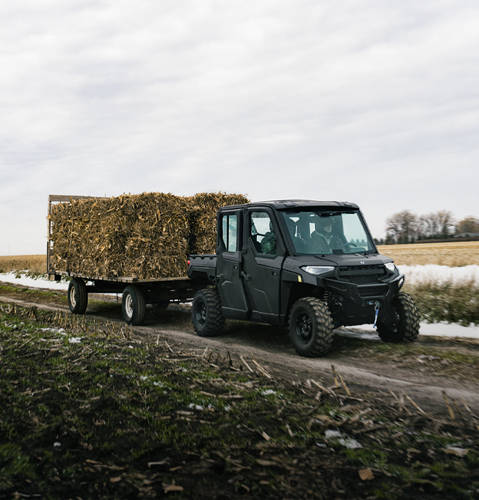
One customer needs hay. Another needs Saturday.
That distinction between a vehicle and its task still explains the company. A RANGER carries tools, tows and works around property. A RZR is a sport side-by-side for recreational riding. Sportsman supplies the ATV branch; GENERAL combines work and recreation. Polaris XPEDITION addresses the adventure customer carrying people and gear farther into the outdoors. The August 2026 announcement of the 2027 range put a 275-horsepower RZR Pro R Boost alongside a new Sportsman 500 starting at $6,999 US MSRP, before fees and taxes.
The catalog then wanders onto water through Bennington and Godfrey pontoons and Hurricane deck boats. Slingshot, the three-wheel roadster, supplies an entirely different sort of outing. Commercial and defense vehicles serve professional operators. These customers share an interest in movement, but their purchasing tests differ. A farmer needs productive hours. A recreational buyer needs a reason to surrender a weekend and a substantial sum.
Competitors include BRP’s Can-Am, Honda, Kawasaki, Yamaha and CFMoto in overlapping off-road markets. Polaris’s appeal rests on the combination of specialized machines, equipment choices and local support. A nearby dealer matters when a vehicle is a working tool. So does the ability to find a replacement part instead of improvising a repair.
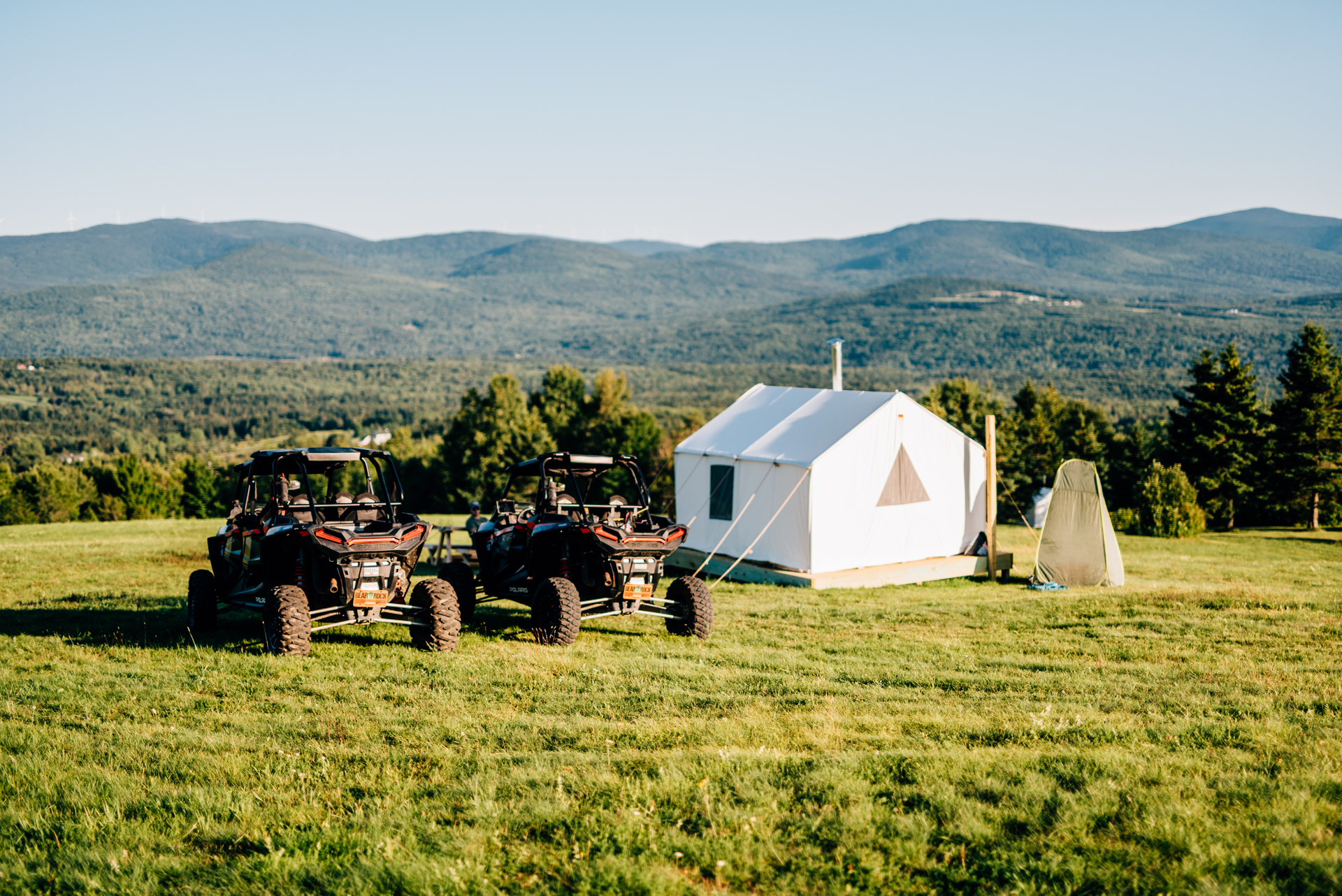
The business earns vehicle revenue largely through dealers and distributors, with parts, garments and accessories adding further purchases. Polaris Adventures opens another door: guided and self-guided experiences through a network advertising more than 230 outfitters nationwide. You can rent the afternoon before buying the machine, the trailer and the storage problem.
The quiet machine still needs a socket
In 2020, Polaris signed a ten-year exclusive partnership with Zero Motorcycles to develop electric off-road vehicles and snowmobiles. The first vehicle from that arrangement, the RANGER XP Kinetic, was unveiled in December 2021. Polaris brought vehicle knowledge and manufacturing scale; Zero brought electric powertrain expertise. The arrangement offers a useful alternative to building every capability internally.
RANGER XP Kinetic motor output
For property work, quieter operation and fewer engine-maintenance tasks have practical value. But an electric utility vehicle has to fit the day’s work and the available charging. Its capabilities cannot answer those questions for the buyer. Anyone considering one should compare routes, loads and charging opportunities before comparing paint. That is also the useful lesson for product builders: make the technology answer a concrete inconvenience.
The price of going everywhere
Expansion brought a different engineering problem: how to assemble a company. In 2018, Polaris announced its Boat Holdings acquisition at approximately $805 million in net present value. That bought established brands and a marine business. A year earlier, it had announced the wind-down of Victory Motorcycles, later reporting $77 million in 2017 pretax wind-down costs. A product can have devoted riders and still struggle to justify its investment.
The choices continued. On February 2, 2026, Polaris completed the separation of Indian Motorcycle and sold a majority stake to Carolwood LP. Indian became a standalone business. Chief executive Mike Speetzen described the move in terms of concentrating on core growth businesses. The portfolio on an old Polaris brochure is therefore an unreliable guide to today’s company.
“Separating Indian Motorcycle enables Polaris to sharpen our strategic and operating focus on our core growth businesses”
Mike Speetzen · February 2026
The expensive part of a promise
Polaris’s record also contains a serious failure in safety reporting. In 2018, it agreed to a $27.25 million civil penalty settlement over CPSC staff charges that it failed to report defects in RZR and RANGER vehicles promptly. The settlement was not an admission of those charges. Polaris agreed to maintain an enhanced compliance program. Reliability includes the speed at which a manufacturer responds when something goes wrong.
Distribution has its own discipline. In 2024, Polaris reduced shipments to manage dealer inventory amid subdued retail demand; annual sales fell 20 percent. Sending another machine to a dealer does not create another rider. Reducing the backlog can hurt reported sales while helping the system function.
+9% year over year. Sales measure shipments and revenue, not rider enthusiasm.
Second-quarter 2026 sales reached $2.023 billion, with $106.4 million in reported net income attributable to Polaris. Results benefited from $74 million in tariff refunds, a reason to distinguish operating progress from a helpful financial event. The company’s recurring challenge remains familiar: build something people can use, keep the channel healthy and support the machine after it leaves. The road ending creates an opportunity. It also leaves the manufacturer responsible for the way back.
Pick your next ride
Explore the vehicle lineup, find a rental adventure, or follow the company’s news.
Watch: RANGER XP Kinetic demonstration · Vehicle orientation · An engineer compares electric and gas Rangers.