Winnebago Industries makes escape on an assembly line. Steel, fiberglass, upholstery, wiring and plumbing arrive at factories in Iowa and Indiana; what rolls out is the promise of waking beside a mountain instead of an alarm clock. The company has been selling versions of that promise since 1958, when 17 employees in Forest City, Iowa, produced a 15-foot trailer priced at $895. Its founders were not chasing a lifestyle trend. John K. Hanson and local business leaders were trying to bring jobs to a town caught in an economic slump.
The useful irony remains. Behind every carefree campground photograph sits an exacting industrial business: long supplier lists, skilled labor, dealer inventories, warranty reserves and customers whose willingness to buy can change with interest rates, fuel prices and confidence. Winnebago became one of the most recognizable names in American travel by making a complicated machine feel like a simple invitation - go somewhere.
But the Winnebago of 2026 is larger than the word most people picture. The parent company owns five main consumer brands: Winnebago, Grand Design, Newmar, Barletta and Chris-Craft. Together they cover motorhomes, camper vans, travel trailers, fifth wheels, pontoons and premium powerboats. Winnebago Specialty Vehicles turns mobile platforms into clinics and outreach units. Lithionics makes lithium battery systems for life away from an electrical hookup.
The name became a category. The company became a portfolio.
Winnebago’s first motorhome, the F17, debuted in 1967. Assembly-line production helped put it on the market at roughly half the prevailing price, according to the company’s history. Three years later, Winnebago listed on the New York Stock Exchange under WGO. By 1986 it had produced 200,000 units. The brand became so familiar that people used “Winnebago” as a casual synonym for a motorhome, a linguistic compliment that can also become a strategic trap. When everyone knows what you made yesterday, it takes work to explain what you are building tomorrow.
That explanation accelerated after Michael Happe became chief executive in 2016. Winnebago bought Grand Design that year for $500 million, deepening its position in towable RVs. It acquired Chris-Craft in 2018, Newmar in 2019, Barletta in 2021 and Lithionics in 2023. The sequence did more than add products. It assembled different versions of outdoor comfort, from a handcrafted powerboat to a luxury diesel coach to a battery bank that can keep the air conditioning running away from the grid.
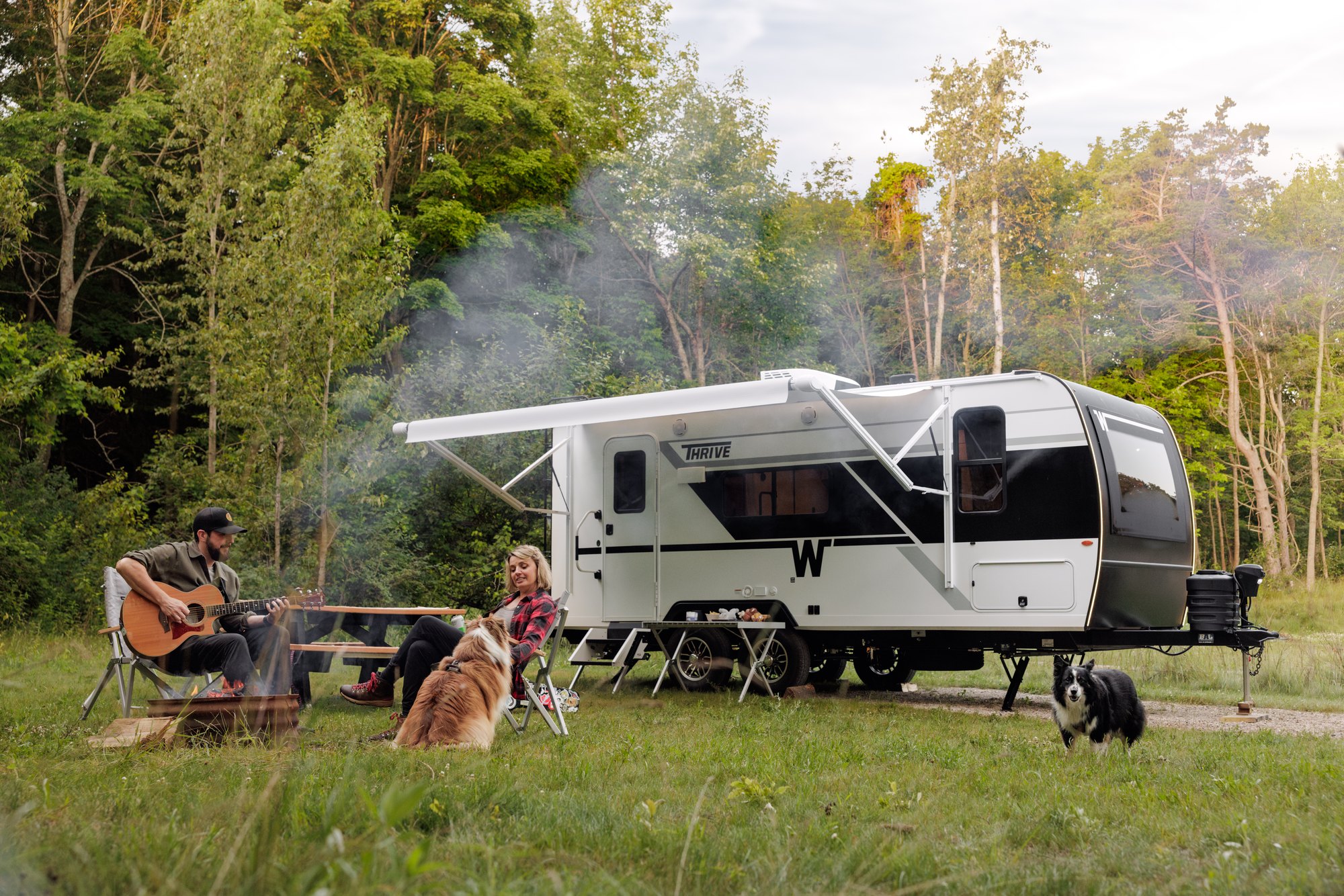
Two customers stand between the factory and the campfire
The company’s immediate customers are mostly independent dealers. They order finished RVs and boats, finance inventory, maintain showrooms and become the local face of service. The eventual users are families, retirees, adventure travelers, boaters and people treating a vehicle as a flexible second home. Commercial buyers add another group: hospitals, nonprofits and public agencies that need a mobile medical, classroom or community-outreach platform.
This two-customer model shapes the entire business. Winnebago must build products people want while giving dealers confidence that those products will move. Ship too aggressively and dealer lots fill with expensive metal that requires discounts. Pull back too far and a popular model is missing just as demand returns. Management’s repeated phrase is “aligning production with retail,” dry language for a high-stakes balancing act.
The challenge was visible in the quarter ended May 30, 2026. Total revenue fell 9.9 percent from a year earlier to $698.7 million. Yet the segments moved in different directions. Motorhome revenue rose 10.1 percent, helped by higher unit volume and new products. Towable revenue fell 26.1 percent as demand remained muted, especially at higher price points. Marine revenue declined 8.3 percent. Barletta still expanded its share of the U.S. aluminum pontoon market to 9.3 percent on a trailing-12-month basis through April.
One quarter, three different roads
What Winnebago is really selling
An RV solves practical problems: shelter, transport, storage, cooking and power in one package. A pontoon turns a patch of water into a social room. A specialty vehicle carries a service to people who cannot easily reach it. Those jobs sound straightforward until they share a chassis with dozens of systems and must survive vibration, weather and years of family improvisation.
Winnebago’s differentiation begins with brands that already mean something to specific buyers. Grand Design built loyalty around product quality and dealer support. Newmar occupies the detailed, higher-end coach market. Chris-Craft trades on more than 150 years of marine design. Barletta focuses on comfort and social boating. The parent does not need every brand to sound alike. Its opportunity is to let them remain distinctive while sharing expensive capabilities underneath: purchasing, materials knowledge, connected systems, energy management and disciplined manufacturing.
That arrangement also creates a useful laboratory. A battery-management lesson from a boat can inform an RV. A material that saves weight in a towable can matter in a motorhome. A service practice that earns dealer confidence at Grand Design can sharpen expectations elsewhere. The transfer is not automatic, and forcing common parts onto unlike products can destroy the very differences an acquisition was meant to preserve. The advantage comes from choosing the invisible layers carefully. Customers may never know which engineering group tested a component or which purchasing team negotiated it. They will know whether the lights stay on, whether a cabinet remains quiet on a rough road and whether someone answers when the trip goes wrong.
The Advanced Technology Group, formed in 2019, works across alternative energy, data and connectivity, materials science and autonomy. Lithionics gives the company direct expertise in lithium iron phosphate batteries and battery management. Winnebago Connect moves RV controls into a unified interface. These are not decorative gadgets. Owners increasingly expect a rolling house to manage power, climate, tanks and connectivity without requiring an engineering degree.
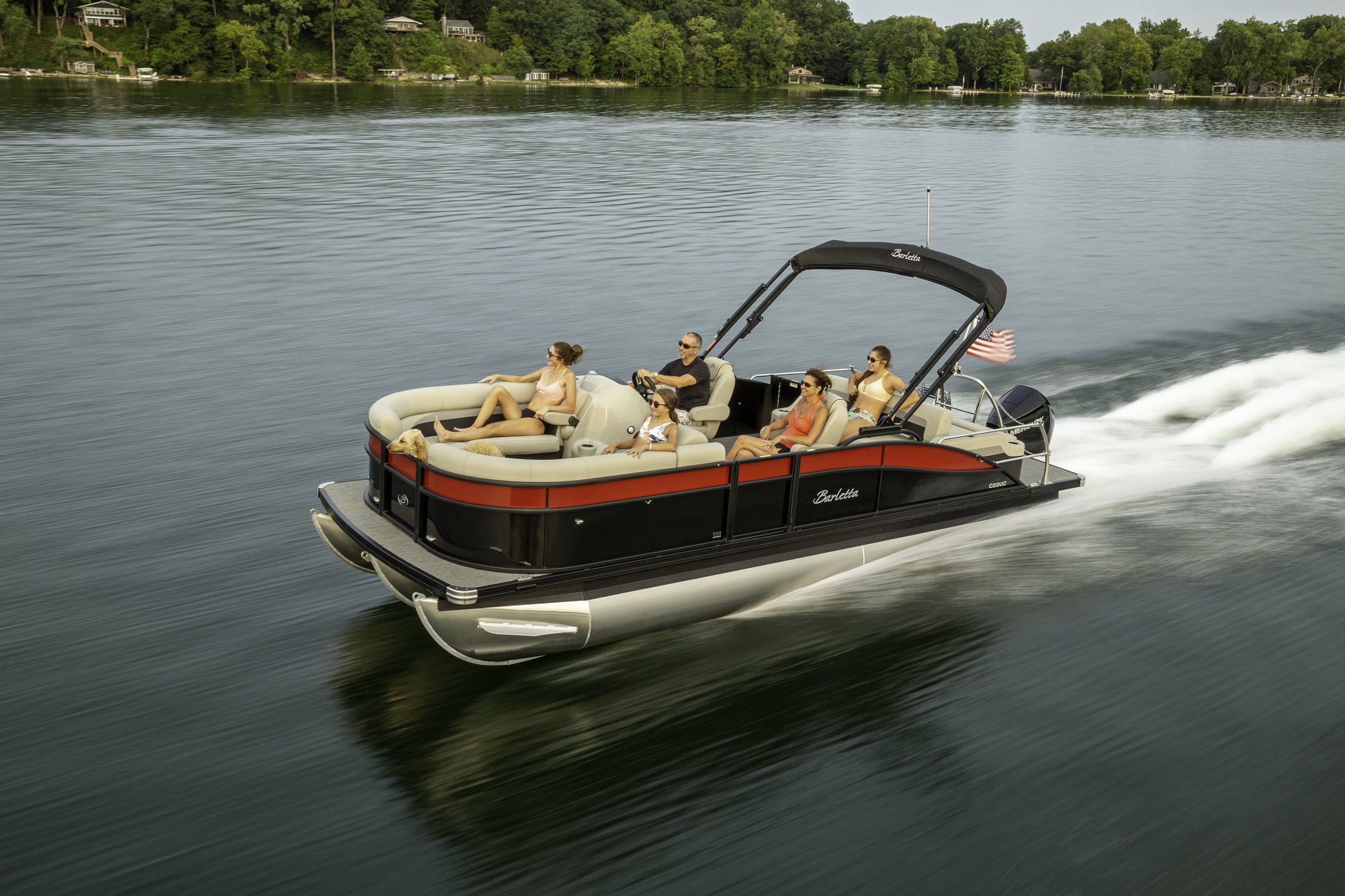
A premium position in an unforgiving cycle
Winnebago competes most directly with THOR Industries and Forest River in RVs, then with a scattered set of premium coach, towable, pontoon and powerboat makers in each niche. Scale helps with sourcing and investment, but buyers do not choose an RV as if comparing industrial components. Floor plans, dealer treatment, service history, storage details and the emotional fit of a brand all matter. One infuriating cabinet latch can become the story an owner tells for years.
The company’s premium position creates room for better materials and features, but it also exposes an affordability problem. RVs and boats are discretionary purchases often financed at retail. Winnebago has responded with more accessible towables such as Access and Thrive, while continuing to invest in Grand Design motorhomes, compact Class C models and the ARKA all-season adventure truck. The portfolio spans entry points, but it does not escape the economic cycle.
Nor should sustainability be confused with a finished victory. Large vehicles and powerboats consume materials and fuel. Winnebago’s stated work includes lower-impact materials, electric concepts, solar installations, waste diversion, water reduction and more capable off-grid energy systems. Its 2025 responsibility report described a Product Sustainability Steering Committee and a goal to reduce freshwater consumption by 30 percent. The honest market position is transitional: a manufacturer trying to make resource-intensive recreation more efficient while customers still expect range, comfort and reliability.
The next campsite
The strongest version of Winnebago Industries is neither a roll-up nor a nostalgia machine. It is a portfolio that protects the reasons people care about each brand and shares the engineering they should never have to notice. Progressive Insurance joined Winnebago in July 2026 on an ownership-experience collaboration. Partnerships with Leave No Trace, the Minnesota Twins and Kampgrounds of America extend the company from the factory into stewardship, culture and community.
The hardest work is less photogenic: stabilizing quality, matching production to real retail demand, supporting dealers and making connected technology dependable. Fiscal 2026 guidance, updated in June, called for $2.65 billion to $2.75 billion in revenue, below the range issued the previous fall. Management described a cautious consumer and continued competitive pressure. The motorhome improvement offers evidence that new products can work, but not permission to ignore the cycle.
Winnebago’s original breakthrough was industrial: use production methods to make a motorhome more attainable. Its modern task is architectural. It must coordinate brands, dealers, factories, software and energy systems so that the complexity collapses into a good weekend. Sixty-eight years after the first trailer left Forest City, the product remains a machine for changing the view outside the window.