Ten thousand bottles is an awkward quantity of optimism. It is enough to fill orders, enough to occupy a warehouse, and quite enough to make a founder wonder whether he has confused his own enthusiasm with a market. When Jared Pobre prepared to launch Caldera + Lab, 10,000 units was the smallest production run he could order. He was entering the men’s skincare business with a serum called The Good. The name was reassuring. The inventory required customers.
Pobre had already built a career in advertising technology. He knew how businesses found audiences online. Now he was responsible for something with a formula, a bottle and a shipping journey. A convincing advertisement could introduce the product. Everything after that depended on what arrived at someone’s door.
By the end of the first year, he was ordering more. Customers were asking for other products, too. That was the encouraging part. The years that followed would also contain agency disappointments, packaging mistakes and, in his later telling, a stolen truck of inventory before Black Friday. Entrepreneurship has a way of making a second career feel remarkably like a first.
The advertising years
Before the bottles, there were leads. Pobre studied business at the University of Southern California, graduating in 1999, then found his way into the early internet industry. His jobs included media buying at Autobytel and business development at Local.com. These were practical introductions to the machinery behind a click: who wanted a customer, where that customer could be found, and what the introduction was worth.
In 2001 he started the predecessor business to Future Ads. The timing put him in the middle of the dot-com collapse. In his account of those early days, his fledgling operation depended on WorldCom Wireless, and the customer’s bankruptcy left him with unpaid revenue and bills still due. Diversification became a lesson with an invoice attached.
Future Ads developed around advertising and casual gaming. Its 2009 American Business Awards entry described an ad-supported model that let people play games for free, supported by the advertisers trying to reach them. The entry put revenue at $4.2 million in 2007 and $15.8 million in 2008. Those figures belong to that earlier business, at that particular moment. They show the scale of the operating experience he carried into his next venture.
Recognition followed. In 2009 he received an Ernst & Young Entrepreneur of the Year award in the technology category. A 2014 merger announcement projected approximately $90 million in annual revenue for Future Ads and named Pobre as the intended chairman of the combined company. The business combination became Propel Media in 2015.
It was a substantial change in responsibility. Building a company and chairing a combined enterprise involve different daily rhythms. Pobre had also started a family with Stacy Keibler. He took the opportunity to spend more time away from day-to-day operations, with Wyoming increasingly part of the picture.
- 2001Starts the business that becomes Future Ads
- 2015Becomes chairman of Propel Media
- 2017Begins Caldera + Lab product development
- 2019Launches with a single serum: The Good
- 2024Raises a $6 million Series A
- 2026Expands the business into Nordstrom
Wyoming gets into the bottle
Pobre and Keibler were splitting their time between Los Angeles and Jackson Hole when the idea took shape. He tried products from his wife’s collection and began asking why the independent beauty brands attracting her attention had so few counterparts aimed at men. The observation was domestic and specific. He wanted something he could buy for himself.
There was a second question behind it: did he want to build again? Time in the mountains offered skiing, biking and a life outside the office. His public biography describes an avid skier and biker. Yet the leisure experiment did not entirely satisfy his interest in making products and running a team. A business idea gave that interest somewhere to go.
Keibler became his co-founder. Wyoming became part of the product’s identity. During an early hike, a botanist introduced them to fireweed; their research turned toward plants native to the Teton region. Even the company’s name carried the landscape with it. A caldera is a depression left by a volcanic eruption, a reference connected to nearby Yellowstone.
Development began in 2017. Pobre assembled consultants, sought out specialists and worked with formulators on an original product. The process took two years. Scent, texture, ingredients and packaging all had to come together before the January 2019 launch.
That is a long interval for someone accustomed to the measurable activity of advertising. It also clarifies the bet. One product gave the company a definite proposition and a limited opening range. It concentrated the risk, too: there would be little else to sell if customers shrugged. Calling it The Good introduced a certain obligation to the contents.
“Whether it’s product development, marketing, or hiring, you’ve got to do the hard work.”
Jared Pobre
The paperwork is part of the product
The early packaging received considerable attention. The team chose light-blocking glass and a custom dropper with a wooden exterior. Pobre described wanting an object that worked in the hand and looked coherent on a shelf. In a direct-to-consumer business, the package is one of the few parts of the company the customer actually gets to touch.
His later accounts include a less romantic packaging lesson: beautiful glass could also be impractical. That tension runs through physical products. A designer can make a bottle look splendid while an operations team worries about its survival. The customer reasonably expects both departments to have won the argument.
Caldera + Lab also pursued independent certifications. Pobre said its B Corp process took 20 months: 12 preparing the application and eight after submission. He estimated roughly $50,000 in associated expenses beyond the certification fee, including legal work and labor. Ethical ambitions had acquired a filing system.
The detail matters because it makes the founder’s choices tangible. A claim about responsible business can fit on a package. Documenting practices takes staff time, agreements and records. For a small company, those hours compete with every other task on the list. Pobre committed resources to that work while the brand was still young.
There were early signs of recognition for the product itself. In 2019, The Good won the men’s category at the ICMAD Indie Beauty Innovators Awards. An award could help introduce a newcomer. Keeping a newcomer in business would still require people to finish a bottle and want another.
The second order
Caldera + Lab’s early customers gave the company a useful kind of direction. They asked for a cleanser and a moisturizer. The range grew beyond the original serum, with names including The Clean Slate and The Base Layer. Requests from people already buying offered a more grounded brief than a list of categories the company might someday enter.
Getting to those customers required another education. Pobre’s advertising background had been in business-to-business markets. Selling a consumer product introduced different creative demands, different explanations and a new purchasing decision. Knowledge of the advertising machinery did not automatically supply the words someone needed to hear.
Early agency relationships disappointed him. Eventually he brought marketing in-house. That changed where the company accumulated experience: the people testing messages and learning the audience were now part of the business. In later conversations, he has emphasized developing capable employees within the brand rather than relying entirely on recruits from established names.
There was already a distributed way of working. In 2020, Pobre and Keibler described a team operating remotely from different parts of the country, including important hires who integrated without meeting in person. The company’s connection to Jackson Hole did not require everyone to work within sight of the same mountains.
Partnerships widened the circle. Former NFL player Tony Gonzalez joined as a brand ambassador in 2021. Actor Frank Grillo also became part of its network of customers and collaborators. These relationships put the products into conversations outside conventional beauty circles, an important consideration for a brand selling to men who might never browse those circles themselves.
The company’s customer descriptions have consistently skewed toward older men. That shaped the opportunity: a business could develop around people already established in their habits, provided it gave them a reason to adopt another one. An initial order invited the company into the bathroom. A repeat order allowed it to stay.
A different kind of shelf life
In October 2024, Caldera + Lab raised $6 million from HIPstr, the early-stage arm of HighPost Capital. It was the company’s first outside capital after bootstrapping. Pobre set out practical uses for the money: retail expansion, hiring and product development. Financing would support a business that had already spent years finding its customers.
The next stage also involved reconsidering the presentation. Pobre hired Jane Smith Agency for a 2025 refresh, acknowledging that the original name, logo and packaging had come together without the coherence he now wanted. Starting a company had not made every early decision permanent. The Great and The Hydro Layer arrived alongside the new look.
His own standing in the industry was changing. He was nominated in the Entrepreneur category of the 2025 Beacon Awards and appeared on the program for BITE in New York, discussing beauty marketing alongside other brand executives. The former ad-tech founder now had operating experience that beauty colleagues wanted to hear about.
By 2026, Nordstrom had become a new retail partner. A counter adds people and circumstances a landing page cannot reproduce: someone explaining a product, someone picking it up, someone making a purchase without first encountering a social advertisement. It gives Pobre another version of the original problem of finding an audience.
October 2024
Discussed October 2026
The funding is a completed round. The revenue figure is a management forecast, not a reported full-year result.
In October 2026, Pobre said the company expected more than $60 million in revenue for the year while remaining profitable. He also spoke about the possibility of building a billion-dollar business. The first figure was an outlook; the second an ambition. Neither removes the ordinary obligations of the next order.
Those obligations give his career its continuity. Advertising introduced him to the economics of attention. Caldera + Lab added the economics of an object someone keeps beside a sink. Years after that first batch, the work still comes back to the bottle: make it, deliver it, and give the person who bought it a reason to return.
Keep the conversation going
The company, the career and the longer conversations.
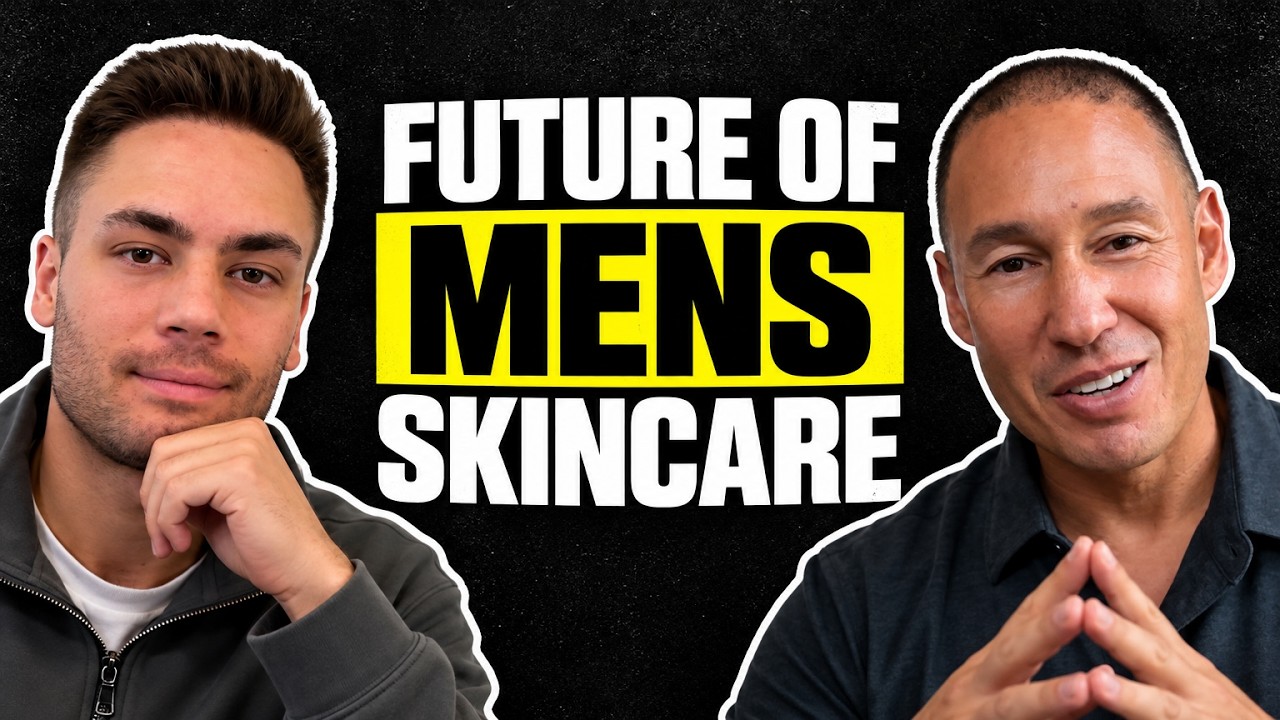
Explore Caldera + Lab Website ↗Jared Pobre’s professional updates LinkedIn ↗Jared Pobre on Instagram Instagram ↗The path from Future Ads to Caldera + Lab Starting Small · Video ↗Packaging, inventory and the next chapter Shelf Space · October 2026 ↗Inside the funding and brand refresh Beauty Independent ↗Building the brand and its distribution Fitt Insider · Interview ↗