Before James Walter and Will Hickey shared the top job at a publicly traded oil company, they shared a neighborhood. They grew up a few houses apart on Colgate Avenue in Dallas. When they started an energy business in 2015, the street supplied its name. Corporate branding, for once, required neither a consultant nor a mysterious arrangement of vowels.
That small detail is a useful place to begin with Walter. His career has taken him through consulting, private equity and multibillion-dollar transactions. Yet the business he helped build keeps returning to proximity: a familiar partner, a team based near its wells, and a concentrated position in the Delaware Basin of West Texas and southeastern New Mexico. The map has expanded. The preference for knowing it closely has endured.
Today, Walter is founder and co-chief executive officer of Permian Resources, alongside Hickey. The title preserves an arrangement they established at Colgate. There are two people at the top, and a history between them that predates the company by considerably more than a financing round.
Two desks, no acreage
Walter’s route into the oil business began with evaluating other people’s assets. At the University of Texas at Austin, he earned two degrees: a bachelor of arts through the Plan II Honors Program and a bachelor of business administration in finance. He then worked at Boston Consulting Group, concentrating primarily on upstream assets for exploration and production companies.
Denham Capital came next. There, he evaluated and monitored oil and gas investments, with a focus on the Permian Basin. It was an apprenticeship in deciding where money should go, before he and Hickey had a company into which they could put it themselves.
The partners arrived at entrepreneurship with different professional preparation. Hickey had worked at Pioneer Natural Resources and EnCap Investments. His background included petroleum engineering; Walter’s included finance and consulting. Their biographies help explain the combination of field operations and investment judgment on which Colgate would depend. Neither set of skills could make a well pay on its own.
Looking back on the founding during the August 2026 earnings call, Walter recalled starting with “zero acres, zero production” and sharing a 200-square-foot office with Hickey. It is a particularly economical origin story for an acreage business. The first property they had to share was the room.
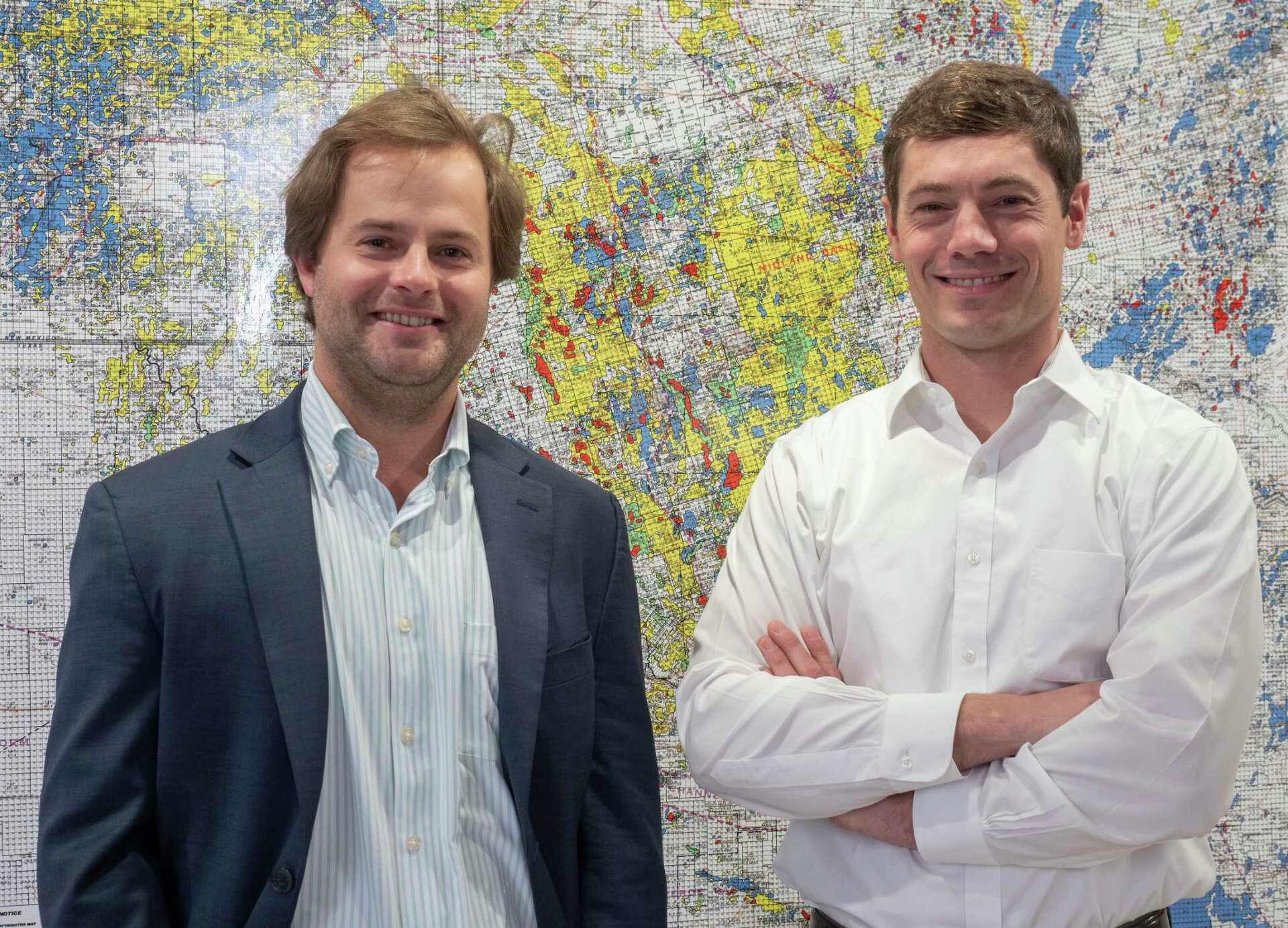
Buying room to work
By February 2016, Colgate had announced $75 million in equity commitments from lead investor Pearl Energy Investments, Natural Gas Partners through an affiliate, and management. The Midland company would acquire and develop oil and gas properties in the Permian Basin. A business that had begun without acreage now had backing to go looking.
There was relevant experience behind the proposal. Across their earlier roles, the founding team had participated in the development of hundreds of horizontal wells and more than $2.5 billion of acquisition and divestiture activity in the basin. Those were credentials brought to Colgate, rather than results achieved by the new company. The distinction matters: they were new founders, already acquainted with the work.
The early opportunity involved assembling neighboring parcels around Pecos. In horizontal drilling, the arrangement of a property can matter as much as its size. Adjacent acreage can make room for a longer lateral, the horizontal portion of a well. A scattered collection of attractive pieces presents a different operating problem from a block that fits together.
Colgate started its first rig in 2017. The progression from buying positions to drilling them gave the investment thesis an operating test. A spreadsheet could propose a return. Crews, equipment, rock and costs would decide how much of it survived contact with the field.
adjacent acres→Develop
the wells→Generate
cash returns
The operating logic, simplified. Each acquisition still has to justify its price.
A partnership that kept its second chair
By September 2022, Colgate’s record included five large acquisitions, more than 100 smaller bolt-on deals, about 40 trades and more than 10 divestitures. This was a company assembled through repeated decisions about what to buy, exchange and sell. The blockbuster transaction came after years of less conspicuous work.
There were financial habits worth carrying forward, too. Colgate had maintained leverage below one times during the 2020 downturn. It began a dividend program in December that year and implemented a $25 million quarterly dividend in the first quarter of 2022. Returning money to owners was already part of its private-company history.
In May 2022, Colgate and Centennial Resource Development announced a merger of equals with an approximately $7 billion combined enterprise value. The announcement valued Colgate at approximately $3.9 billion, including stock, cash and assumed net debt. These were transaction valuations, distinct from either founder’s personal wealth.
The combination closed on September 1. Centennial took the name Permian Resources, and Walter and Hickey became its co-CEOs. The public-company structure changed around a leadership partnership that was already seven years into running a business together. One conspicuous continuity sat right there in the job titles.
- 2015Walter and Hickey co-found Colgate Energy.
- 2016Colgate announces $75 million in equity commitments.
- 2022The Centennial combination creates Permian Resources.
- 2023The Earthstone acquisition closes on November 1.
At formation, employees owned more than 13 percent of the combined business. Walter spoke about shareholders as a significant owner himself. There is a practical consequence to that arrangement: decisions about spending and distributions affect the value held inside the company by the people making them.
“Maintaining low leverage and preserving liquidity are critical to running a successful business in a cyclical industry.”James Walter, September 2022
The phone call before the announcement
The Earthstone Energy acquisition offers a closer view of Walter doing the work behind a deal. On April 12, 2023, he contacted Earthstone chief executive Robert Anderson to express interest in exploring an acquisition. He followed the conversation by sending a draft confidentiality agreement. Before the transaction could become public, the companies needed a way to exchange private information.
They signed a mutual agreement on April 19. On April 25, Anderson and Walter met to discuss a possible combination. Their subjects included complementary Delaware Basin assets, access to capital and operating savings. Further management discussions followed the next day. At that stage, the companies were considering a stock-for-stock merger without an agreed exchange ratio.
The eventual announcement arrived in August: an all-stock transaction valued at about $4.5 billion, including Earthstone’s net debt. Each Earthstone share would receive 1.446 Permian Resources shares. The proposed combination brought the companies’ Permian acreage above 400,000 net acres and projected combined production to approximately 300,000 barrels of oil equivalent per day.
The acquisition closed on November 1, 2023. Viewed from the announcement, it was another large addition. Viewed from Walter’s April phone call, it was a sequence of conversations, information exchanges and negotiation. Both views are accurate. Only one makes the job sound like something a person actually does between meetings.
The small things inside the big numbers
Walter can be quite specific about the work beneath a production figure. On the August 2024 earnings call, he described improved drilling efficiency through cooperation between geology and drilling teams. Their task included placing laterals where the rock supported both productivity and faster drilling.
He also discussed changes to bottom-hole assemblies, including motors and bits. His explanation moved from team communication to equipment adjustments, then to the accumulation of improvements over months and quarters. The financial executive was discussing the mechanics behind the bill.
That detail gives substance to the company’s emphasis on operating efficiency. Acquiring acreage creates the opportunity to spend capital. Drilling it efficiently helps determine the return. Walter’s account connected those two parts of the business without requiring a fresh corporate slogan to hold them together.
By August 2026, Permian Resources reported roughly 190 transactions that year, adding approximately 54,000 net leasehold acres and 20,000 net royalty acres for $1.05 billion. The large company was still doing a great deal of small-company work: finding individual opportunities and putting them into an existing position.
August 5, 2026
One July purchase illustrates the geography. For an unadjusted $520 million, the company acquired approximately 20,500 net leasehold acres and 950 net royalty acres in Ward County, Texas. The land directly bordered its existing Southern Delaware position, offering opportunities for longer laterals and higher working interests. Being next door still had a financial use.
The basin, the board and the duck pond
Walter’s public responsibilities now extend beyond the company. In 2024, he joined the Federal Reserve Bank of Dallas’s El Paso Branch board. He also serves on the board of the Permian Strategic Partnership, a coalition of businesses working on the region’s long-term needs.
When Colgate joined that partnership, Walter tied its involvement to employees living and working in West Texas. He described community projects as relevant to the company’s own home. The point was concrete: the place containing the assets also contained the people expected to run them.
The latest chapter keeps testing the relationship between size and judgment. Permian Resources reported $751 million in adjusted free cash flow for the second quarter of 2026, a company-defined non-GAAP measure. Walter emphasized discipline in acquisitions even as oil prices and volatility complicated negotiations. Expansion still needed an acceptable purchase price.
In October, the community commitment acquired a more domestic setting: Midland’s duck pond. The city and Permian Resources announced an agreement to improve Wadley-Barron Park, with the company funding and coordinating work to help the pond retain water. Planned improvements included dredging, a liner, erosion repairs and new fountains.
“Creating a community where people want to live, work and raise families is critical to Midland’s future,” Walter said. After the acreage figures and acquisition terms, the pond offers a different measure of proximity. Employees need somewhere to spend a Saturday as well as somewhere to spend a working week.
The childhood street name disappeared from the public company’s sign in 2022. Much of its original arrangement survived: the co-founder beside him, the Midland base, the attention to adjoining acreage. Walter’s career has moved a long way from two people sharing an office. He continues to make consequential decisions about what belongs next door.