In the second quarter of 2026, Matador Resources reported an average realized natural gas price of negative 79 cents per thousand cubic feet. A company built to find something valuable was receiving a price below zero for part of what it produced. The wells had not forgotten how to work. The trouble was farther along the journey.
That awkward number is a useful introduction to Matador. You can understand the Dallas producer by studying its drilling. You understand it better by following what happens after the drilling stops.
- Join the land. Connected acreage creates room for longer horizontal wells.
- Build the connections. Processing, pipelines and water handling help production reach a market.
- Sell the service. The same infrastructure earns fees from neighboring producers.
The Monday after the exit
Joseph Foran began with $270,000 contributed by 17 friends and family members in 1983. That business became part of Matador Petroleum, which sold to Tom Brown in 2003 for roughly $388 million. According to Foran’s company biography, the sale happened on a Friday. He began the next company the following Monday. Apparently a weekend was sufficient decompression.
Today’s Matador Resources dates to July 2003, when Foran and Scott King founded it. Initial equity of $6 million was followed by another $46.8 million. The distinction matters: the charming kitchen-table origin belongs to a predecessor; the new venture began with experienced people and substantially more capital.
Its early unconventional focus included Louisiana gas. In 2008, Matador sold Haynesville rights on about 9,000 net acres for approximately $180 million while retaining participation interests. It subsequently put capital into the Eagle Ford and a more oil-oriented portfolio. The company was willing to change its commodity mix.
A map is also a machine
Matador now concentrates on the Delaware Basin, spanning southeast New Mexico and West Texas. Its principal targets include the Wolfcamp and Bone Spring formations. Geologists identify promising layers; engineers design wells; land specialists assemble the rights that let those plans become physical objects.
The acreage has a geometry problem. A long horizontal well needs somewhere to go. Neighboring parcels can make longer laterals and coordinated development possible. Matador calls its incremental acquisition method “brick-by-brick.” In October 2026, it said more than 400 transactions, including Ridge Runner, had helped assemble roughly 50,000 net Woodford acres at an average acquisition cost of $4,000 an acre.
Think of the map as part of the equipment. Buying the missing piece may improve how the surrounding pieces work. That is the logic; the resulting well economics still have to prove it.
The second business under the first
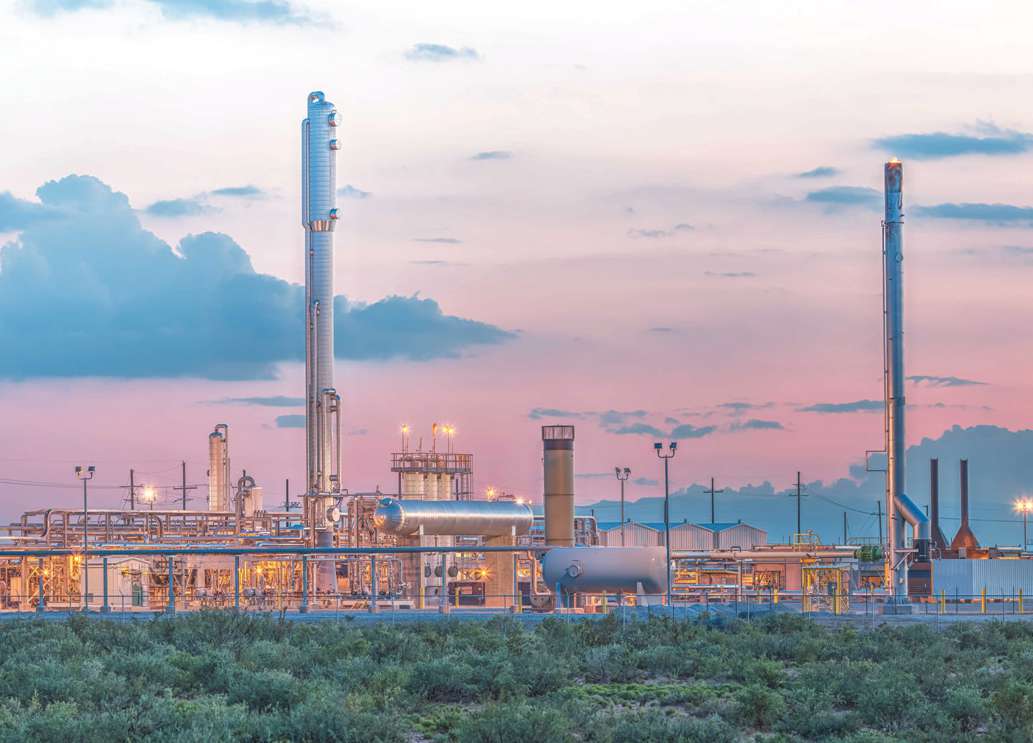
A shale well produces more than a barrel of oil. Gas needs gathering and processing. Produced water needs handling and disposal. These parallel chores explain why Matador owns infrastructure as well as underground interests.
In 2017, it formed San Mateo Midstream with Five Point. Matador retained 51%; Five Point took 49%. Five Point contributed $176.4 million initially, and Matador received a $171.5 million distribution. The arrangement brought in outside capital while preserving Matador’s control. Neighboring producers could purchase services from the same system.
“It takes a village to drill a well.”Matador’s careers page
The network kept growing. San Mateo’s July 2026 Cardinal acquisition cost $752 million, subject to adjustments, and lifted designed gas-processing capacity above one billion cubic feet daily. A new $650 million term loan helped finance it and comes due in July 2027. Infrastructure solves problems. It also sends invoices.
Transport
Process
Dispose
The buyer gets a barrel
Matador’s customers are businesses buying hydrocarbons or paying for infrastructure services. Plains Marketing, Exxon Mobil and Enterprise Products Partners together accounted for 72% of its oil, gas and liquids revenue in 2025. A customer gets a commodity or a functioning connection; nobody needs another app.
The model combines commodity-linked production revenue with predominantly fixed-fee midstream services. In 2025, reported total revenue was approximately $3.70 billion, including derivative gains. Third-party midstream services supplied $164.7 million. Production remains the main business; services add another way to earn from the region’s activity.
Matador competes with other producers for acreage, capital and people, and with infrastructure operators for service customers. Its distinctive combination is regional: land knowledge, drilling execution and an owned network serving both its wells and other companies’ wells.
Cheap gas changed the route
The limits were visible before that negative gas price. Third-party midstream constraints restricted approximately 3,000 barrels of oil equivalent per day in the fourth quarter of 2024. In that episode, the route out became a constraint on production.
Matador subsequently secured transportation for 500,000 million British thermal units daily on Energy Transfer’s Hugh Brinson pipeline. Additional gas supply and liquids agreements followed in June 2026. The stated aim was better realized prices and less exposure to the Waha hub. Market access had become a project in its own right.
The expensive part of the lesson
The buying continues. Matador closed Paloma in October 2026 for $1.255 billion cash, subject to adjustments, adding approximately 16,500 net acres. Much of the value rests in undeveloped drilling locations. The purchase price is therefore an entrance fee; developing those locations requires more spending.
There is a lesson here for businesses far removed from oil: examine the constraint between making something and getting paid. A shared service can become a second business if other customers need it too. That is an interpretation of Matador’s approach, rather than a promise of repeatable returns.
The conditions matter. Falling prices, expensive debt, underused plants, disappointing wells or disposal restrictions can upset the arithmetic. Owning more of the route does not guarantee a profitable destination. Matador’s next test is whether all those connected pieces earn enough to justify what they cost.
Follow the pipes
Explore Matador’s website, company news, investor information and presentations and earnings webcasts. Connect on LinkedIn or X. For the infrastructure business, visit San Mateo Midstream.