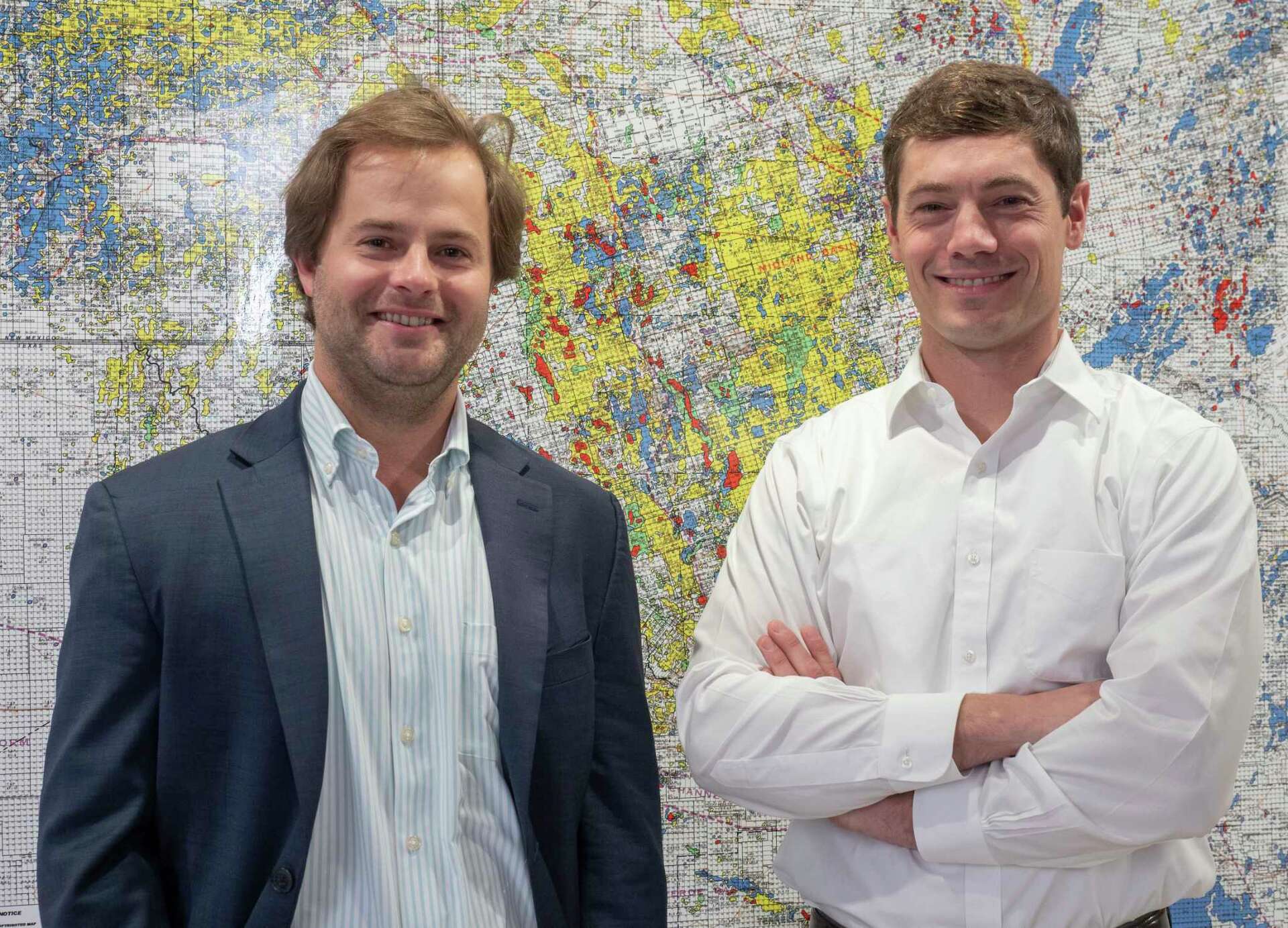
Before Will Hickey and James Walter shared the top job at an oil company, they shared a street. They grew up a few houses apart on Colgate Avenue in Dallas. When they started a business together in 2015, they borrowed the name. It was a small piece of home to take to West Texas, where the distances, the machinery and the sums of money would soon become considerably larger.
There is something pleasingly literal about that origin. Corporate names often require a committee and an explanation. Colgate Energy required a childhood address. The friendship came before the business plan, and the partnership survived the disappearance of the name: in September 2022, Colgate combined with Centennial Resource Development to form Permian Resources. Hickey and Walter became its co-chief executives.
Today, Hickey is based in Midland, running the company alongside the same person with whom he founded its predecessor. The interesting question is how a partnership built at such close quarters accommodates a much larger enterprise. His career offers a few concrete answers: learn the engineering, learn the economics, and keep finding ways to make the two agree.
The engineer takes the long way to the corner office
Hickey studied petroleum engineering at the University of Texas at Austin and earned an MBA at Southern Methodist University. His early career took him into Pioneer Natural Resources, where he rotated through engineering roles and became chief of staff to the chief operating officer. The route put him close to both the work in the field and the decisions made above it.
He then worked at EnCap Investments, evaluating and monitoring oil and gas investments with a focus on the Permian Basin. That move matters to his later story. Engineering asks what an asset can produce. Investing adds the purchase price, the capital required and the return. A founder buying acreage needs answers to both sets of questions before the drilling starts.
Walter arrived with a different apprenticeship: Boston Consulting Group, followed by energy private equity at Denham Capital. Their experience overlapped in the basin and differed in emphasis. In their established division of responsibilities, Hickey handled the technical and engineering side while Walter concentrated on business development and finance. Two people could hold the same title without bringing identical toolkits to work.
The arrangement also gives the friendship a practical dimension. Knowing someone for years does not automatically make a company run well. Complementary experience gives that familiarity something useful to do. In Hickey’s case, the operating background remained central even as buying assets became a major part of the enterprise.
A startup with expensive equipment
Colgate was founded in 2015. In February 2016, it announced $75 million in equity commitments from Pearl Energy Investments, NGP and its management team. The young company was based in Midland and intended to acquire and develop Permian oil and gas properties. Its founders were entering a difficult commodity market; their announcement treated those conditions as a chance to buy.
Seventy-five million dollars is a rather substantial opening budget in ordinary life. In a business that must buy rights, drill underground and build the means to move production, it also imposes choices. The relevant question is how much useful business the money can purchase. Early Colgate concentrated on opportunities around Pecos, in the Delaware Basin.
The approach involved buying small leases and looking for neighboring pieces to acquire or exchange. It is an unglamorous activity to place beside the familiar image of an oil discovery. Yet the shape of an acreage position can matter as much as the acreage count. A collection of properties becomes more useful when its pieces fit the development plan.
By 2018, the company had secured $450 million of backing, held rights to about 30,000 acres and was operating two rigs. Hickey’s enthusiasm was visible in a field-side moment that August: checking a well’s production on his phone beside a frack pond, he celebrated the result with Walter.
“We’re making a lot of oil, baby!”
Will Hickey, checking a well result in West Texas, 2018
The line has an advantage over most executive language: nobody needs a glossary. It also captures the distance between an investment proposal and the moment a well actually produces. For all the financial machinery around Colgate, Hickey still had an engineer’s tangible result to look at, on a screen small enough to hold in one hand.
Growth measured in transactions, and in patience
Colgate’s expansion was assembled over years. A September 2022 account of its operating history listed five large acquisitions, more than 100 smaller additions, roughly 40 trades and more than ten divestitures. The numbers describe a business constantly editing its own map. Buying was one tool; swapping and selling were part of the work too.
Its finances supplied another measure of the approach. Colgate maintained leverage below one times during the 2020 downturn and began paying dividends in December of that year. By the first quarter of 2022, it had implemented a $25 million quarterly dividend. Returning money to owners was already part of the company’s history before the public-company combination.
There was patience behind some of the larger moves. In November 2021, Hickey described acquisitions the company had pursued for three years before completing them. One agreement involved approximately 25,000 net acres in Reeves and Ward counties for about $508 million. A transaction announced on a particular day can conceal years of conversations.
That detail is useful when considering his rise. A timeline makes growth look brisk because it compresses the waiting. The work includes bids that do not close, neighboring properties that remain unavailable and opportunities that require a different market. The eventual announcement gets the date; the preparation rarely gets equal billing.
- 2015Hickey and Walter found Colgate Energy.
- 2022Colgate and Centennial combine as Permian Resources.
- 2023Permian Resources closes its Earthstone acquisition.
The name changes. The partnership stays.
The Centennial combination closed on September 1, 2022. The new business retained Midland as its headquarters, brought together people from both organizations and installed Hickey and Walter as co-CEOs. Colgate Avenue had supplied a memorable beginning. Permian Resources supplied a name suited to the geography of the combined business.
The transition required more than fitting a new sign above the door. Two organizations had personnel, infrastructure and operating practices to combine. The partners’ subsequent account of the integration credited the employees who brought those elements together. A founder can make the agreement; an operating company has to make it function every day afterward.
They also carried an unusual compensation arrangement into public-company leadership. At formation, Permian Resources said its co-CEOs would be paid in performance stock units, with no cash salary or bonus. The 2026 proxy describes the continuation of compensation entirely through performance-based equity, with shares earned depending on shareholder returns against both absolute and peer-relative measures.
That is a consequential choice about how the job pays. The awards have value and can produce substantial compensation, so a missing salary should not be mistaken for unpaid work. The design places the emphasis on performance over a period of years. It makes the owners’ experience part of the executives’ compensation calculation.
A larger map still needs an engineer
On November 1, 2023, Permian Resources closed its $4.5 billion Earthstone Energy acquisition. The enlarged business had more than 400,000 Permian net acres and approximately 300,000 barrels of oil equivalent a day of pro forma production. Integration became an immediate operating assignment, with the company targeting savings across operations, administration and financing.
Those are corporate-scale figures, but they return Hickey to familiar questions. Can the wells be drilled more efficiently? Can completion times improve? Can practices learned on one acreage position help another? Buying a business adds assets at once. Realizing the operating benefits takes repeated decisions after the deal teams have finished.
His public conversations have continued to address those mechanics. In December 2025, he appeared on Enverus’s Morning Energy Live with Andrew Gillick for a discussion centered on the Delaware Basin, costs, acquisitions and the outlook for U.S. shale. The subjects connect the engineer’s early training with the capital-allocation questions that now occupy a co-CEO.
Year-over-year drilling and completion cost per foot in 2025.
For 2025, the company reported a ten percent reduction in drilling and completion costs per foot from the previous year. That metric gives the operating story a concrete unit. An acquisition has a headline price. A well has a cost per foot, repeated across a drilling program. Small improvements can become significant when the activity repeats.
What the next chapter asks of him
By August 2026, Permian Resources reported a position of approximately 535,000 net acres across West Texas and southeastern New Mexico. Its second-quarter oil production averaged 198,100 barrels a day. The footprint had grown far beyond the early Colgate holdings, while Hickey and Walter continued to share the leadership of the business.
The aspiration they have set out publicly is to keep producing competitive oil and gas from the Delaware Basin, improve execution and deliver long-term value to owners. Those ambitions are easy to state. The details of Hickey’s career show where they become demanding: buying the right pieces, joining operations and keeping costs under control.
His story began with a partnership whose name recalled a few houses on a Dallas street. It now involves a map stretching across a state line. Somewhere between those two scales lies the job he has built for himself: keeping the engineering close enough to the financial promises that each can answer for the other.