Clay Gaspar once put a particularly awkward management problem into a single sentence: “The hardest calls to make are when you need to override a prior decision that you've personally made.” He was speaking about the courage to change. The uncomfortable part was the signature at the bottom of the original decision. Your own.
It is a useful place to begin with the president and chief executive of Devon Energy. Oil companies accumulate things: acreage, equipment, contracts, convictions. The first three appear on spreadsheets. The fourth can make the spreadsheets rather expensive. Gaspar’s career has repeatedly brought him to the point where an organization must decide what deserves another dollar, and what deserves a polite goodbye.
In October 2026, that question took a very tangible form. Devon agreed to sell its Eagle Ford assets for $4.2 billion. Only five months earlier, it had completed its merger with Coterra. Expansion and subtraction, in the same year. The interesting part of Gaspar’s story is how consistently he has been willing to entertain both.
An engineer before the corner office
Gaspar came to the executive suite through petroleum engineering. He earned his bachelor’s degree at Texas A&M and a master’s in petroleum and geosciences engineering at the University of Texas. He is a registered professional engineer in Texas. Before Devon and WPX, his career included technical and leadership work at Mewbourne Oil, Anadarko Petroleum and Newfield Exploration.
That background matters because the raw material of his business does not behave like an office budget. Rock varies. Wells interfere with other wells. A promising development still needs a way to move its output. A chief executive can announce a strategy before lunch; the reservoir is under no obligation to attend.
His professional commitments also extend beyond the company. They include board work with the American Petroleum Institute, the American Exploration & Production Council and the Permian Strategic Partnership, along with Texas A&M’s Engineering Advisory Council. The combination puts him in rooms concerned with technical training, industry policy and the practical requirements of producing energy.
The acreage nobody was applauding
The groundwork for Gaspar’s later Devon role was laid at WPX Energy, where he became president and chief operating officer and served on the board. WPX’s 2015 purchase of RKI Exploration & Production for $2.35 billion brought it into the Permian during an industry downturn. At the time, shareholders did not greet the portfolio change warmly.
By 2018, Gaspar could describe the purchase from a rather different vantage point. Nearby acreage was attracting much higher bids. Speaking in Midland, he recalled an opportunity “under the cover of darkness” during industry distress. That is a more colorful description of countercyclical investing than usually survives a corporate presentation.
The transaction belonged to a wider reconstruction. Under Rick Muncrief, WPX had been working to simplify a scattered portfolio and shift its commodity balance toward oil. The Delaware Basin offered stacked reservoirs and room for development. Getting into it was one decision. Selling other assets and reducing debt were further decisions, with their own deadlines and consequences.
There is a temptation to tell this sort of history backward, as though a later success had been neatly visible at the start. The contemporary record is more useful: an unpopular purchase, falling commodity prices, and a management team obliged to make the pieces fit. Gaspar learned the business of transformation while the arithmetic was still moving.
and Delaware entry
and COO role
and CEO
The barrel needs an exit
Listen to Gaspar discussing operations and the conversation quickly leaves the well itself. In a 2018 interview about WPX’s Permian business, he explained a two-stage journey: first move oil from the wellhead to the local Midland-Crane hub, then move it beyond Midland to markets including Houston, Corpus Christi and Cushing.
That sounds almost too obvious to deserve attention. It was precisely the sort of obvious detail that could become a constraint when production grew faster than the means of transporting it. WPX used several pipelines and contracts to reach a range of purchasers. Gaspar described thinking ahead about the second leg, rather than treating arrival at a local tank as the end of the assignment.
A reservoir map shows where value might begin. A transportation agreement helps determine where it can go. Gaspar’s explanations keep returning to that longer journey. The operating problem includes the customer downstream, the bottleneck in between and the time required to put an alternative in place.
A merger with a personal catch
The Devon-WPX merger closed in January 2021. Gaspar became Devon’s executive vice president and chief operating officer, while Muncrief became CEO. Gaspar moved from Tulsa to Oklahoma City. Later that year, he described the combination as complicated work involving employees, investors and other stakeholders, with integration requiring time.
He was unusually direct about the personal risk. In 2022, discussing consolidation, he recalled knowing there had been a fifty-fifty chance he could lose his own position in the combination. Half the executive team had been left without a job. His argument was that executives should accept being dispensable when that served shareholders.
Corporate discussions of efficiency can become strangely bloodless. This one contained a possible casualty with a name and a speaking slot. Gaspar was saying that the logic should apply to his chair, too. It gives his earlier remarks about reversing your own decisions a sharper edge: sometimes the thing under review is your place in the organization.
“You're paid to be expendable at some point, if necessary.”
Clay Gaspar, on industry consolidation, 2022
The view changes with the job
Gaspar succeeded Muncrief on March 1, 2025. The succession continued a working relationship that had stretched across both WPX and Devon. Muncrief was a mentor as well as a colleague. Proximity to the CEO’s job gave Gaspar preparation; occupying it introduced a different set of conversations.
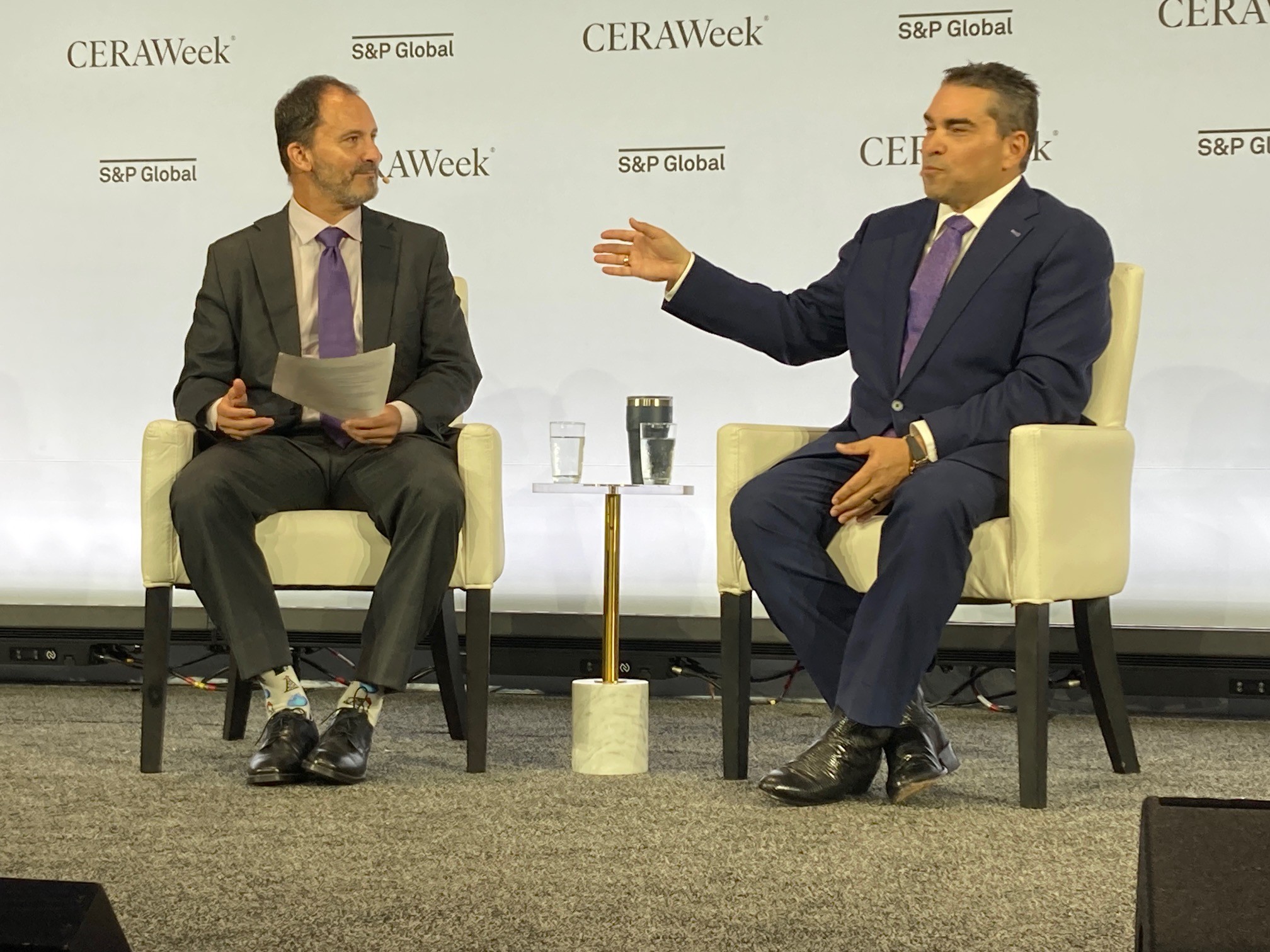
At CERAWeek in March 2026, he described having to reintroduce himself to a board that already knew him, because it knew him in another capacity. That is a recognizable problem well beyond the oil business. Familiarity can make a promotion look simpler than it feels. The people across the table remain the same; the decisions you owe them have changed.
He outlined three priorities: improve Devon’s existing business, pursue longer-term opportunities within it, and improve the portfolio. He also discussed AI as a progression from quicker access to information toward changing how teams perform complicated work. The emphasis was on organizational design as much as software. Even for an engineer, the difficult machinery includes the meeting room.
Two companies, one new set of choices
In February 2026, Devon and Coterra announced an all-stock merger. Gaspar would lead the combined company as president and CEO, with Coterra’s Tom Jorden becoming non-executive chairman. The announced economics included a target of $1 billion in annual pretax synergies by the end of 2027. That was a target, with work still attached.
The companies completed the merger on May 7. The business retained the Devon name and DVN stock symbol, with headquarters in Houston and a significant Oklahoma City presence. The deal brought another round of integration into a career already shaped by one.
On the merger call, Gaspar treated the enlarged portfolio as a new allocation problem. Assets needed to be considered together, including how they complemented one another. The reasoning is easy to follow and harder to execute: the best plan for either previous company may change when the available choices change. An acquisition announcement can take a day. Learning what to do with the result takes longer.
Annual pretax merger synergies targeted by year-end 2027. A forward-looking company objective, not a completed result.
Following the gas all the way to market
In August, Devon approved investment in the Solitude Pipeline System, a WhiteWater-led venture connecting the Permian Basin with Katy, Texas. Devon would hold a 25 percent equity interest and secured firm transportation capacity. The proposed first phase would enter service in the second half of 2029, subject to approvals.
The logic echoes Gaspar’s earlier WPX explanation. Production has to reach a market, and a local bottleneck can eat into the value of otherwise attractive acreage. Devon described the project as part of a broader approach encompassing processing, compression, power, water and transportation. Each piece affects the economics of the wells around it.
Then came October’s Eagle Ford sale agreement with Crescent Energy. The assets represented roughly four percent of Devon’s production. Closing was expected around year-end 2026, subject to conditions. Gaspar tied the sale to concentrating on assets with higher returns and longer inventory lives, with proceeds intended for repurchases and debt reduction. Buying more and choosing to own less can occupy the same strategy.
A different kind of field trip
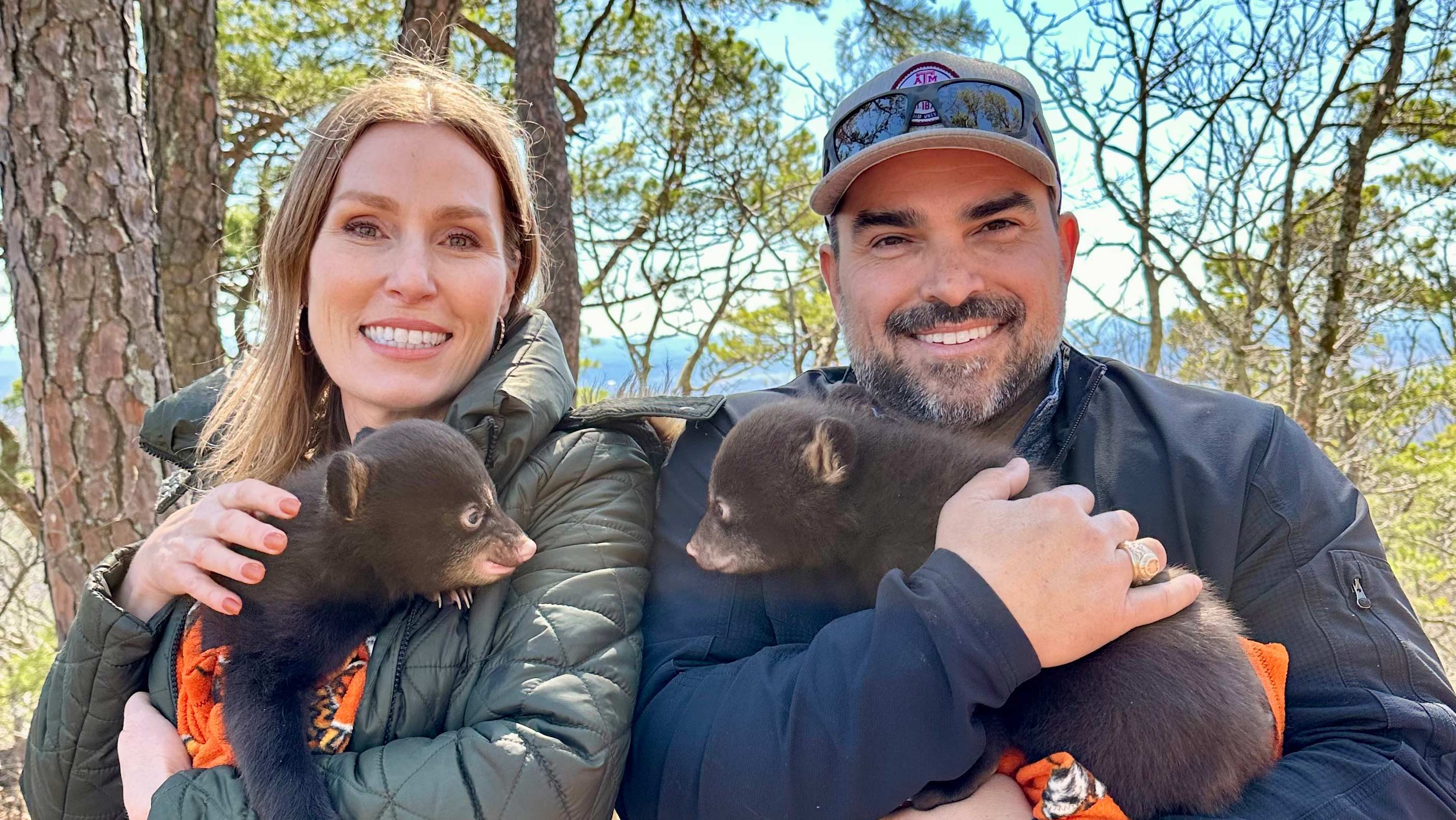
There is another Gaspar photograph worth pausing over: he and his wife Leanne holding black bear cubs during conservation fieldwork. He serves on The Nature Conservancy’s Oklahoma chapter board. The setting is a welcome change from the conference-stage armchair.
The couple met as freshmen at The Tap in College Station. Years later, they established a scholarship for first-generation engineering students at Texas A&M. Their connection to the university has become a practical way to help someone else get started.
That is a useful place to leave him: an engineer whose work now involves deciding what a much larger organization should become, and a former student helping another student begin. Both require leaving room for a future that has yet to introduce itself.