At Libya’s Zelten Field, the problem was partly a matter of timing. Gas helped lift oil to the surface. Operators adjusted its injection. Meanwhile, the well kept changing. In cold weather, hydrates could obstruct the system. A setting that made sense yesterday could become today’s expensive habit.
Sensia’s response joined meters, controllers, electric chokes and remote software into a loop. Measure the well. Reconsider the gas rate. Adjust it. Repeat. In the company’s case study, Sirte Oil Company achieved an average production uplift of 5-10% across optimized wells. The interesting thing is how much machinery sits behind that modest-looking percentage.
- Sensia joined oilfield expertise with industrial control.
- Its products connected measurement, software and physical action.
- Customer gains did not translate into the financial performance its owners expected.
- The joint venture ended in April 2026. Its businesses moved to Rockwell Automation and SLB.
01 / A company built around the handoff
To understand Sensia, start with the distance between knowing something and doing something about it. A production engineer can see a troubling pressure trend. A control system can move a valve. Getting the right interpretation into the right machine, safely and consistently, is another job altogether.
In October 2019, Rockwell Automation and Schlumberger, now SLB, assembled a company around that handoff. Rockwell brought automation and information expertise. Schlumberger brought oilfield knowledge and measurement capabilities. Sensia launched with roughly 1,000 employees and a projected $400 million in initial annual revenue. It began with established businesses, rather than a prototype looking for customers.
“It will make oil and gas production, transportation and processing simpler, safer, and more secure.”Allan Rentcome, founding CEO · 2019
The customers were producers, transporters and processors of oil and gas. Their work ranged from individual wells to pipelines, terminals and LNG facilities. The buyer might need a better flow measurement, a production accounting system or an integrated safety project. Sensia’s proposition was to make those pieces work together.
02 / The software had to reach the pipe
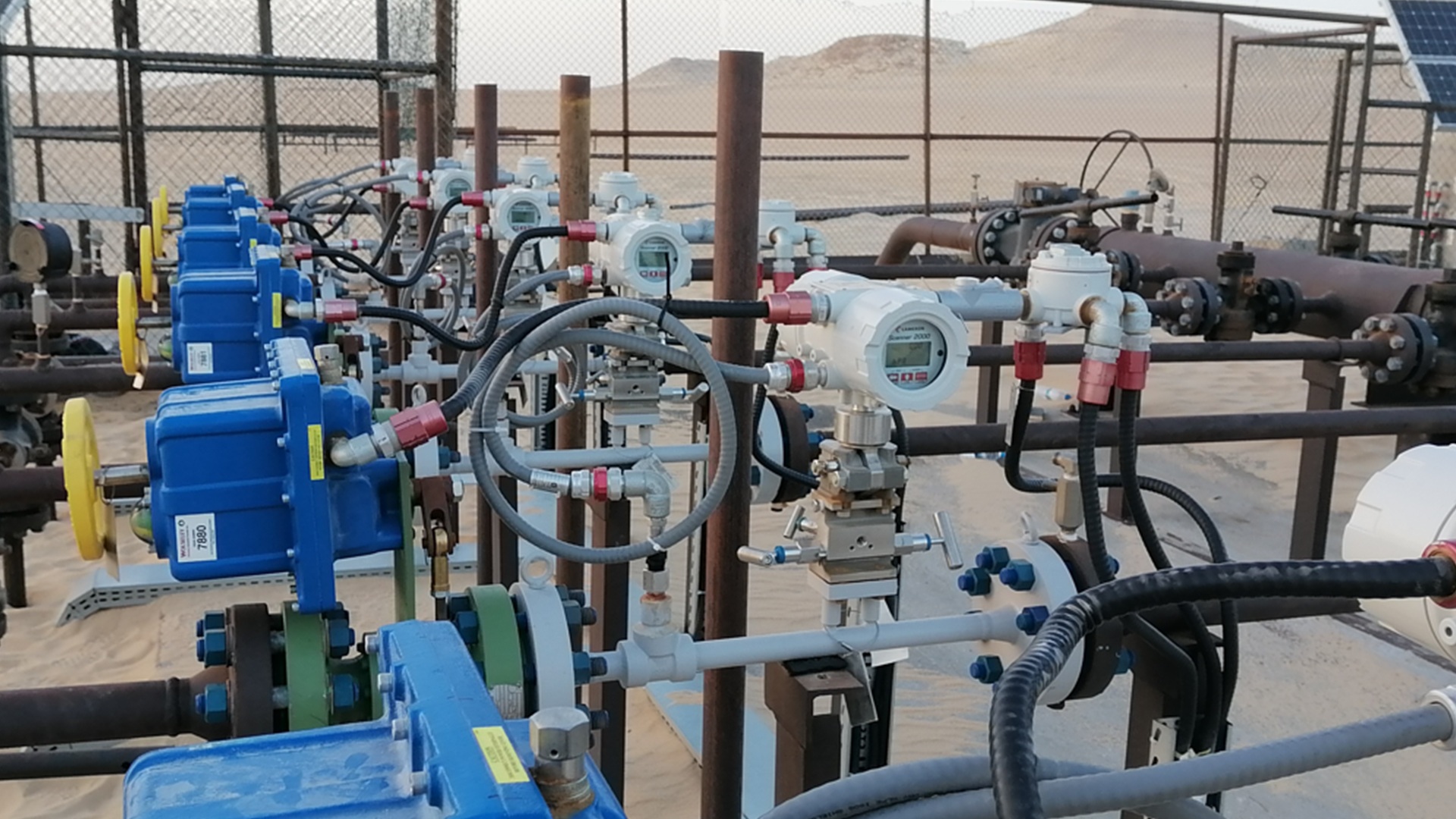
Avalon was the connecting platform. It gathered and contextualized operational data, presented diagnostics and supported control. Sensia offered deployment on premises or in the cloud, with integration into existing operational systems. That matters in an industry where replacing every installed system is a substantial undertaking.
Avalon also supported lift surveillance and applications such as AiRP, which prioritizes responses to events affecting electric submersible pumps. The practical attraction was attention: helping an operator decide which abnormal event deserved action first when many assets demanded supervision.
↳ Measure again. The well keeps changing.
Other software did different jobs. Avocet combined field data capture, operations management, production accounting and reporting. OFM helped engineers analyze well and reservoir performance, build forecasts and identify outliers. Avocet 10.5, announced in September 2025, added allocation performance improvements and mobile photo and video uploads. These are the unglamorous conveniences that determine whether information gets recorded properly.
Underneath sat a substantial hardware portfolio: CALDON ultrasonic meters, JISKOOT sampling systems, BARTON instruments, NUFLO products and flow computers. Custody transfer measurement concerns the quantity and quality changing commercial hands. A measurement error can therefore become an invoice problem. Sensia sold engineering, commissioning, training and maintenance alongside the equipment and software.
03 / Winter was a useful test
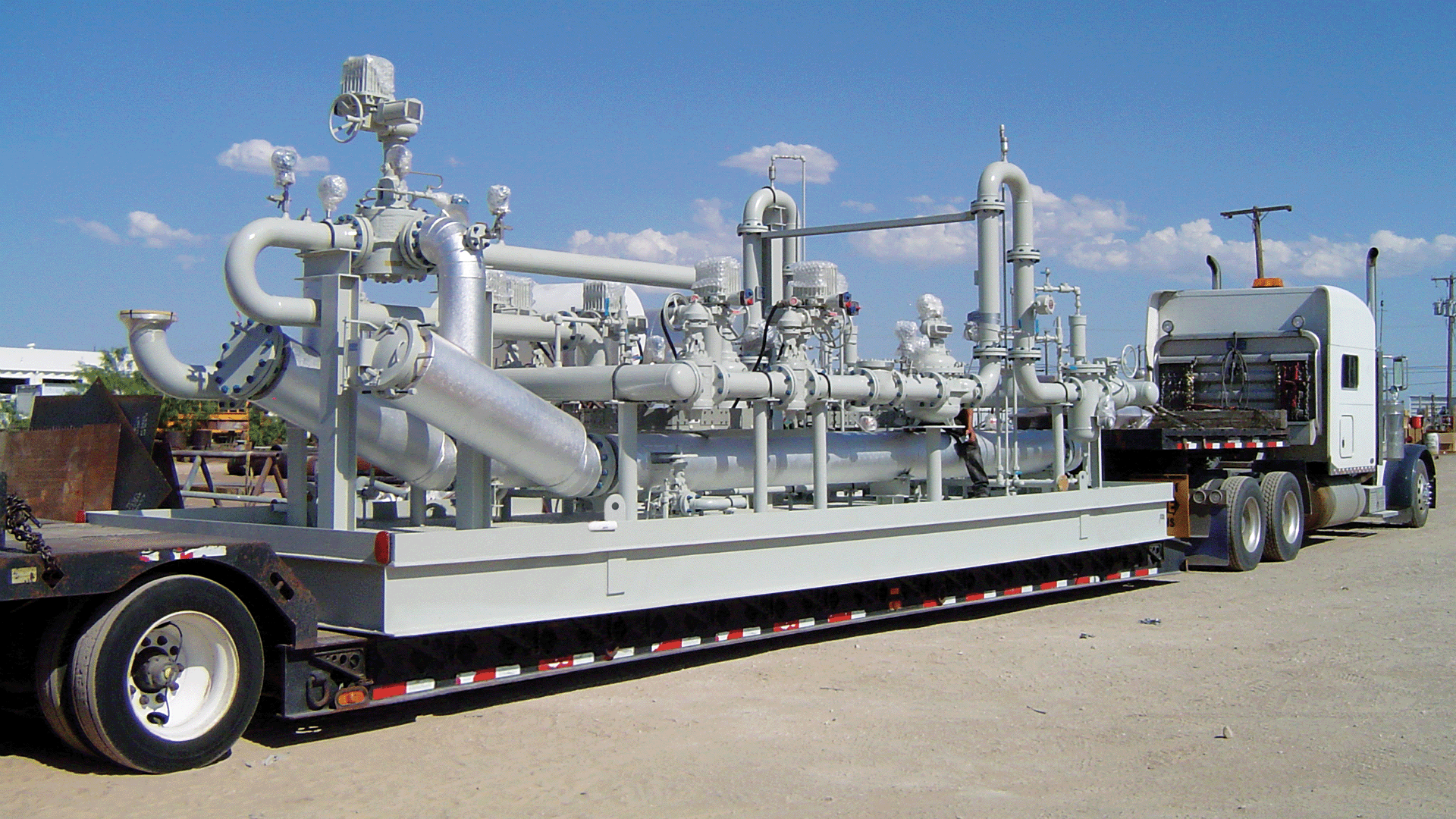
At Zelten, manual injection adjustments struggled with changing well conditions. Sensia’s solution connected wellsite equipment to office-based surveillance and control. Solar power packages supported six remote gas lift stations. The project addressed the whole chain, including the energy required to keep the instruments awake.
across optimized wells
hydrate-related issues
Specific project results, not a forecast for every field.
The case study also reported an 85% reduction in manual gas lift adjustments during peak hydrate months. These are Sensia’s reported outcomes, with the usual limits of a supplier’s case study. They describe particular operating conditions and should inform a pilot, rather than become a promise in someone else’s budget.
An anonymous Asian national oil company case offers a useful companion. It describes difficulties integrating frequent sensor readings, maintaining remote communications and retraining operators. Power availability required solar rooftops. The lesson is wonderfully concrete: an analytics project can depend on whether an instrument has electricity.
04 / The business had a different feedback loop
Sensia occupied the space between industrial automation suppliers, oilfield specialists and production software vendors. Emerson and Honeywell offered overlapping capabilities. Sensia’s distinguishing feature was the combination inherited from its parents, packaged with industry-specific software and measurement brands. Customers could also assemble comparable functions through separate suppliers and an integrator.
Its commercial model spanned equipment, integrated projects, software and continuing services. A buyer therefore had to assess installation, integration and support alongside software capability. The appropriate comparison was the cost of an operating system over its working life, including the people needed to maintain it.
The corporate transaction was substantial: Rockwell paid Schlumberger $250 million when the venture formed. By 2023, growth and profitability below plan prompted new management and revised strategy. Rockwell recorded a $158 million goodwill impairment that year, followed by $161 million in 2025. Those were noncash accounting charges, not customer installation bills. Historical financial performance below expectations led the partners to choose dissolution.
On April 1, 2026, the split was completed. Process automation, safety, vMonitor and edge control offerings moved to Rockwell. Lift controls, measurement, digital production and most digital platforms and software moved to SLB. Products, teams and ongoing projects had a coordinated handover.
05 / Copy the loop, then test the economics
A useful reading of Sensia’s experience starts small. Pick a decision that matters. Establish the measurement, the person or machine authorized to act, and the outcome worth improving. Test the complete loop before expanding. Check power, communications and operator readiness along the way. Without those conditions, remote optimization has fragile foundations.
The distinction between operational value and corporate value remains the story’s sharpest edge. A field can benefit from better control while the organization selling it disappoints its owners. Sensia leaves both observations on the table. Anyone buying industrial technology would do well to examine both.
Follow the equipment
Products, company updates + watch