The revealing number in Rock Flow Dynamics’ latest customer announcement is not the claimed speed increase. It is the number of models tested: close to 35. Before an unnamed Canadian oil-sands operator added tNavigator to its engineering tools, it put the software through a detailed thermal evaluation. Temperatures, pressures, steam chambers and production volumes all mattered. A colourful underground picture would not suffice.
- tNavigator connects geological models, reservoir flow and surface facilities.
- Its buyers are engineering teams making decisions about expensive subsurface assets.
- The proposition combines computing performance with conversion, training and support.
RFD reported speeds up to ten times faster than the legacy thermal simulator in that evaluation. That is a company-reported result from particular models, rather than a promise for every field. The more interesting proposition is what a shorter run permits: another scenario, another sensitivity test, another chance to discover that the plan needs changing.
A field has more than one author
Rock Flow Dynamics makes software for people whose work begins with an incomplete picture of the ground. Geologists interpret structures and rock properties. Reservoir engineers calculate how fluids might move. Production engineers consider wells, pipes and facilities. Those tasks concern the same asset, but the models can live in separate applications. Every handoff asks someone to translate the work.
tNavigator puts these disciplines in one environment. Seismic interpretation and Geology Designer help build the geological picture. Model Designer prepares the dynamic model. The simulation engine supports black-oil, compositional and thermal calculations. PVT Designer handles fluid properties; Well Designer and Network Designer extend the work into wells and surface facilities. The company’s phrase, “One Asset, One Software,” is unusually literal advertising.
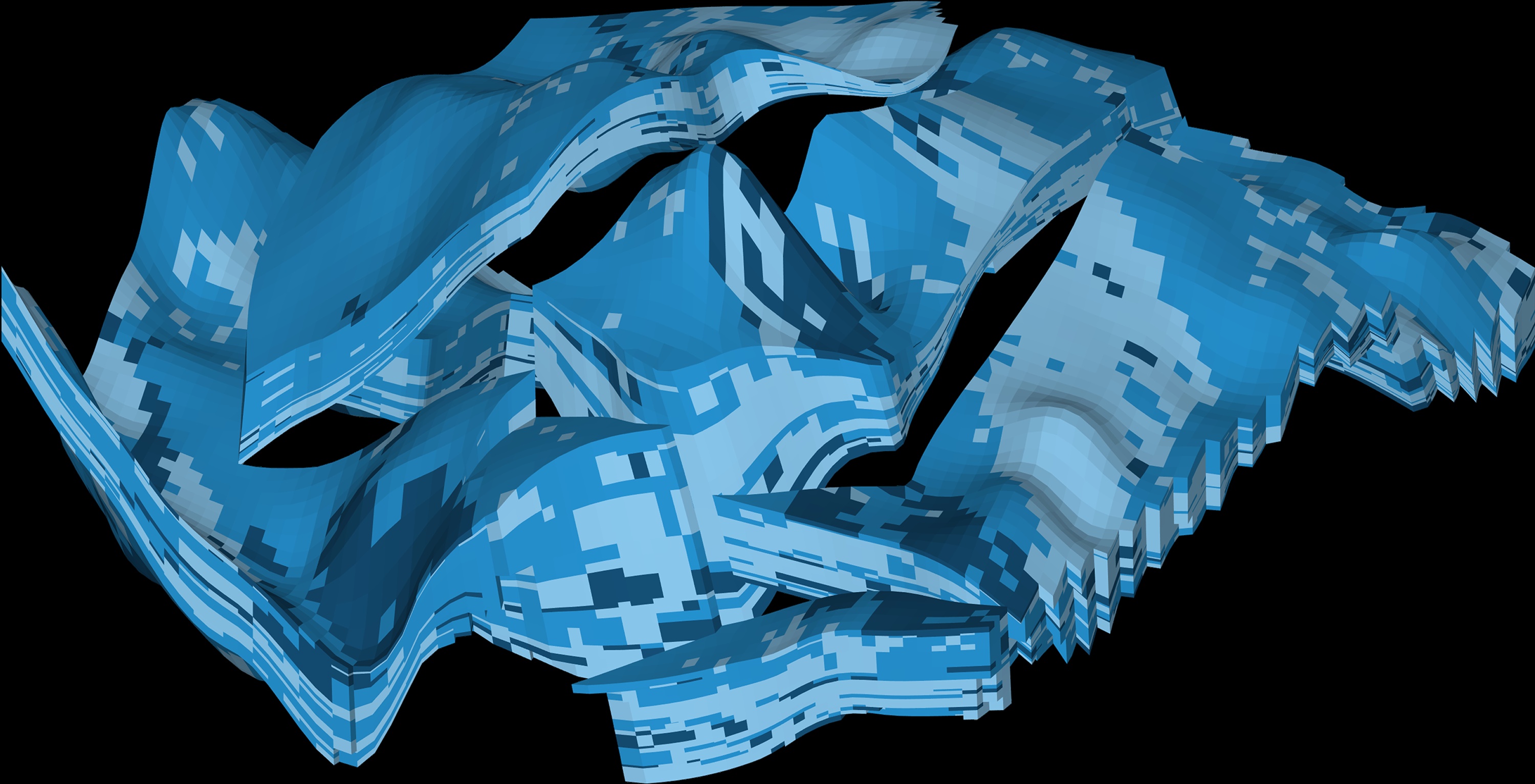
The purpose is practical. A team can examine development options, forecast production and connect a reservoir calculation to constraints above ground. A promising well location is only part of the calculation when the fluids must pass through shared equipment. Integration makes those connections easier to examine together.
Conceptual workflow, not a performance benchmark.
The physicists found another problem
RFD began in 2005. Co-founder and CEO Vasilii Shelkov came from high-energy physics, with experience at US laboratories. He met Kirill Bogachev at YUKOS; the two went on to build the company. Bogachev became CTO. It was a useful pairing for a product requiring numerical methods, parallel computing and an interface engineers could actually use.
Intel Capital invested $2 million in November 2010. The contemporary announcement described international expansion, beginning with Houston, alongside optimisation for Intel hardware and joint marketing. Multicore processors were changing the available machinery. RFD had designed its simulation software to exploit that architecture from the start, rather than treating parallel computing as an afterthought.
In a 2026 GEO EXPRO interview, Shelkov described limited early sales, long buying cycles and international customers helping the business through lean periods. He also said RFD later bought Intel out because the founders wanted to remain independent. His prescription for an unselling product was pointed:
“Don’t hire salespeople when your product doesn’t sell.”Vasilii Shelkov · GEO EXPRO, 2026
The trial is part of the sale
That history suits the market. RFD competes with SLB’s Petrel, ECLIPSE and INTERSECT ecosystem and Computer Modelling Group’s simulation tools. These alternatives also offer sophisticated physics and modelling workflows. RFD’s case rests on the combination of integrated tools, computing performance and usable support. A buyer must judge that combination against its own models.
Its commercial offering recognises the difficulty of switching. RFD sells rental, ownership, enterprise and SaaS cloud licenses. It also provides proof-of-concept studies, model conversion, consultancy and bespoke training. License holders receive manuals, tutorials and technical support. The purchase includes a route through the migration work, which can be more persuasive than another feature list.
Published customer accounts give that route some texture. OKEA tested existing Draugen models and reported that few input changes were necessary before becoming a regular customer. Wintershall Dea engineer Connie Wergeland described setbacks while joining two reservoirs to shared surface facilities; RFD supplied an update with the options the project required. These are testimonials selected by the vendor, but the details are useful: conversion, missing functionality and support were part of adoption.
RFD reports more than 330 commercial clients in 47 countries. Its customers include operators and consultancies; published accounts name Santos, Petronas, Perenco and EnQuest. The expertise being sold spans geology, petroleum engineering and software development. The support desk must understand the problem represented by the model, as well as the buttons used to build it.
The computer room behind the picture
In April 2026, RFD opened a 1,000-square-metre data centre in Belgrade. The company describes a multimillion-dollar investment, with more than 30,000 high-performance computing cores and 6,400 terabytes of storage. Its stated primary purpose is testing and optimising tNavigator. Software that helps customers examine complicated assets needs its own place to be examined.
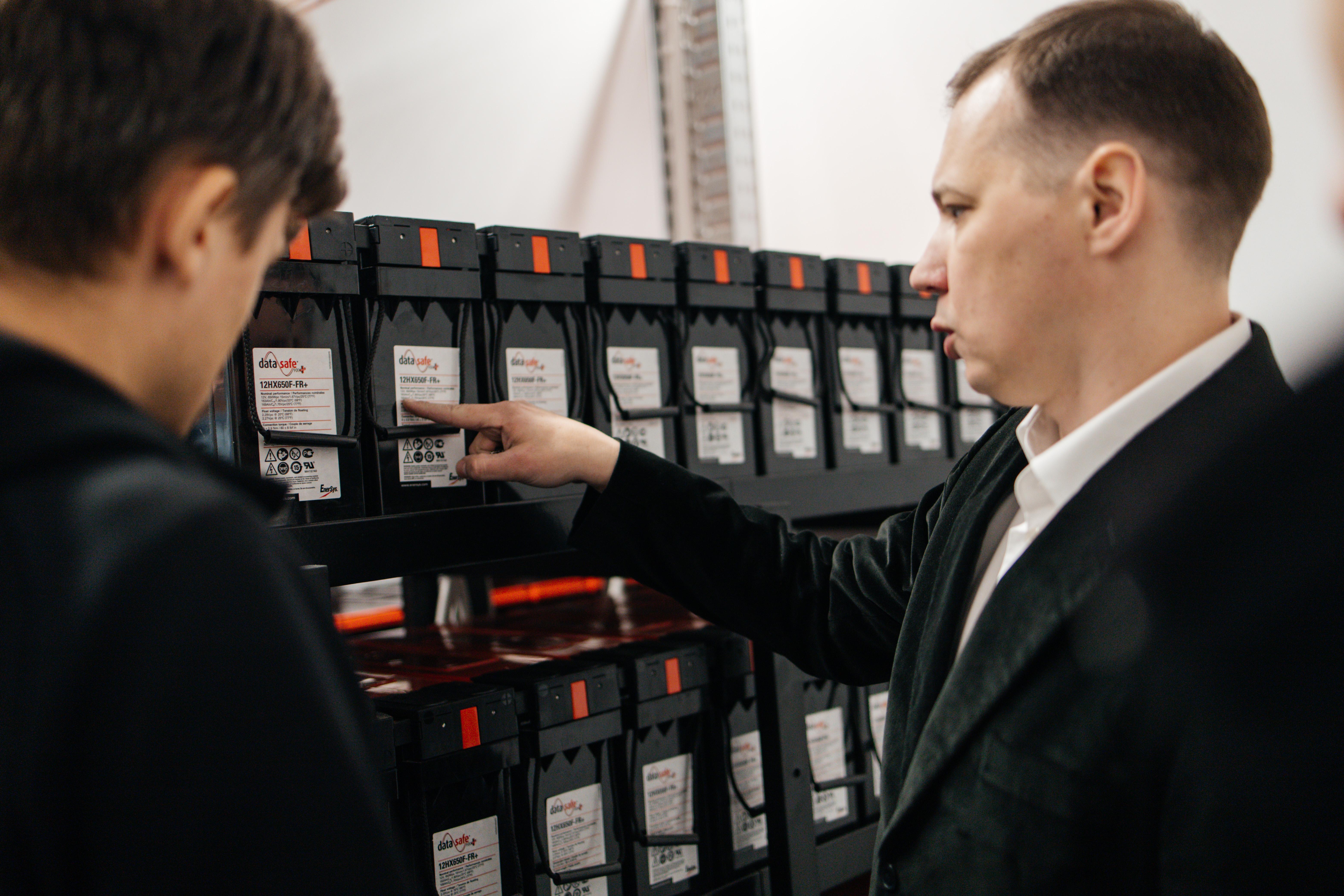
Customers have several computing routes themselves: laptops, workstations, clusters and cloud deployments. RFD offers built-in Azure on-demand capability and assistance with other providers. The relevant cost is therefore a combination of licensing, computing and the work required to prepare and validate models. A speed claim tells only one part of that story.
The same ground, different ambitions
Oil production is no longer the platform’s only application. RFD offers workflows for carbon storage, hydrogen storage, geothermal energy and mining. In February 2026, it announced that DBI Gruppe had implemented tNavigator for hydrogen and CO2 storage work. Modelling injection, migration and withdrawal gives the existing subsurface tools another job.
Uncertainty remains the organising problem. Assisted history matching helps reconcile models with observed behaviour; uncertainty analysis explores alternative assumptions. Python integration lets teams automate runs and connect data workflows. These capabilities help engineers ask better questions, provided they bring sound data, appropriate physics and enough expertise to inspect the answers.
The lesson readers can copy is modest: test a proposed change on a problem you already understand. Compare outputs, measure the whole workflow and see how support handles the awkward parts. That approach loses its value if poor input data or an unsuitable model goes unchallenged. An elegant simulation can still be elegantly wrong. RFD’s interesting promise is making another examination practical.