An oil reservoir can be full of oil and still be a miserable business. The trouble is movement. Heavy crude resists flowing into a well; a long horizontal bore offers access to more rock, but its far end may contribute disappointingly little. Salamander Solutions sells a way to change that predicament: put an electric heater where the oil needs encouragement.
- Custom electric cables warm heavy oil and help prevent flow-blocking solids.
- Continuous heated sections reduce troublesome external connections.
- The buyer needs more profitable barrels, not merely a hotter well.
It sounds almost indecently simple. Warm something thick and it becomes easier to move. Yet the history of downhole heating is crowded with devices that worked briefly and customers who remembered the briefly. Salamander’s story begins in the distance between a sound physical principle and equipment an operator can afford to trust.
A good idea with bad connections
Older heating cables joined short sections with multiple splices. Each joint introduced a possible interruption. A buried system inherits an awkward service policy: even a small failure can demand a large intervention. In December 2019, the Journal of Petroleum Technology described an industry still wary of heaters that died young.
“The reservoir performance when the heater lasted was great, but he would never do it again.”
An operator’s verdict, recalled by Salamander CTO John Karanikas in 2019
That is a formidable objection to sell against. The customer already believes in the heat. What needs repairing is confidence in its delivery. Salamander’s response is a continuous mineral-insulated cable, with internal transitions between heated and unheated sections. In most downhole applications, external connectors disappear from the heated length. Less to connect means fewer places to disappoint.
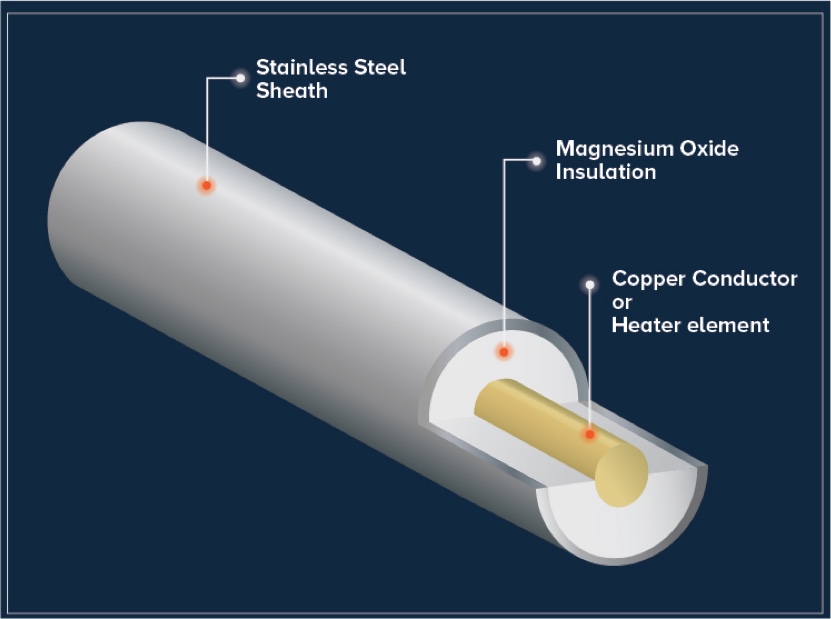
The company specifies up to three megawatts across three kilometers of continuous heated length in wells. It designs cables for ten years or more at full power and maximum temperature. Those are design capabilities, rather than a promise that every reservoir will respond alike. A durable cable answers the equipment question. Geology retains a vote.
Shell’s expensive education
Salamander was incorporated in March 2017 as a Shell spinout. Its inheritance was years of research into heating difficult hydrocarbons underground. The original work included in-situ conversion and upgrading, applications more demanding than simply persuading viscous oil to flow. Engineers had already spent considerable time asking what failed under heat, voltage and prolonged service.
The financing followed the machinery. In July 2018, Salamander announced a $7 million Series A led by Eden Rock Group, alongside MCAAA Holding, Shell Ventures and Frontive Holding. It also acquired MCAAA Ltd, a UK cable manufacturing facility. Owning the factory brought an essential part of the proposition inside the business: the ability to manufacture the long cable it was asking operators to believe in.
When the heater outpaced the pump
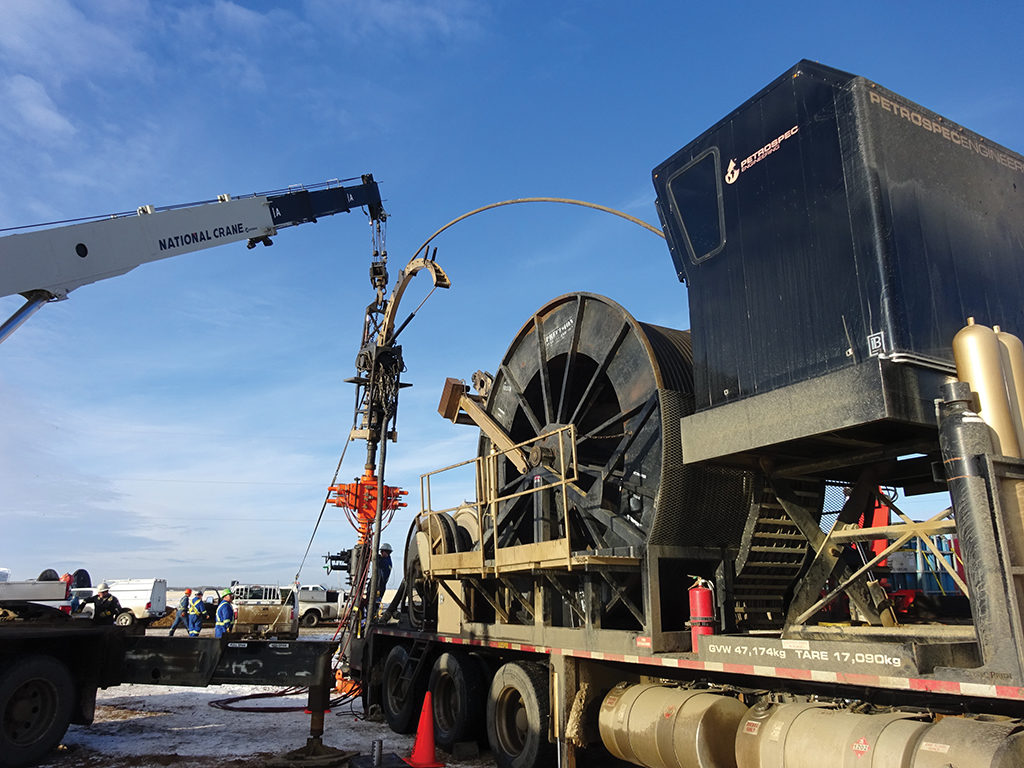
A 2020 paper by Salamander and Petrospec researchers reported an Alberta pilot with an unusually revealing complication. The heated well initially produced about five or six times as much oil as its cold comparator. That comparator’s pump subsequently could not handle the viscous oil. In the heated well, unexpectedly strong flow carried more heat toward the pump, damaging its elastomers in May and October 2019.
Success had moved the constraint. The experiment makes a useful engineering lesson: assess the whole production train, including what happens when the treatment exceeds expectations. The authors also reported adjusting heat input several times daily to exploit fluctuating electricity prices. Temperature control and the power bill were part of operating the well, not administrative details added afterward.
Apply heat02
Reduce viscosity03
Check the pump
The percentage is not the profit
Another Canadian experience supplies the commercial correction. JPT reported a CNRL well moving from roughly 25 to 37 barrels a day. The gain did not justify spreading the treatment to more than 100 similar nearby wells under the prevailing economics. Its reported system-cost range was $100,000 to $1 million, depending on length. These were historical figures, not today’s quotation.
Salamander’s own 2018 application briefs proposed incremental barrels at $10-$15 each and payouts of one to one-and-a-half years for suitable cases. Those estimates describe a proposition to evaluate, not a universal tariff. The practical test is whether additional oil pays for equipment, installation and electricity. A handsome percentage can conceal a modest number of saleable barrels.
Good candidate selection therefore matters as much as cable manufacture. High electricity prices and weak oil prices can erase the return. The published screening guidance favors low water cut and adequate existing production. Heating a poorly chosen well consumes money as reliably as it consumes power; the reservoir model should earn its place before the installation crew arrives.
One cable, several jobs
The product names describe distinct assignments. BoostWell targets viscosity. StreamWell maintains temperatures to discourage solids precipitation. LinkWell supports the connection between SAGD wells and improves steam distribution. Foundry addresses in-situ conversion. The common expertise combines electrical heating with reservoir behavior; the intervention changes according to what is obstructing production.
Offshore, the problem becomes keeping long flowlines clear of wax and hydrates. Salamander offers permanent heating and temporary plug-removal applications, and advertises up to 80 kilometers of reach using two circuits. The commercial attraction is access to more distant reservoirs from existing facilities. Its 2020 Shell agreement concerned qualification of this subsea system, an essential distinction from announcing a completed offshore deployment.
Customers buy an engineered system. Salamander models reservoirs, designs hardware, manufactures cables and supports deployment, controls and monitoring. Selected cases can include leasing or risk-sharing agreements. Public contracts include Petrogas in Oman and Tatweer Petroleum in Bahrain. Steam, chemicals and mechanical interventions remain practical alternatives; the relevant comparison depends on the particular well and the cost of keeping it productive.
Two years to earn the next chapter
In January 2026, Oman’s ministry agreed to a Block 71 feasibility study with Westlawn and Salamander, including appraisal-well rights. The expected two-year evaluation precedes any negotiated concession. A May announcement also envisaged a Salamander pilot within a proposed Venezuela joint venture. The discipline worth copying is clear: remove avoidable failure points, test the complete system, and let commercial evidence determine expansion. Underground, a persuasive idea still has to pay its electricity bill.