The checks were arriving. That was the trouble. In a case study published by Valor, a Texas royalty owner’s portfolio looked perfectly ordinary: producing wells, incoming statements, money in the bank. Yet six wells had approximately $1.4 million sitting unpaid in suspense. The obstruction was a clerical error in recorded documents. A small mistake had acquired a rather expensive afterlife.
- Valor manages mineral interests and oil and gas back offices.
- Its own mineral.tech software supports specialists doing the work.
- Customers range from families to banks, universities and operators.
- The useful habit: compare every producing interest with its payment record.
Valor identified the problem in May 2026, investigated the title, coordinated corrective paperwork and updated division orders with the operator. By the end of August, the funds were released. That result belongs to one client. But the underlying question travels well: if some of your assets are paying, how would you notice the ones that are not?
The check is a poor inventory
Oil ownership comes with an administrative trick. The evidence that reaches your desk describes activity someone has already recorded. An absent payment leaves a quieter trace. You need an inventory of what should exist before you can recognize what is missing. Counting envelopes is wonderfully convenient. It is also an inadequate audit.
Valor’s mineral management combines land records, accounting and regular scrutiny. Staff verify ownership, review leases, maintain division orders and reconcile revenue. Those division orders record the fractional interests used for payments. Put the wrong fraction beside the right name, or leave an ownership problem unresolved, and productive acreage can become an unproductive relationship.
Recovered for clients. This is recovered client money, not Valor’s revenue.
The firm’s current mineral management page reports more than $32 million recovered over 36 months. The interesting part is the repeated task behind the total: establish ownership, compare production with receipts, investigate exceptions, then pursue the correction. The business earns its place in the gap between possessing an asset and administering it competently.
A dashboard with people behind it
Joseph DeWoody and Clifton DuBose founded Valor in 2018. Their acquaintance began considerably earlier, as DeWoody told Fort Worth Inc. DuBose later practiced oil and gas law in Midland; DeWoody’s credentials include Certified Professional Landman and Certified Mineral Manager. Today, they serve as co-CEOs.
“We went to kindergarten together.”
Joseph DeWoody / on co-founder Clifton DuBose
Their software, mineral.tech, joins mapped interests, production information, revenue and documents. Clients can inspect holdings and reporting online. A lease need not disappear into a filing cabinet, and an accounting question need not wait for somebody to assemble a quarterly packet. The practical attraction is having related evidence within reach.
Valor explicitly describes mineral.tech as software powering its professionals, rather than a standalone SaaS product. That determines what the customer is buying. A platform can organize a discrepancy. A specialist must still interpret records, contact an operator and follow the issue through. Valor bundles those responsibilities into its service.
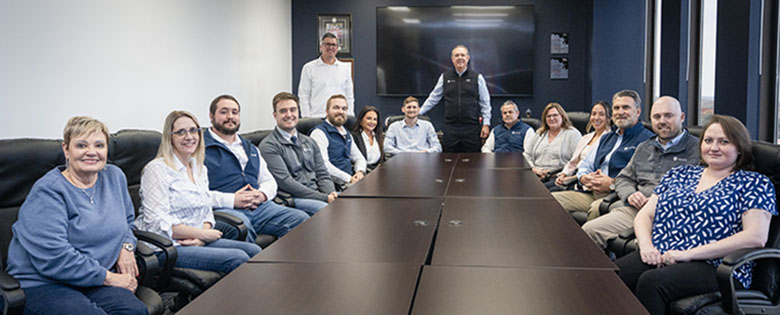
The team includes CPAs, landmen and certified mineral managers. Its services can encompass a narrow accounting assignment or broader administration, including mail and distributions. This flexibility matters: one owner may need help organizing documents; another may need somebody to manage the portfolio every month.
Even a university can own a royalty
Valor’s customers are an unexpectedly varied club. Banks, family offices, trusts, foundations, universities, churches and municipalities appear alongside individuals and investment funds. Mineral interests can arrive through inheritance or gifts. The recipient gets the economic interest along with a small specialist administration job, whether anyone applied for it or not.
In September 2024, Frost announced it had engaged Valor and mineral.tech to support its mineral asset clients. In October 2025, Peoples Company and Valor announced a partnership connecting surface land expertise with subsurface mineral administration. One relationship concerns a bank’s reporting needs; the other joins two distinct layers of ownership.
DeWoody has credited the Frost relationship with changing Valor’s approach to institutional work, including stronger controls. A family’s useful reporting tool had to become something a bank could depend on. Those arrangements reveal Valor’s market position. It sits among specialist asset administrators, with software inside the service. An owner could instead employ an internal team using a tool such as Enverus MineralSoft. The meaningful comparison is who investigates exceptions and keeps the records current, alongside what the screen can display.
The other side of the royalty check
Valor also serves operators, the businesses responsible for production and payments. Its outsourced back office handles accounting, regulatory reporting and owner relations. Joint interest billing allocates well expenses among working-interest partners. Revenue accounting distributes proceeds. These functions require recurring attention long after the excitement of drilling has passed.
- 01 Establish ownership
- 02 Compare production + payments
- 03 Investigate the gap
- 04 Coordinate the correction
Owner relations connects that accounting to people: changed addresses, inherited interests, questions about checks and unresolved balances. Valor offers a documented contact function and division-order maintenance. Keeping that desk beside accounting and land administration gives a correction somewhere to go, rather than another department to wait for.
The handover has a practical choreography. Valor says it typically transitions operator systems at a month’s start, reconciles converted balances with the previous trial balance and gives the first close extra review or parallel processing. Operators retain approval of disbursements and ownership-deck changes. Outsourcing still requires someone on the client side to make decisions.
Buy the work, check the economics
Mineral clients receive personalized onboarding and monthly management quotes based on scope. Operator pricing typically starts with well-count tiers, then adds charges for other work and, where applicable, software. Valor estimates its operator service can cost 30-50% less than equivalent internal staffing for smaller and midsize operators. That is its estimate, dependent on the engagement.
The June 2026 Series B, led by Ladd Wilks and the Moncrief and Lamb families, funds further AI development and a planned acquisition strategy. Inc. lists Valor’s 2026 three-year revenue growth at 58%. Expansion brings a plain test: can the firm process more records while keeping responsibility for each exception clear?
An owner can copy the basic discipline: inventory interests, link documents to wells and reconcile expected payments with receipts. Professional management makes more sense when complexity overwhelms available time. It cannot manufacture production or settle every dispute. For a simple, orderly portfolio, competent internal administration may suffice. The question is whether someone will keep doing it.