James Cadwallader wanted a better showerhead. ChatGPT went looking, visiting 65 websites on his behalf. For most shoppers, that would be the end of the matter: choose a fitting, check the price, hope the plumbing cooperates. For Cadwallader, the excursion raised a business question. What happens to marketing when the customer sends a machine to do the reading?
He expects those research trips to grow much longer. His forecast is that, within five years, an agent might consult 6,500 sites for a comparable request. That is a prediction, not a measurement. But the distance between the two numbers explains the direction of his work. A brand could once win a glance. Now it may need to survive an automated investigation.
Cadwallader is co-founder and CEO of Profound, the New York company he started with Dylan Babbs in 2024. It began by showing businesses how they appeared in AI answers. By September 2026, it was developing software to help marketing teams do the work those answers demanded. The showerhead had acquired quite a supporting cast.
Before the machines, there were terrible cooks
To understand how Cadwallader arrived here, spend a moment in a less orderly corner of the internet. In 2017, he was head of creative and a co-founder at Kyra TV. One of its shows, Bad Canteen, followed six young Londoners learning to cook and preparing to open a food outlet. Cooking competence was emphatically not the admission requirement.
The idea came from DJ DamnShaq. The participants were friends; their chemistry supplied much of the entertainment. A former kebab shop in Woolwich became their kitchen. Cadwallader described a group sincerely trying to improve, with the audience invited to watch the attempt. The mess was part of the proposition. A television format had been built around people who needed the instructions.
Kyra also made PAQ, a streetwear show organized around four hosts and fashion challenges. Cadwallader compared it to Top Gear. The comparison offered a useful explanation: viewers could come for personalities and competition, then stay for a subject they might otherwise find forbidding. Fashion acquired a plot.
In describing Kyra’s work, he complained that brands could spend heavily on beautiful films and still fail to hold attention because the narrative was missing. That observation matters to his later career. He had already learned that paying to produce something and giving somebody a reason to consume it are separate jobs.
By 2021, he was overseeing Kyra Studios and Kyra Digital as chief creative officer. The latter included Rag Report, a fashion publication built for TikTok. Ten weeks after launch, the account had passed 200,000 followers. It published twice daily, with a small dedicated team and freelance support. Cadwallader emphasized consistent quality and understanding the platform rather than a secret formula.
TikTok subsequently worked with Rag Report on its Fashion & Beauty Frontrunners programming. Here was another version of the same problem: learn how a new distribution system rewards work, then make something suited to it. A television commercial cannot simply put on trainers and call itself a TikTok.
The company named after the view
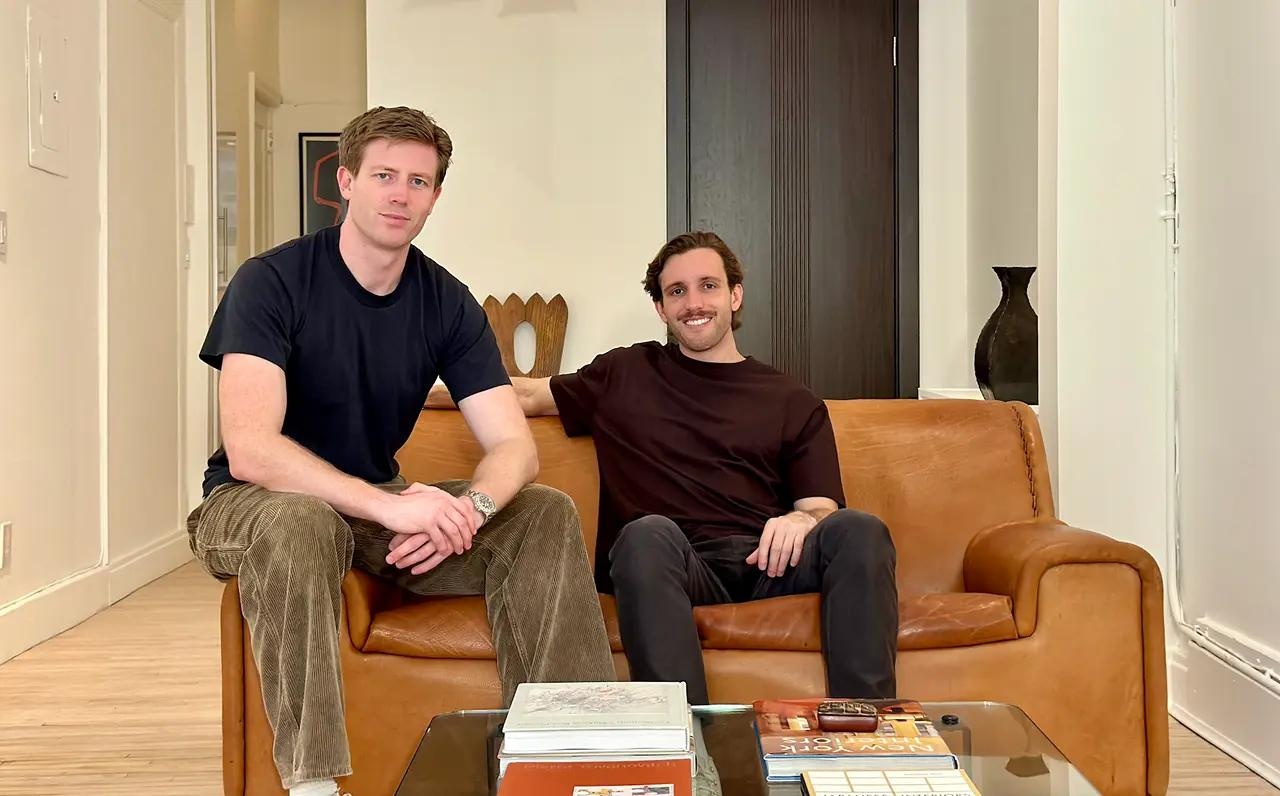
Profound’s beginning was considerably less inevitable than its later funding announcements make it sound. Cadwallader and Babbs met at South Park Commons in New York. They explored aviation technology, maps, lithium mining, payment infrastructure for AI agents and design tools. That is quite an agenda for two laptops.
They also needed a legal company name to enter the Founder Fellowship. Looking outside the community’s office near Astor Place supplied an answer: Cooper Square Technologies. A company eventually concerned with how computers interpret the world began with its founders reading the street.
The partnership brought a creative and commercial background together with Babbs’s technical leadership. Cadwallader remembers pulling his co-founder into Saturday sessions with a whiteboard and Post-it notes, asking that the laptop remain closed. Writing software could wait while they worked out what deserved to be built.
New York was a deliberate base. Babbs has described the city’s concentration of marketing and agency talent as a reason to build there. The people who might buy the product, explain their problems and challenge its assumptions were close at hand. For a business selling a new kind of marketing software, that proximity had a practical use.
A recommendation comes with an opinion
Profound’s original proposition was straightforward: help a brand understand what AI systems say about it. Traditional search offered a results page that a person could inspect. An AI assistant can instead assemble a recommendation, explain the choice and leave competing products outside the answer altogether.
The difference creates several questions. Is the brand mentioned? In what circumstances? Is the description accurate? Which material helped shape the response? Being present in the answer is only one part of the job. A recommendation based on an obsolete detail can be a peculiar sort of victory.
Cadwallader and Babbs built around that difficulty. The company’s early funding supported hiring and product development, with investors including Khosla Ventures, Saga Ventures and South Park Commons. Its August 2024 seed announcement also named individual backers such as Scott Belsky and Karim Atiyeh.
By the following summer, the ambition extended beyond measurement. By August 2025, Profound was combining visibility monitoring with content creation and marketing agents. Its customer examples included Ramp, U.S. Bank, Indeed and MongoDB. The proposition was moving from showing a team what had happened toward helping it decide what to do next.
- 01 / ObserveWhat does AI say about the brand?
- 02 / UnderstandWhere is the information incomplete?
- 03 / ActCreate, correct and update the material.
- 04 / RepeatCheck the answers as they change.
An editorial simplification of Profound’s move from analytics into execution.
Five rounds, a widening brief
The financing tells part of that expansion. A $3.5 million seed round in August 2024 was followed by a $20 million Series A in June 2025, led by Kleiner Perkins. Ilya Fushman joined the board. A $35 million Series B led by Sequoia arrived that August.
In February 2026, Profound announced a $96 million Series C at a $1 billion valuation, led by Lightspeed. The accompanying product argument was specific: customers had been moving visibility data into other tools to execute their plans. Profound wanted to bring that orchestration inside its own platform through Agents, with people retaining strategy and final control.
September brought a $180 million Series D at a $1.8 billion valuation, co-led by Sequoia and Kleiner Perkins. The announced purpose was to expand the platform and research how AI could change marketing work.
Round sizes, not revenue. Bars share a $180 million scale.
The human work gets more specific
Cadwallader’s September description of the product put company knowledge at its center. Profound’s AI Marketer, called Aim, works with a Context Manager holding organizational and individual information. The intended workflow connects discovering an opportunity to briefing, drafting, approval, publication and subsequent reporting.
His argument is that an agent needs the particulars: product facts, customer objections, decisions and a recognizable brand voice. Cheap production creates a supervision problem. Someone still needs to choose the assignment and decide whether the result deserves to leave the building. The software’s ambition grows, and so does the importance of an informed human brief.
“The antidote to slop, from my experience, is more context.”
James Cadwallader
The appeal to judgment fits the creative career that preceded Profound. At Kyra, an audience could abandon a video that gave it no reason to keep watching. At Profound, a marketer has to supply enough relevant information for another system to represent the business sensibly. The distribution changes. Careless work still has somewhere to fail.
Growth has to learn everybody’s name
Cadwallader’s account of managing Profound is less frictionless than an automated workflow diagram. He worries about culture keeping pace with hiring. He favors people who work hard without needing a performance of exhaustion, and describes colleagues making room for family commitments within demanding jobs. That distinction is something he says he understood less well while running his earlier company in his twenties.
There is a recurring practical question beneath the speed: how does a company teach newcomers its standards when the newcomers keep arriving? Funding can pay for recruitment. It cannot, on its own, introduce every new colleague to the habits that made the organization worth joining.
The geographic expansion has a personal dimension, too. Announcing a London office in October 2025, Cadwallader wrote that he had grown up in the UK and that bringing Profound there felt like coming home. The company was answering European demand, while its co-founder was returning with a different business to explain.
A room full of people, after all
For all the attention to machine readers, Profound spends time gathering human beings. Its Zero Click event in San Francisco in April 2026 drew more than 750 marketing leaders, with speakers from companies including OpenAI, LinkedIn, Figma and Reddit. The name describes a change in internet behavior. The format remains agreeably familiar: people in a room, comparing notes.
That coexistence gives Cadwallader’s story its shape. He has worked on entertainment built around friends learning to cook, fashion that needed a narrative, and software intended to help marketers understand a new reader. Each venture asks what makes information useful or compelling to whoever encounters it.
Now the reader may arrive on someone else’s behalf, inspect dozens of pages and return with an answer. Cadwallader is building for that intermediary. Somewhere, a shopper still wants a showerhead that works. The business between the question and the purchase has become his subject.
Follow the conversation
Profiles, conversations and further reading.