Mostafa M. Elbermawy began with a rather old problem: the past. Archaeology interested him before growth marketing did. He taught himself to code, built websites, and discovered that a finished website tended to produce an unfinished conversation. Clients wanted people to visit it. A handsome front door was all very well; somebody still had to find the house.
That question has followed him through Microsoft, American Express, startup growth teams, and the New York agency he founded, NoGood. Now he also runs Goodie AI, which helps brands understand their visibility in AI search. The route from ancient objects to answer engines sounds eccentric until you notice the recurring occupation: working out how something becomes discoverable.
His career has changed mediums more often than it has changed questions. The tools have become newer, the interfaces more conversational, and the job titles more elaborate. The customer still needs to find a reason to choose.
A website was only the beginning
Elbermawy grew up in Cairo, in an entrepreneurial family. Business problems were part of family conversation, and he wanted to help solve them. His interest in archaeology survived his move into technology. In 2025, while discussing his companies, he was also trying to fit a visit to the Grand Egyptian Museum into his schedule. The old enthusiasm had evidently declined to retire.
His early web work supplied a practical education. Making a site function was one assignment; bringing users to it was another. Marketing offered him a place to combine technical work with communication and analysis. He went on to work with Microsoft's Bing team and American Express's digital experience team, before taking growth roles at startups including Workzone and Harver.
Those stops matter because his eventual business was built around a problem he had encountered inside companies: assembling the people needed to turn a growth strategy into daily work. Advice could identify the job. A team had to do it.
Alongside building companies, he has invested in and advised startups. The subjects he offers advice on are concrete: how to take a product to market, how to organize a growth team, which marketing technology to use, and whom to hire. That breadth helps explain his preference for the term growth engineer. The work crosses the boundaries of a campaign brief. It involves people, tools, product decisions, and the path a customer takes through all of them before making a choice.
Workzone marketing executive; writes about filter bubbles.
NoGood begins as a remote agency.
A core team comes together in a WeWork office.
Runs NoGood and Goodie AI; teaches AI search.
The agency with the unhelpful name
NoGood began in 2017. Its name has a less solemn ancestry than a brand consultant might prefer: Elbermawy liked No Fun, a bar he frequented when he lived on New York's Lower East Side. The contrary little name appealed to him. He also owned the domain, which is sometimes the decisive vote in a founder's creative committee.
The business itself grew out of consulting demand and the limits of working alone. He knew specialists from his years in the industry and started bringing them together. It was an attempt to make the growth team he had wanted as an employee available to other businesses.
That is a useful distinction when reading his career. He had already seen the inside of marketing organizations. NoGood gave him a way to arrange the work himself: creative people, technical people, and people who could examine what happened after the campaign went live. The experiment concerned the organization as much as the advertising.
Even good marketers can lose a to-do list
The early agency was entirely remote. In early 2019, he made the first hire for its core team and worked from a small WeWork office. Designers, developers, growth strategists, performance managers, and a data scientist followed. By 2020, the team was working remotely again.
His account of building that organization includes the sort of incident that rarely survives a polished company biography. A project-management system went underused. People kept their own task lists. Integrating Monday.com with Slack added notifications without solving the underlying problem. The team later moved to Notion to bring tasks, experiments, budgets, and meeting notes together.
No glorious breakthrough, no ceremonial unveiling. Just the familiar discovery that buying software and changing how people work are separate purchases. For an agency selling experimentation, its own operations became a continuing experiment.
He also learned to be more selective about clients. Trying to accelerate a company before it had established product-market fit could frustrate the team. Growth work needs something sound to grow. An advertising budget cannot be expected to supply the missing business.
“Be the curator of culture.”
Mostafa M. Elbermawy
That is how he describes the founder's role in company culture. Hiring decisions and ordinary behavior carry the values. The founder has to make room for the team to sustain them. It is a quieter ambition than becoming the office's permanent motivational speaker, and probably leaves more time for work.
He was studying the feed before the chatbot
Long before Goodie, Elbermawy was writing about the way platforms shape what people see. His November 2016 WIRED essay examined the filter bubble around the US election. Comparing online signals with his own social feed, he found that the picture visible to his circle did not resemble the wider picture suggested by the data.
The essay matters here as an early expression of a continuing interest: the distance between what exists online and what a particular interface chooses to show someone. A person can be surrounded by information and still receive a narrow view of it. Personalization makes that distance easy to overlook.
For a marketer, the same problem acquires a commercial edge. A brand's presence on the web and a customer's encounter with it are different events. His subsequent work on AI discovery returns to that separation, with another kind of intermediary deciding which information reaches the user.
When the answer becomes the destination
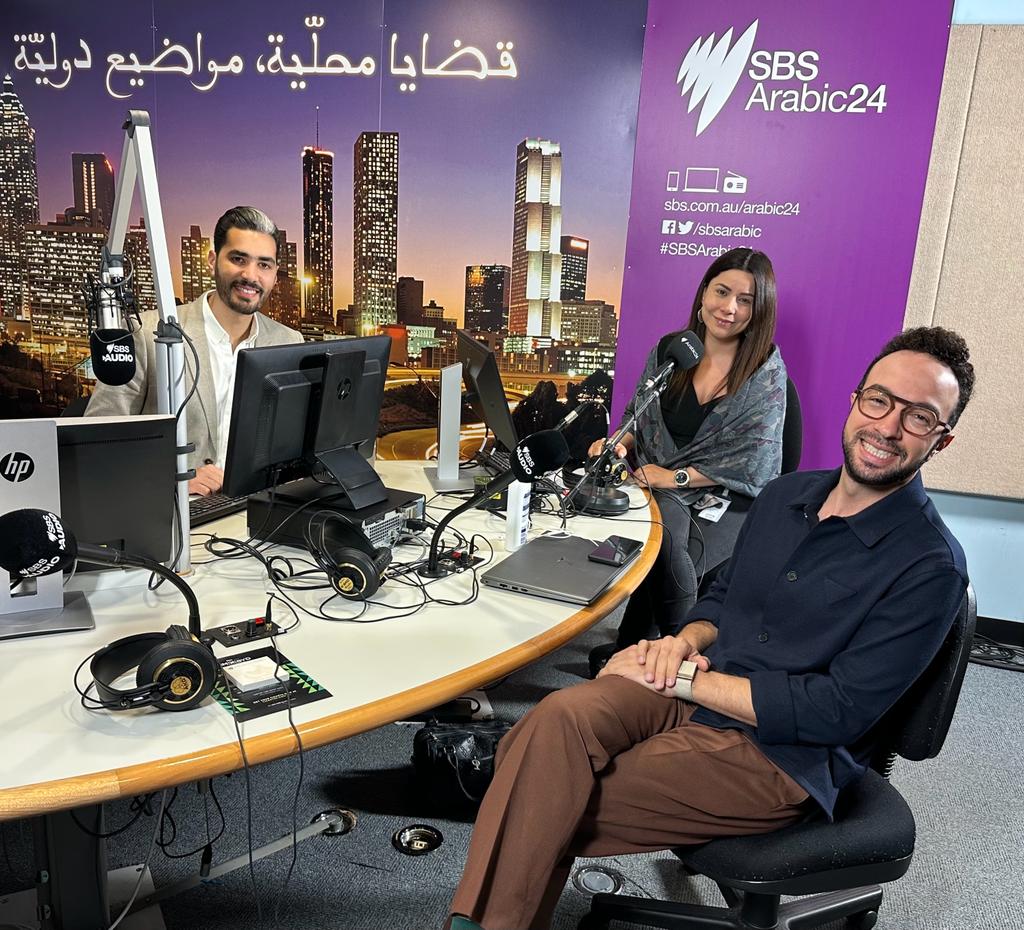
By October 2023, he was discussing generative AI and the future of search during a visit to Sydney for SXSW. His SBS appearance put those questions into an Arabic-language conversation as well. In March 2025, his scheduled SXSW session addressed community-driven search and the changing ways brands become discoverable.
Goodie turns that subject into software. It is designed to help companies monitor and improve how they appear across AI services such as ChatGPT, Perplexity, and Gemini. NoGood supplies the consulting and execution side of his work; Goodie supplies a product focused on the newer discovery environment.
In his telling, the product came from watching client problems appear before there was an established operating system for handling them. People were asking AI systems for comparisons and recommendations. Brands needed a way to understand the answers being given about them.
He describes the opportunity with a suitably mischievous line: “A lot of the biggest moves in tech are distribution plays wearing a product costume.” The observation fits someone whose work has repeatedly begun where making a thing meets getting it chosen.
- 01RetrievedThe information is found.
- 02CitedIt enters the answer.
- 03TrustedThe brand is credible.
- 04PreferredIt becomes the choice.
A conceptual sequence from his August 2026 writing, rather than a measurement of results.
A recommendation is a different ambition
His August 2026 writing distinguishes being cited from being recommended. A company can provide information used in an answer without becoming the company the answer suggests buying from. His four-part sequence moves from retrieval to citation, trust, and preference.
He argues that this makes AI search a concern for the wider marketing organization. The brand's own pages, outside coverage, community discussion, and reputation all contribute to its public identity. In his view, technical accessibility remains necessary, while the larger task is giving the system a convincing, consistent account of the business.
He is also prepared to argue about the vocabulary. In a May 2026 essay, he treats conventional SEO as a foundation for answer engine optimization and urges teams to coordinate search, social, and public relations. He cautions against easy shortcuts and against treating one platform's perspective as a complete account of discovery.
These are the arguments of a founder selling into the market he describes. They are also specific enough to examine: what can a system retrieve, what does it repeat, and does the resulting answer actually favor the brand? The question has moved beyond counting visits to a homepage.
The classroom, and the customer who may be software
Teaching has become another part of his work. He offers an AEO masterclass on Maven and teaches through Reforge. The Maven syllabus moves from understanding AI search to content, social and earned media, technical accessibility, and measurement. As of October 2026, its next listed cohort is November 18-19.
His May essay on marketing to agents takes the argument a step further. He asks companies to consider software acting for a buyer as an audience with its own requirements. Clear product facts, usable documentation, and current information become part of persuasion. A lyrical slogan may charm a person; a purchasing agent still needs to know what is in stock.
Elbermawy's personal interests offer a welcome interruption to all this machinery. His website's inspiration list includes the artist Inji Aflatoun, The Unbearable Lightness of Being, and Naguib Mahfouz's Cairo trilogy. The interests sit comfortably beside an early enthusiasm for archaeology. There is room in this career for material that resists a dashboard.
The thread through his work is remarkably practical. A client has a website and needs visitors. A consultant has demand and needs colleagues. A brand has an online presence and needs to understand how an answer engine describes it. He keeps finding another version of the unfinished conversation. The front door is still there. He is busy working out who, or what, will arrive at it next.