A paycheck lands. Then life begins its deductions. Rent takes a clean bite. A card balance lingers. A car makes a noise with financial implications. Somewhere between a budgeting rule and a late notice, a person has to decide what to do first. The arithmetic is rarely the mysterious part. The order of operations is.
Jacky Chiu has built a company around that awkward interval. He is the chief technology officer and a co-founder of Brightside, a Phoenix-area financial technology company sold to employers as a benefit for their workers. Brightside brings together software, financial products and people called Financial Assistants. The system can organize choices. The assistant can hear the pause before an answer.
This is a curious position for a career technologist to defend. The usual sales pitch for software is subtraction: fewer steps, fewer employees, fewer conversations. Chiu's work points toward a more discriminating ambition. Automate the maze, perhaps, but not the moment when someone needs help choosing a turn.
The code can sort the options. A person can notice that the question being asked is not quite the problem that needs solving.The design principle inside Brightside's model
A career in consequential systems
Chiu did not arrive in financial technology through a personal-brand express lane. His public career record is a sequence of increasingly consequential systems. He started as a software developer at Sun Apparel in 1998. He moved into management information systems at MCI, then spent seven years in information technology leadership at Apollo Education Group. These were enterprise environments, the sort where a tiny change can acquire a meeting, a committee and a surprisingly muscular spreadsheet.
In 2012 he joined LifeLock, the identity-protection company, and rose into vice president roles spanning product and technology. LifeLock went public that year and was acquired by Symantec in 2017. Identity protection is a useful apprenticeship for anyone later asked to build financial tools: trust is not decorative, security is not a feature to add on Friday, and the customer usually arrives because something has already become complicated.
- Software development at Sun Apparel
- Management information systems at MCI
- IT leadership at Apollo Education Group
- Product and technology leadership at LifeLock
- CTO and co-founder at Brightside
His education fits the same practical contour. Chiu earned a bachelor of business administration in computer information systems from the University of Texas at El Paso, then a master's in computer information systems from the University of Phoenix. Business on one side, systems on the other. It is an unromantic pairing, which may be precisely why it has proved useful.
The founding assignment
Brightside began in 2017 from an idea championed by benefits executive Shawn Leavitt: employers had absorbed the business consequences of workers' money stress but offered little help with the messy decisions underneath it. Callum King left Comcast Ventures to build the venture. Tom Spann, a co-founder of Accolade, came aboard as chief executive. Chiu was recruited from LifeLock as a key founding executive and CTO.
The first version of the argument was already complete. Comcast Ventures and Trinity Ventures supplied $4 million in seed capital. The product would combine personal assistance, technology and financial products. It would be delivered through employers, but designed for the employee trying to make a paycheck stretch over an unruly month.
That distribution choice changed the engineering problem. Brightside was not building a general-purpose money app and hoping consumers might wander in. Employers would sponsor access for a defined population, often including frontline workers. The platform therefore had to serve two constituencies without muddling them: the worker looking for confidential, practical help and the employer looking for evidence that the benefit was useful. One needed a next step. The other needed aggregate outcomes. Neither needed a lecture in fintech vocabulary.
The product is the whole chain. Remove the middle and help becomes hard to scale. Remove the end and the system loses the conversation.
The model sounds simple when reduced to three nouns. In practice, each noun is unruly. Financial products come with rules. Employer benefits come with boundaries. People come with debts, deadlines, priorities and varying tolerance for being told to download another app. The technology leader's task is not merely to connect databases. It is to make those constraints legible without allowing the machinery to pretend it understands more than it does.
There is also a distinction between education and action. A library can explain compound interest beautifully while a bill remains due on Tuesday. Brightside's founding proposition was that workers often need help resolving the Tuesday problem first. That can mean identifying an assistance program, arranging a payment plan, evaluating consolidation or beginning a savings habit small enough to survive the month. The product has to convert information into a sequence, and the sequence has to respect the person living through it.
Chiu's own description of his work is compact: he says he co-founds and builds AI-native platforms in regulated industries. The phrase contains two fashionable initials and one unfashionable warning. Regulation is the part that spoils improvisation. It turns product discipline from a virtue into an operating condition.
Money for the middle
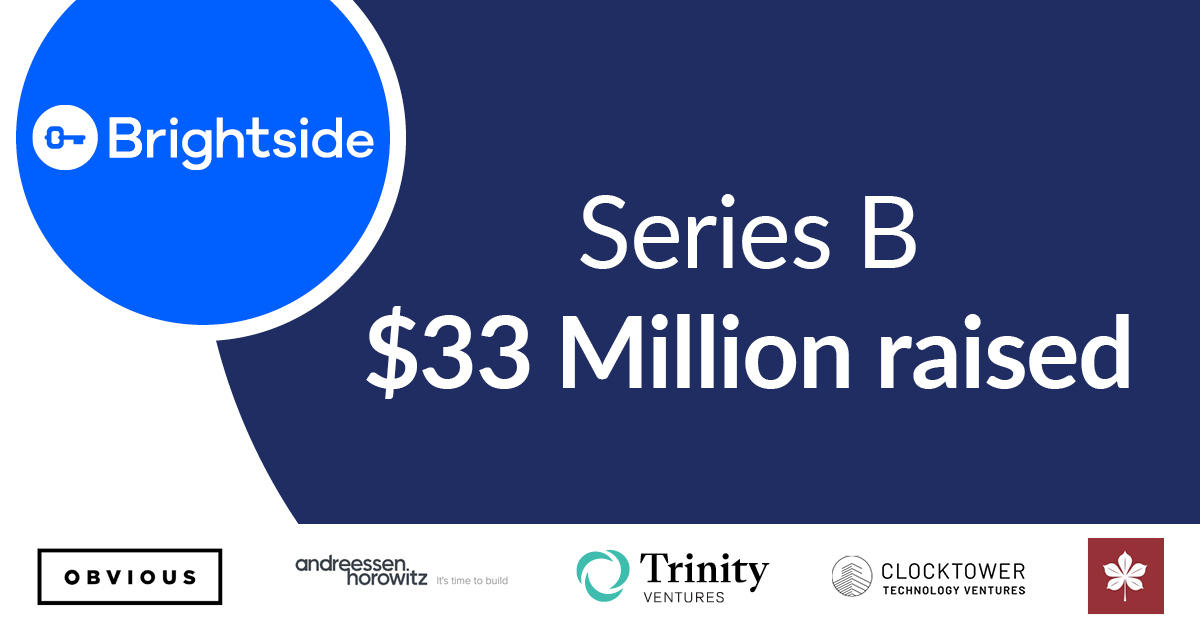
Brightside raised a $35.1 million Series A in 2020, led by Andreessen Horowitz, and a $33 million Series B in November 2022, led by Obvious Ventures. The latter round was earmarked for growth and platform improvements, including more AI-driven capabilities. By then, Brightside said it supported more than 300,000 families. In June 2025, the company reported that one million families were eligible through their employers.
Funding is a measurement of investor conviction, not a medal for finishing. More revealing are the claims Brightside has chosen to measure. In 2022 it reported that households using the service saved about $1,200 a year on average. It also reported stronger debt reduction and employee retention among engaged users. These are company figures, and they belong in the story as operating targets rather than applause lines. The important detail is what they force the platform to do: pursue outcomes beyond logins, lessons completed or cheerful confetti after a user links an account.
Growth brought its own test of the original promise. Brightside said its revenue expanded roughly eightfold in 2021 and was on course for another steep increase in 2022. Headcount passed 175 that year. Those figures describe a company changing shape quickly, which is precisely when tidy founding principles tend to acquire exceptions. Chiu's responsibility was to make the exception intentional: let technology absorb repetition and complexity while keeping the human handoff available when context becomes the deciding fact.
In 2025, Brightside appeared at No. 137 on the Inc. 5000, with 2,772 percent revenue growth over the ranking period. Chiu's public response opened with the wonderfully efficient “GO Brightside!” He thanked the team, customers, clients and supporters, then wrote that he was excited to keep making financial care accessible to those who need it. No founder mythology. No garage. No claim to have rewritten money itself. Just a cheer and the next assignment.
The restraint inside the machine
Chiu also serves as an adviser to Dovly, a credit technology company. The appointment in 2020 reunited one part of the LifeLock network around another trust-heavy consumer problem. It suggests a career less interested in novelty for its own sake than in a recurring class of puzzle: how to turn a regulated, emotionally loaded process into a product someone can use without first becoming an expert.
That is why the human exception matters. A purely automated product can be elegant because it narrows the world until every input fits. Real financial lives are impolite inputs. They show up late, contradict themselves and include facts nobody thought to place in the dropdown. Brightside's Financial Assistants are not an ornamental layer over the software. They are part of its error-handling philosophy.
A humane system is not a less technical system. It is one engineered with a more honest idea of its limits.What Chiu's career makes visible
There is ambition in that restraint. Chiu's public profile now foregrounds AI-native platforms. Brightside has advertised work on an AI agent platform. The obvious challenge is to gain speed and reach without confusing fluent output with judgment. Finance supplies endless opportunities for an automated answer to be technically plausible and personally useless.
Chiu's career offers no grand manifesto, and perhaps that is fitting. He has spent nearly three decades in roles where manifestos eventually meet production. His record runs from code to infrastructure, from infrastructure to product, and from product to a company whose central promise depends on all three working quietly enough for a useful conversation to happen.
The best clue to what he is building is not a model name or an architecture diagram. It is the deliberate gap left for another person. In an industry fond of removing friction, Chiu has preserved the kind that sounds like a question, waits for the whole answer and understands that the next step may be small. The machinery matters. So does knowing where to put the chair.