Long before artificial intelligence learned to write investment memos, Ivan Latanision was worrying about four colors of ink. His 1992 master’s thesis at Rochester Institute of Technology compared two methods for printing process color on newsprint. The experiment was delightfully physical: move a printing plate out of register, measure what happens, repeat. The finding was less romantic. One technique produced consistent, acceptable variation; the other could become unpredictable.
A career can hide its theme until the right old document turns up. Latanision’s subsequent work has moved through newspaper production, financial publishing, ocean freight, clinical trials, telecom expenses, insurance, and private capital. The machinery became software. The plates became products, databases, and workflows. Yet the underlying question barely changed: when several systems contribute to one picture, how do you keep them aligned?
Today he is Chief Product & Marketing Officer at Allvue Systems, the Miami-headquartered software company serving private equity, private debt, public credit, fund administrators, and banks. He works from the New York metropolitan area. His remit sits at a useful fault line. Product decides what the software will do; marketing must explain why anyone should care. A muddled platform cannot be rescued forever by a lucid brochure.
The useful art of making things agree
Latanision began in technology and operations at newspapers and media companies, including The Citizen News, USA TODAY, and Greater Media. By 1996 he was at Thomson Reuters. At Reciprocal, a digital-rights-management company, his title shifted toward product marketing. Then came seven years as chief technology officer of SourceMedia, a financial-services publisher with daily newspapers, magazines, websites, software products, directories, and conferences. It was a portfolio before “platform” became every software company’s favorite noun.
The move from publishing to INTTRA in 2008 might look like a turn into another industry. It was also a move toward the same operational puzzle at a larger scale. Ocean shipping relied on carriers, shippers, freight forwarders, importers, hard-copy documents, and repeated data entry. As INTTRA’s product leader, Latanision argued for shared standards, accessible data, and electronic transactions that could reduce errors and speed document flow. The cargo was physical; the friction was informational.
“Adoption of e-commerce systems utilising global standards and accessible, transparent data will help shippers optimise their ocean supply chains.”Ivan Latanision, during his INTTRA years
One operating problem, six different rooms
Honeywell’s life-sciences business followed, then Medidata Solutions in 2016. Here the portfolio problem became explicit. Medidata had roughly 40 products. Latanision, arriving as Head of Product, led a strategy to bring them toward one platform. The clever part was not drawing a new architecture diagram. He created a customer advisory board and asked it to map the entire clinical-trial lifecycle, surfacing trouble across clients’ technology environments. Customers were not invited merely to applaud a roadmap. They helped expose the seams.
That distinction matters. A product-by-product conversation tends to preserve the organization chart that created the mess. A workflow conversation follows the person trying to get something done. It notices the copy-and-paste between tools, the spreadsheet kept “just in case,” the field whose name changes across systems, and the report that arrives after the decision. The mundane details are where a unified platform either earns its adjective or loses it.
Complexity should be absorbed, not admired
In 2018, Latanision joined Tangoe as chief product officer. The company managed enterprise spending and assets across fixed communications, mobile devices, and cloud services. The product he introduced in 2019 gathered those categories into Tangoe One. His description was characteristically customer-facing: an easy-to-understand answer to complicated enterprise technology management. Complexity existed, certainly. The customer did not need to be made to feel it at every click.
From 2020 to 2024, he served as executive vice president and chief product officer at Insurity, overseeing product vision, strategy, and market segments for insurance software. Insurance is an excellent place to lose one’s appetite for careless innovation. Rules matter. Data lineage matters. A confident error remains an error. During those years, Latanision also joined fellow executives in a weekly leadership series for UConn graduate business students, opening the C-suite to questions about strategy, technology, retention, disagreement, and careers.
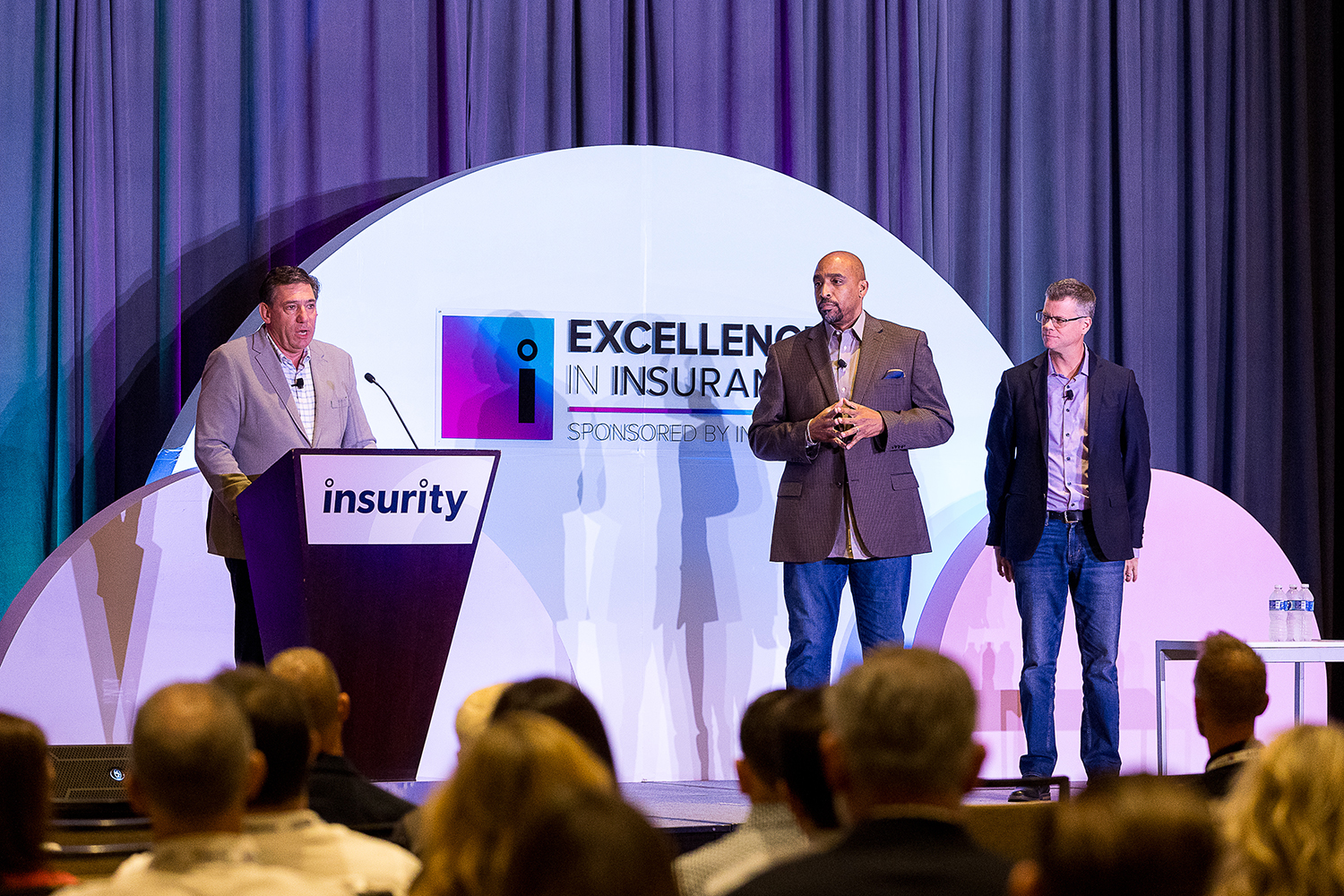
Former colleagues offer a small window into his manner. One describes a manager who inspired his team through a chaotic environment and looked after both the group and the company. Another calls him a strong executive and mentor. Recommendations are not laboratory evidence, but these two rhyme with the customer-advisory-board method: make the system legible, give people a voice, and help them move through complexity without pretending it is simple.
AI arrives, and the basement asks for attention
Latanision joined Allvue in 2024 as Chief Product Officer, alongside a role as an operating advisor at TA Associates. By 2025 his Allvue title had expanded to include marketing. The timing placed him in the middle of a peculiar enterprise race. Every vendor wanted an AI story. Private-market firms, meanwhile, still had information distributed across fund accounting, portfolio monitoring, investor relations, research, trade-order management, documents, portals, and private spreadsheets with heroic filenames.
His response has been conspicuously structural. Allvue introduced Nexius as a data platform for consolidating and normalizing information. It launched credit research tools and document-extraction capabilities, developed an AI assistant called Andi, and connected products through APIs and partnerships. At an Allvue credit user group in New York, clients were brought into conversations about the product roadmap, AI, data, and integrations. Again, the feedback loop sat inside the strategy rather than after it.
“At Allvue, we’re defining data models, and we’re defining ways to bring data in and master data so that we have a common model that AI can understand.”Ivan Latanision, 2026
It is a sentence about AI whose hero is a common model. That is almost comic in an era of animated assistants and breathless keynotes. It is also the point. A language model can make an interface feel startlingly fluid while the underlying data remains contradictory, stale, or untraceable. In private markets, where a decision may travel through an investment committee, an administrator, an auditor, and an investor, fluency without provenance is a liability wearing excellent tailoring.
On the Lead The Machine podcast in 2026, Latanision made the commercial test sharper. AI in a regulated, private-equity-backed software company must do more than demo well. It has to work with untidy real-world information, fit into critical processes, withstand scrutiny, and produce economic value. He favors AI embedded in the work over an isolated novelty. Document extraction is useful because it removes a manual step and feeds validated information into a system. An assistant is useful when it understands the product and the client’s context. The feature earns its place by shortening the journey.
This does not make him an AI skeptic. It makes him skeptical of skipping floors. His public writing argues for connected data, workflows designed for scale, and AI applied to create clarity. In a period of concern about private-market transparency, he has also emphasized consistent, auditable information and real-time readiness. Innovation, in this telling, is not a decorative layer placed on old disorder. It is the patient removal of the disorder that prevents a new tool from being trusted.
The picture in register
There is a pleasing loop from the RIT pressroom to Allvue’s data platform. In the thesis experiment, each ink could be correct on its own and the final image could still be wrong. In enterprise software, each application may perform its local function while the customer experiences mismatched fields, duplicate work, and competing versions of truth. Local excellence does not guarantee a coherent whole.
Latanision’s career suggests an operator drawn to the whole. He has moved between technical operations, technology leadership, product, advising, and marketing. He has worked in sectors with specialized vocabularies and strict consequences. Rather than becoming attached to one domain, he appears attached to a type of problem: portfolios that have grown apart, workflows that cross company boundaries, and data that must become reliable before it can become intelligent.
That makes his expanded title at Allvue more interesting than corporate punctuation. Product and marketing are two forms of alignment. One aligns capabilities into an experience; the other aligns that experience with a promise. If the words race ahead of the product, customers notice. If the product ignores the story customers tell about their work, the roadmap drifts. Holding both sides creates a useful discomfort.
Artificial intelligence will keep improving, loudly and quickly. The unglamorous work beneath it will remain. Someone must decide what the fields mean, where the information came from, which system can change it, and how a person corrects the machine. Someone must sit with customers and map the journey that no single product team owns. Latanision has been rehearsing for that assignment since four inks refused to stay politely in line.