There is a clock hidden inside every living medicine. It starts with a donor, runs through a factory, and ends beside a patient. The biology may be microscopic, but the operational problem is enormous: cells must be selected, composed, checked, moved and delivered while they are still useful. Ivan Dimov understood that the clock was not an inconvenience surrounding the science. The clock was part of the science.
That is how an electronic engineer from Chile, via Bulgaria, Africa, Ireland, Berkeley and Stanford, came to spend nearly nine years running Orca Bio. Dimov co-founded the company in 2016 with scientists Nate Fernhoff and Jeroen Bekaert. Their wager was precise in every sense. If a conventional donor graft was a mixed crowd of cells, perhaps a carefully measured composition could preserve the useful actors while reducing the troublemakers. Making that composition once would be research. Making it reliably, for trial sites across the country, would be a company.
Dimov's particular contribution was not a lone eureka. It was fluency across borders that usually require translators: electronics and biology, academia and industry, a bench protocol and a production line. His résumé can look like a drawer of unrelated adapters. Robotics. Hospital technology. Mobile barcodes. Microfluidics. At-home diagnostics. Cell therapy. Plug them together and the pattern appears. He has repeatedly taken something delicate and technical and asked whether it can survive contact with the world.
A childhood with several maps
Dimov was born in Bulgaria. At ten months old, he moved with his family to Mozambique. Later came other African countries and school in Namibia, which he finished at 16. Then the family moved to Chile. His mother and Chilean stepfather settled in Puerto Montt; Dimov chose Valparaíso and entered civil electronic engineering at Universidad Técnica Federico Santa María two years younger than his classmates.
“Siento que soy de todas partes.”“I feel I am from everywhere.”
The line explains more than geography. In Chile, Dimov did not stay inside one discipline. He helped establish a robotics research center at his university and a hospital technology center with collaborators in Valparaíso. The latter worked with hospitals on clinical engineering and technology management. He also worked on a robot for building DNA chips and on BlobCode, a venture that aimed to let ordinary mobile-phone cameras read two-dimensional barcodes before QR codes became an everyday reflex.
Biology caught him because it looked, to an engineer, like a machine with its own intelligence and software. He tried brain research in France, decided it was not his road, and pivoted toward applied biophysics. A doctorate at Dublin City University led to work with bioengineer Luke Lee, first through Ireland and Switzerland and then at UC Berkeley. In Lee's BioPOETS laboratory, Dimov worked on microfluidic systems: tiny channels and chambers that make laboratory operations happen on the scale of a chip.
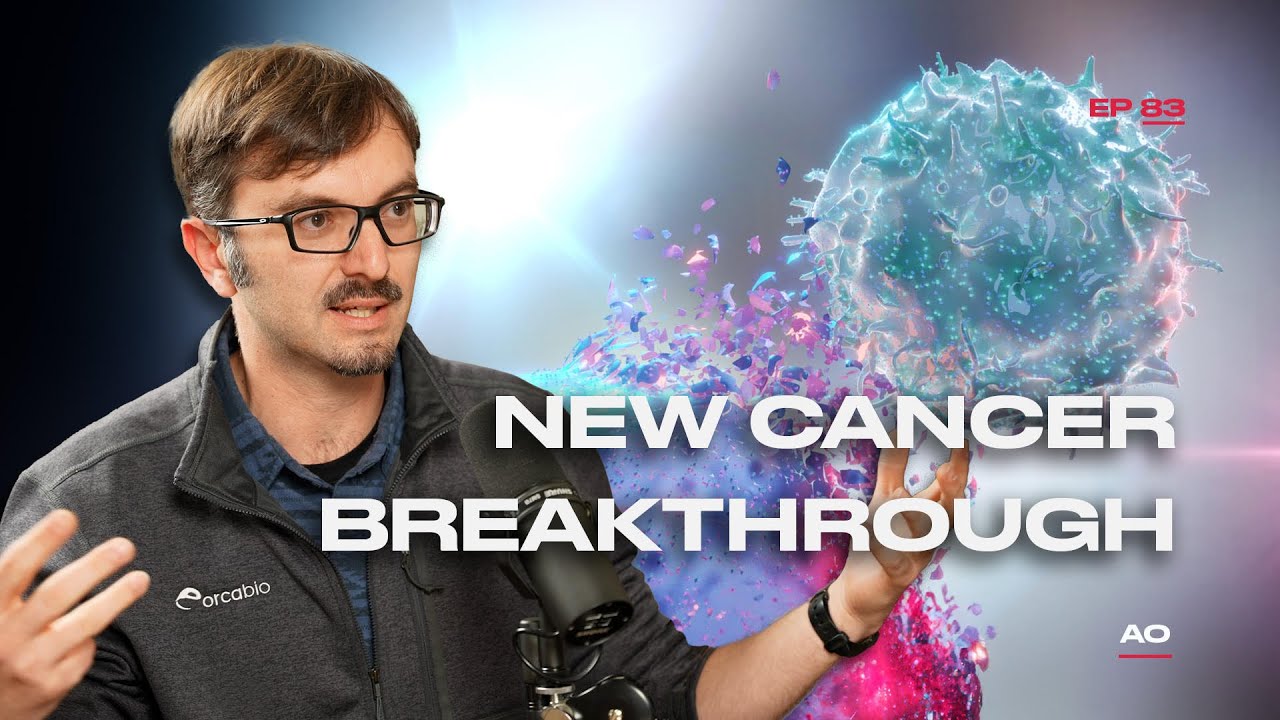
First, retire the hammer
In April 2010, Dimov arrived at Stanford as a Siebel visiting scholar. He joined work around Irv Weissman's laboratory, analyzing cell-surface protein dynamics and developing microfluidic methods for studying differences between individual cells. The technical brief suited him. The intellectual culture changed him.
Engineers, in Dimov's telling, can become enchanted by tools. Build an impressive hammer, then tour the world looking for a nail worthy of it. Medicine offered the opposite problem: too many nails. Beside physicians, he encountered a surplus of urgent, specific needs. The work became choosing one and tailoring the technology to it.
“Academia is a safe place where there's a lot of openness to trying out new things.”Dimov on exploration, error and the useful freedom of a laboratory
The freedom matters because the next stage is less forgiving. Dimov had already seen that transition with microfluidic diagnostics. Research at Berkeley helped produce the idea behind the company that became Lucira Health, which he co-founded and initially served as chief technology officer. The chip had to leave the laboratory because reproducibility, clinical-trial design and routine manufacturing were not side quests. Lucira's at-home COVID-19 test later became the first fully self-administered test of its kind authorized by the FDA, and Pfizer acquired the company in 2023.
The translation loop
Orca Bio raised the difficulty. The product was not a plastic cartridge with chemistry inside. It was made from living donor cells. The team wanted to sort those cells with single-cell precision, purify several populations and assemble them in deliberate proportions. Then the product had to reach the treatment center on schedule. Dimov said in 2020 that the company had demonstrated delivery within 48 hours anywhere in the United States. The claim was really a description of the business: the medicine and its supply chain were inseparable.
The factory is part of the invention
Biotechnology loves the image of discovery and tends to crop out the loading dock. Orca could not. A variable cell product would weaken the entire premise of precision. A late product could be unusable. Scaling required custom machinery, process automation, quality systems and a network that treated a biological package with the urgency of a relay baton.
This is the founder lesson hidden in Dimov's story: complex products do not have an operations phase after the innovation phase. Operations are the innovation. The same is true of rockets, batteries and advanced semiconductors, but cell therapy makes the point with unusual drama. Nature supplies the raw material. The company must persuade nature to meet a schedule.
Orca emerged from stealth in 2020 with a $192 million Series D and nearly $300 million raised at that point. The capital funded clinical work and manufacturing at commercial scale. Under Dimov, the company advanced Orca-T into Precision-T, a randomized Phase 3 study conducted at 19 treatment centers. Enrollment finished in 2024 with 187 participants, above its original target.
The study's primary measure was survival without chronic graft-versus-host disease, a complication in which donor immune cells attack the recipient. At one year, the figure was 78 percent for the precision-engineered product and 38 percent for the conventional-transplant comparison. It was the sort of result that turns an engineering philosophy into clinical evidence. It also came with the usual necessary restraint: a trial result must survive peer review, regulatory review and, eventually, ordinary use.
Building past yourself
In May 2025, with positive Phase 3 results in hand and Orca preparing its regulatory submission and commercial infrastructure, Dimov left the CEO role. Fernhoff, his co-founder and chief scientific officer, succeeded him; Bekaert became president. Founder stories often treat a title as the final proof of identity. This transition was more interesting. The work had moved from invention and clinical development toward launch, and the leadership changed with it.
The timeline after Dimov's departure makes the handoff legible. The FDA accepted Orca's application and granted priority review in October 2025. Phase 3 results appeared in the journal Blood that December. A Series F round closed in the same month, part of $250 million in new equity across two recent rounds. Then, on June 30, 2026, the FDA approved the therapy under the brand name TREGZI.
Approval belongs to a large cast: patients and donors, laboratory researchers, clinicians, regulators, manufacturing teams, investors, and the employees who kept the clock running. Dimov's place in that cast is specific. He helped form the company, served as its founding CEO for close to nine years, and led it through the long middle when a scientific proposition had to become a reproducible organization.
In 2026, a biotechnology gathering in Uruguay introduced him as a serial entrepreneur and Orca's former founding CEO. It was an apt return to Latin America for a builder whose earliest laboratories were in Valparaíso. The biography now contains a rare completed loop: an electronics student becomes a biophysicist; the biophysicist becomes a company builder; the company turns carefully sorted cells into an approved product.
The useful part is not the neatness of that ending. Dimov's route was never neat. It wandered through barcode cameras, mining sensors, hospital equipment, diagnostic chips and single-cell biology. What persisted was a question: can this idea be made to work outside the room where it was invented?
For Orca Bio, the answer required a factory, a clinical network and a 48-hour clock. For founders elsewhere, the materials will differ. The discipline travels well. Begin with the problem. Respect the unglamorous constraints. Build the delivery system as carefully as the product. And when the work asks for a different kind of leader, remember that a mission is larger than a chair.