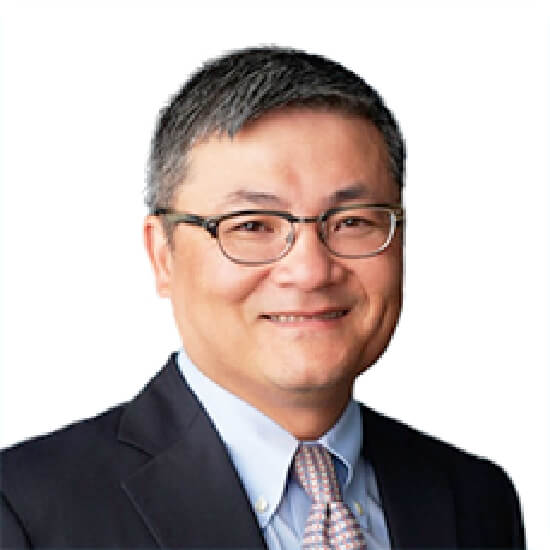
A surgeon walks into his uncle's house in Vietnam. The uncle mentions, almost in passing, that he drinks a certain tea to keep his blood sugar down. The surgeon does not believe him. He takes some home anyway.
That is the entire origin story of Imagine Pharma, the Pittsburgh biotechnology company Ngoc L. Thai founded in 2016 and where he now serves as founder, co-CEO, and chief medical officer. The leaf his uncle drank turned out to contain a polypeptide. Thai's lab named it IMG-1. Under the right conditions, it does something nobody asked it to do: it tells insulin-producing islet cells, the ones that quietly die off in diabetics, to migrate out and multiply into the billions.
What he is building now is not a supplement and not a tea. It is a bet that the body can be taught to regrow its own insulin factories - and that the instructions were sitting in a plant the whole time. The work spans type 1 diabetes, wound healing, and oral biologics. The conviction behind it comes from two decades spent on the other side of the operating table.
Two decades cutting, then a pivot
Thai earned a bachelor of science from Cornell, then an MD and a PhD from the University of Pittsburgh School of Medicine. He trained as a transplant surgeon under Thomas E. Starzl - the man widely credited with making organ transplantation possible - and John J. Fung. That lineage matters. It put him in the room where the hardest problems in transplantation were being argued out.
He finished his fellowship in 2004 and was promptly handed a turnaround job: rebuild the pancreas program at UPMC. By 2006 it was the largest in that institution's history and one of the largest anywhere. In 2007 he moved to Allegheny General Hospital, founded its liver transplant program from nothing, and rebuilt its kidney and pancreas programs. In 2016 - the same year he started Imagine Pharma - he was named Chair of Surgery at the Allegheny Health Network, with nine hospitals and 150 surgeons reporting up to him.
Notice the pattern. He keeps walking into programs that need to be built and building them. The biotech is the same instinct pointed at a molecule instead of a department.
What IMG-1 actually does
Islet cells live in the pancreas and make insulin. In type 1 diabetes they are destroyed, which is why patients inject insulin for life. The standard transplant approach - move islet cells from a donor into a patient - runs into the oldest wall in medicine: there are never enough cells, and the body fights the ones it gets.
Thai's pitch flips the supply problem. Instead of finding more cells, you grow the patient's own. His stated vision is to biopsy the pancreas of someone newly diagnosed, use IMG-1 to expand their islet cells into the billions, and reinfuse them - the patient's own tissue, multiplied, with no donor and no rejection fight.
The strangest part is that the team found the effect by accident. They were trying to prove something else entirely. Instead of the result they expected, they watched cells get up and move.
One molecule, three doors
Imagine Pharma is built around the single IMG-1 discovery, but Thai split it into three development platforms - the way a builder draws three wings off one foundation.
Oral Delivery
Getting biologics - normally injected - to survive the gut and work when swallowed.
Therapeutics
IMG-1 itself as a drug, targeting diabetes and metabolic disease.
Regenerative Medicine
Cell expansion and tissue repair, including diabetic wound healing.
In October 2023 the company closed a $32.5M Series A to push these programs forward. For a 15-person shop in Pittsburgh chasing first-in-class biology, that is real runway and a real vote of confidence in a molecule whose mechanism is still, by the founder's own admission, partly a mystery.
He does not pretend to have all the answers
Most founders oversell. Thai does the opposite. He is candid that the exact mechanism of IMG-1 is not fully understood - researchers know it binds to a nuclear transcription factor, and that a cascade follows, but the full chain is still being mapped. That willingness to say "we don't entirely know yet" is the same skepticism that made him take the tea home to test rather than wave it away. It is rarer in a pitch deck than it should be.