An investor once told Iva Teixeira and her co-founder that he liked their company, but preferred to invest at a later stage. They had a reply ready: they expected to raise money only once. If he passed, he would miss his chance. He laughed. In Teixeira’s retelling, he was entitled to. The founders eventually returned to the conversation with another funding round to discuss.
It is a pleasingly unvarnished opening to a founder’s story. The usual version requires early certainty to be vindicated. Here, certainty gets a small public correction, and everyone carries on. There is room for ambition, an investor with a sense of humor, and the possibility that you can be serious about a business while being wrong about how it will grow.
Teixeira is the co-founder and CEO of Good Face Project, a San Diego software company serving the cosmetics industry. Its territory is the work behind the product: ingredients, formulation and the requirements a team must consider before something reaches a shelf. A photograph can sell the bottle. Someone still has to organize what goes into it.
An education in constraints
Long before Good Face, Teixeira left Bulgaria for the United States at 19 with $3,000 borrowed from family friends. She supported herself through her education. Mathematics and business at Marian University led to graduate study in industrial engineering and operations research at the University of Michigan, followed by an MBA at Harvard Business School.
There is a useful fit between that training and the company she would eventually build. Operations research concerns decisions made within limits. A cosmetics team has plenty: what an ingredient does, what the formula costs, where the product will be sold, and which requirements it must meet. The creative brief is the beginning of the problem. It rarely contains the entire problem.
Her working life included Bain & Company and a senior operations role at par8o. Her founder profile also lists Nestead, where she served as CEO. Consulting and operating provide different views of an organization. One asks what should change. The other discovers how many people, habits and everyday decisions are involved in changing it.
The shopper had a different question
Good Face’s origin came through conversations with consumers. During research for a large beauty business, Teixeira interviewed more than 100 women. Among the things she heard was a desire for help choosing from the expanding assortment of products. The choice on the shelf had become larger than the shopper’s capacity to make sense of it.
That is an awkward problem for an industry skilled at adding another choice. Each new launch arrives with its own explanation, vocabulary and reason to exist. The shopper must somehow compare them all. Teixeira began looking for a way to connect the information around ingredients and products, so that finding an answer would require less individual detective work.
The resulting business began with consumer-facing ingredient intelligence. Good Face was founded in 2018 and joined Target’s accelerator program in 2020. The relationship gave its founders a place to explore a retailer’s version of the same question: how do you make useful information available at the point where someone is deciding what to buy?
Two founders, a shared vocabulary
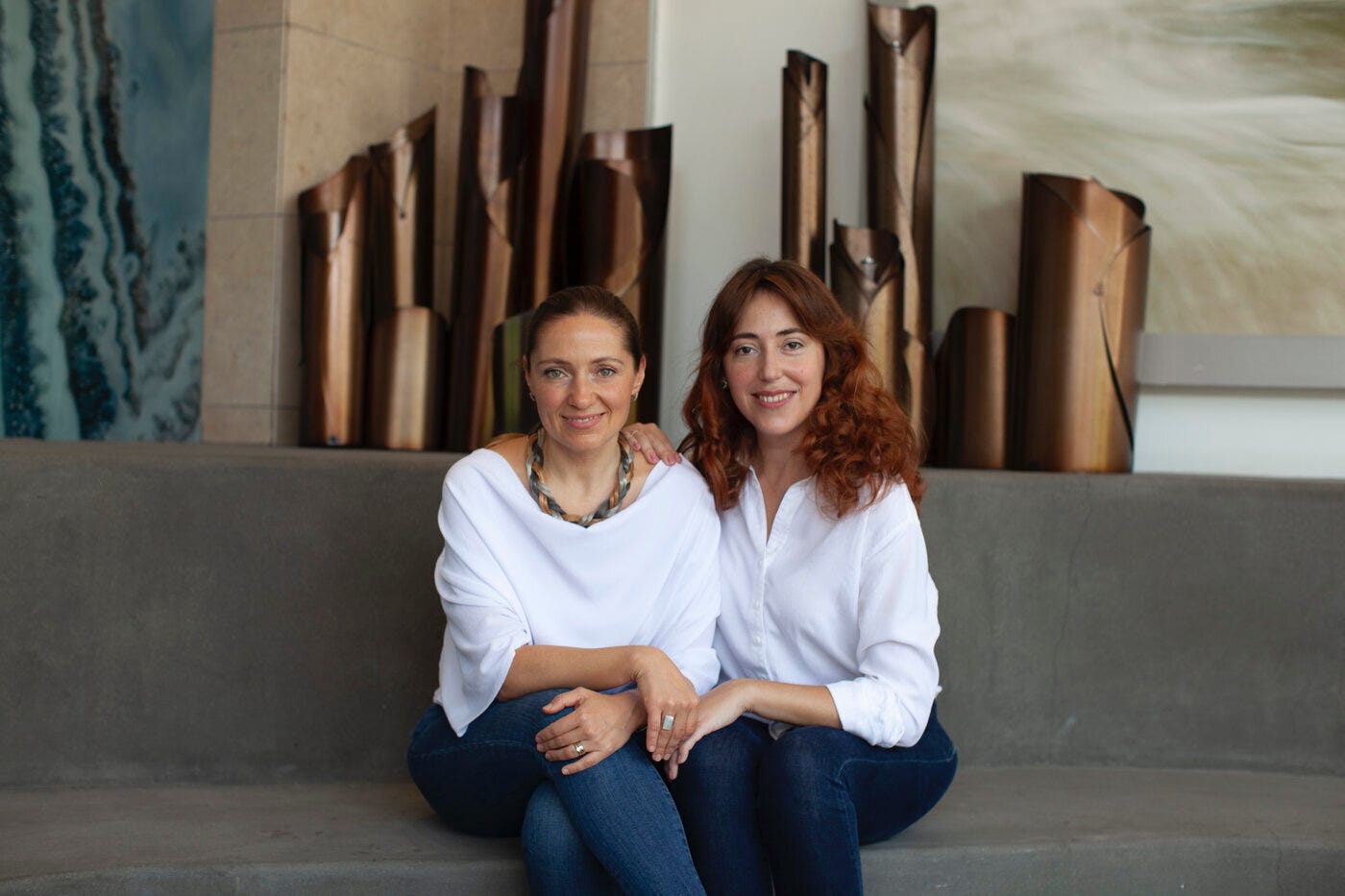
Teixeira built Good Face with Lena Skliarova-Mordvinova, its co-founder and chief technology officer. A mentor introduced them. Their collaboration joined Teixeira’s business and operating experience with Skliarova-Mordvinova’s data science expertise. In an enterprise built around organizing knowledge, the partnership is a useful reminder that knowledge arrives through people first.
The technical foundation was an ingredient ontology: a structured way to describe ingredients and their relationships. That distinction matters. A list can tell you that something exists. A connected model can help organize what else needs to be considered alongside it. For a working team, the value lies in being able to bring those relationships into a decision.
By 2021, Teixeira was describing the ambition as a translation problem, using the image of a Rosetta Stone for cosmetics. It is a revealing metaphor. Translation demands respect for both sides of the conversation. A chemist, a retailer and a shopper may be considering the same product while needing quite different explanations of it.
Move the answer into the working day
Good Face Formulator launched in 2021. The business was now bringing ingredient information into product development itself. In an early account of the launch, Teixeira named Givaudan and Target’s private-label R&D team among its clients. The audience had changed, along with the moment at which the information could be useful.
For a consumer, an answer can explain an existing product. For a formulator, an answer can help shape one still being developed. That is the business significance of the move. Information enters a sequence of choices: a prototype, a revision, a proposed market, a retailer’s requirements. The sooner a relevant conflict appears, the more opportunity a team has to respond.
Teixeira described the work as optimizing formulas under constraints. The phrase is less photogenic than a beauty campaign, but considerably more precise. A product must satisfy several demands at once. Making one feature attractive does not settle every other question. The software’s job is to help the people working on those demands see them together.
Led by VMG Catalyst, with financing intended to expand the product, customer adoption and team.
In August 2022, Good Face announced that seed financing. Participants included Spark Growth Ventures, REDO Ventures and Capsum, alongside executives from Summer Fridays, The Detox Market and GoFundMe. Capital brought a new set of commitments to a business whose founders had once told an investor they expected to raise only once. The joke had acquired an operating budget.
There was a second route through the consumer experience, too. In 2021, Good Face introduced native checkout with Bonsai, allowing purchases without sending shoppers elsewhere to finish them. The common concern is visible across these different products: an interruption between knowing and doing. The business kept finding places where the next step could become easier.
What the team brings to the table
When asked what she looks for in hiring, Teixeira named three qualities: “Intellectual horsepower,” “Heart wholesomeness” and “Openness to the world.” Together they describe a demanding combination. Technical ability has to travel with consideration for others, and both have to survive an encounter with an unfamiliar perspective.
That combination makes particular sense in a company whose customers bring different professional vocabularies to the same problem. Software people must understand the working day of people outside software. Commercial ambition must make room for specialized expertise. An elegant explanation is useful only if the person receiving it can act on it.
“Contribution is pure joy.”
Iva Yovchev Teixeira
The line appears in her own description of her motivation. She also writes about meeting people within the constraints they actually face. Read alongside the business, it suggests a consistent interest: helping someone do the next thing with the resources and understanding available to them. A useful product begins by taking that situation seriously.
A useful limit to automation
In August 2024, Good Face added regulatory services. Tarek Nasser was appointed to lead the offering at its launch. Alongside automated information gathering and screening, customers could obtain help with interpretation, registration and related work. The distinction between retrieving information and deciding what it means had become part of the business model.
For Teixeira, the stated reason was customer demand for additional support. The decision also makes a practical point about building software for complicated work. Saving a person time does not remove the need for expertise. It can make that expertise easier to apply, by reducing the amount of preliminary work required before a useful conversation begins.
The question after the AI demo
Teixeira’s public writing about AI brings the constraints into view again. In a post that began with a morning at jury duty, she described customers asking for powerful capabilities while also insisting that their proprietary information stay private. Those wishes can collide. Her argument was to discuss the prerequisites and trade-offs openly, including accuracy, privacy and accountability.
It is a grounded subject for the head of an AI software business to raise. A prediction arrives looking like an answer. The person using it still needs to understand the information behind it, the permissions attached to that information and the conditions under which the prediction might be useful. A polished demonstration does not resolve those questions.
Her recent work has put her in those technical conversations directly. At the 2026 IFSCC Congress in Perth, she presented a feasibility framework for machine learning-based stability prediction in cosmetic formulations. October conference coverage included an interview about that research. The topic places attention on what is needed to make prediction possible, before treating prediction as a finished promise.
There is a line through these episodes: the shopper trying to compare products, the formulator considering requirements, the customer asking what an AI system may do with a document. In each case, someone needs an answer while there is still a decision to make. Teixeira has built her career around getting closer to that moment. Even the investor who laughed had supplied one.
Continue the conversation
Interviews, work and conversations with Iva.
- Good Face Project - official website
- Iva on LinkedIn
- The five-question founder interview
- The early leadership conversation
- The 2022 financing and formulation story
- Good Face and the Target accelerator
- The 2021 founder interview
- Regulatory services announcement
- Native checkout announcement
- Iva on AI responsibility
- 2026 research interview in Perth
- Watch on YouTube: The Sayva Spotlight
- Listen: Formulating Brands Faster