At nineteen, Iva Yovchev Teixeira left Bulgaria for the United States with $3,000 borrowed from family friends. It was not startup capital. There was no startup, no pitch deck, no cloud-based anything. There was simply a young woman crossing an ocean and betting that motion could become opportunity. Years later, when asked when her entrepreneurial life began, she did not point to the founding of Good Face Project. She pointed back to that departure.
It is a useful correction to the tidy mythology of company-building. Incorporation papers make poor origin stories. The real beginning is often an earlier decision that trains the same muscles: act with incomplete information, work inside hard limits, and proceed before certainty volunteers to accompany you.
Teixeira put herself through college and acquired an unusually compatible stack of disciplines. At Marian University she studied mathematics and business administration. At the University of Michigan she earned a master’s degree in industrial engineering and operations research. Harvard Business School supplied the MBA. If beauty is an industry of surfaces, her education was about structures: quantities, constraints, flows, trade-offs and the frequently comic distance between how an organization imagines it works and how it works on Tuesday afternoon.
The questions behind the counter
Her career took her into strategy consulting at Bain & Company, where she advised large beauty businesses, and then into operating roles at venture-backed technology companies. At PAR8O, she served as senior vice president of operations, helping scale work across client acquisition, partnerships, analytics and delivery. Consulting taught her to diagnose the machine. Operating taught her that someone must eventually pick up a wrench.
In 2017, an independent consulting project for a large beauty company placed her in front of a retention problem. The expected answers were ordinary: price, availability, performance. The shoppers supplied different ones. They wanted to understand the vocabulary on the label, the logic of combining products and the meaning of the ingredients themselves. The beauty business had developed an eloquent language for desire and a far less coherent one for explanation.
Teixeira saw a data problem hiding inside a communication problem. The research existed, but it was scattered. Ingredients were considered one by one, while products were mixtures living inside a web of rules, claims, markets and consumer expectations. She described the early ambition as a “Cosmetics Rosetta Stone” - one shared grammar for consumers, brands and manufacturers.
“Contribution is pure joy.”Iva Teixeira
A partnership clicks
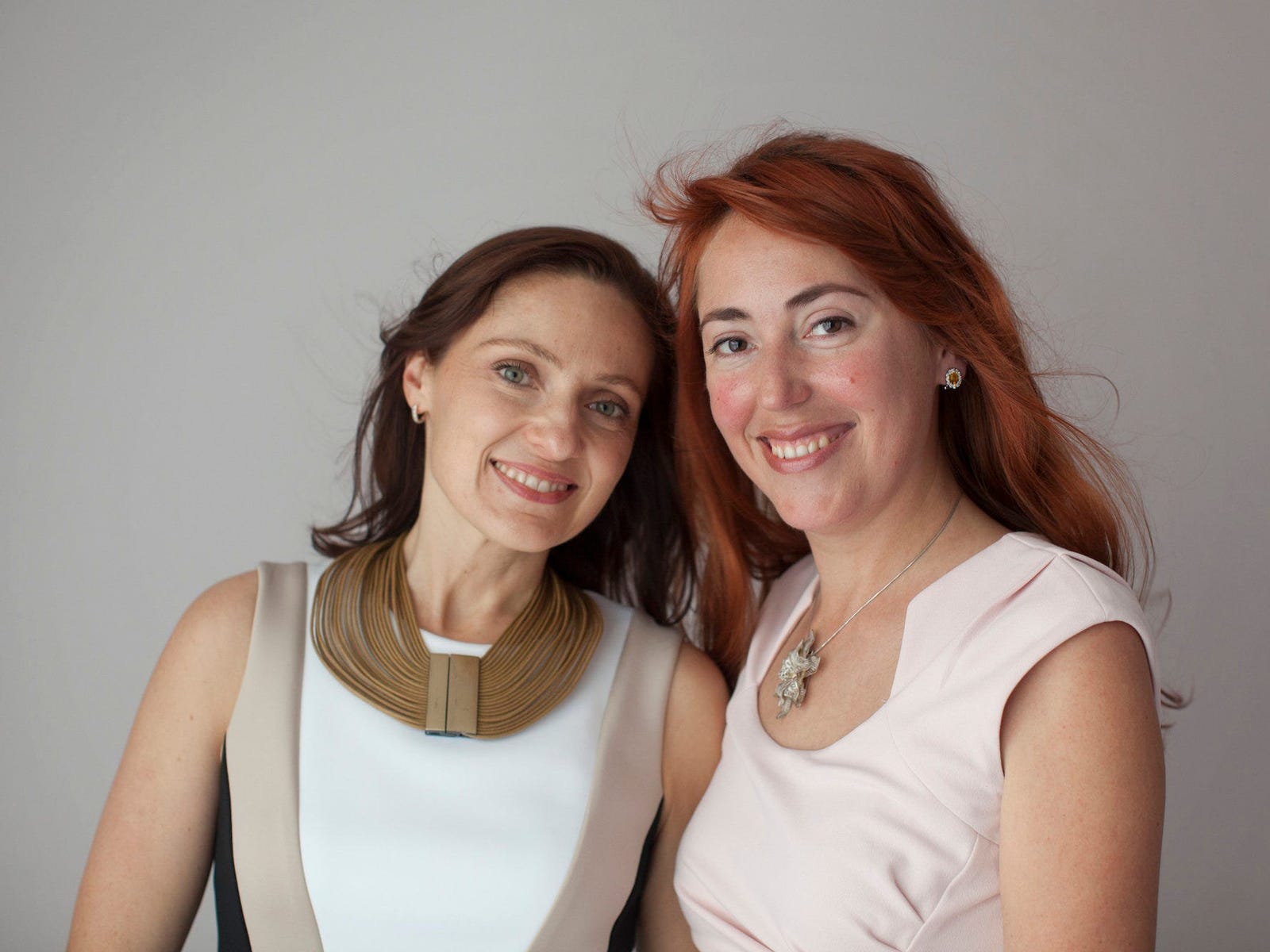
A mentor introduced Teixeira to Lena Skliarova-Mordvinova, a data scientist looking to join a startup. They arranged to meet at a public event. Teixeira later recalled that the fit was immediate. The pairing made structural sense: commercial and operating judgment beside the technical ability to connect a thicket of scientific information. In 2018, they co-founded Good Face Project.
The first expression was consumer-facing. The Good Face Index organized ingredient knowledge so shoppers could inspect products with more context. Building it forced the team to turn disconnected research into an ontology - a map in which ingredients, properties and applications could relate to one another. Fortune reported that the platform drew from more than 60 independent scientific databases. An index had quietly become a foundation.
One formula, several moving constraints
Then the founders walked upstream. Consumer confusion was only the visible end of a longer chain. On the other side were cosmetic chemists and regulatory teams managing formulas against changing government rules, retailer policies, ingredient availability, target costs and product claims. Many stored their formulas in Excel. The contrast was almost satirical: exquisite packaging at the front, cells and tabs at the back.
Good Face Project repurposed its connected data for the people at the bench. Good Face Formulator launched in 2021, allowing teams to assemble a formula and evaluate it while they worked. A restriction could appear before a prototype had consumed weeks. A retailer standard could become a filter rather than a late surprise. The product’s essential move was temporal: put the useful information at the moment of decision.
The imbalance Teixeira kept seeing
Figures Teixeira used in interviews to describe beauty-industry spending. The comparison became part of her case for better tools at the workbench.
Move the knowledge one decision earlier
There is a transferable business lesson in that migration from index to workflow. Information is helpful when it explains a finished object. It becomes infrastructure when it shapes the object before it is finished. Good Face did not discard its original data; it changed where the data entered the process.
The company joined the Target Tech Accelerator in 2020. It bootstrapped for its first two years and waited to pursue a larger round until the founders believed they had product-market fit. In 2022, Good Face raised a $5.65 million seed round led by VMG Catalyst. Contemporary reporting placed total funding at $7.29 million. By then, a few hundred chemists could be using the platform at a given time to evaluate thousands of formulas.
Teixeira’s account of the sequence is revealing. Fundraising was not treated as a ceremony that made the company real. Customers did that. Capital arrived after the team had learned what repeated behavior it could accelerate. There is less theatre in this version of entrepreneurship, and considerably more arithmetic.
The human operating system
Software companies enjoy talking about systems. Teixeira also applies the language to leadership, although her favored words are warmer. Asked for three qualities she seeks when hiring, she named intellectual horsepower, heart wholesomeness and openness to the world. The trio is more practical than it first appears. Good Face must translate among chemists, regulators, software builders, manufacturers, brands and retailers. Cleverness without generosity would make a poor translator; warmth without rigor would make unreliable software.
She speaks just as plainly about mistakes. During an early meeting, an investor told Teixeira and Skliarova-Mordvinova that Good Face was too early for his firm. The founders replied that they intended to raise only once, so this was his sole chance. He laughed. In the retelling, Teixeira grants him the point. A growing technology company would need more capital. The funny part survives because the lesson did.
Her preferred amendment is not to avoid error but to compress the cycle: try more things, speak with more people, make mistakes faster, move ahead. “We do not believe in regret,” she has said. That attitude suits a product living beside changing regulations. A static answer would age badly; a responsive system can learn.
Brave, with the trade-offs visible
In 2026, Teixeira’s public focus has widened from whether the beauty industry should use AI to how it should use it. She has written about privacy, accountability and the tension between customers who want powerful predictions and customers who need proprietary information protected. Her position is neither refusal nor enchantment. Push the frontier, she argues, but disclose the prerequisites and costs. It is the industrial engineer’s instinct again: every optimization has constraints, including the fashionable ones.
She presented at Beauty Independent’s Tech*AI Summit and joined a MakeUp in Los Angeles panel about what “clean beauty” could mean by 2030. The phrase once helped launch Good Face’s consumer proposition, yet Teixeira has long acknowledged its ambiguity. The company’s later posture is more neutral and arguably more durable: software should help a business execute its chosen standards, understand the consequences and keep pace as the rulebook changes.
During a 2026 trip to the in-cosmetics Global trade show in Paris, Teixeira brought her daughter Kalina into meetings. At the end of two days, her daughter said she wanted to be like her - specifically, brave like her. It is difficult to improve upon a child’s edit of the founder biography. The degrees matter. The consulting toolkit matters. The ontology, the capital and the customers matter. But first there was a nineteen-year-old with borrowed money, crossing into a life she could not yet diagram.
Good Face Project’s longer ambition reaches beyond cosmetics toward other industries built from chemical formulas. Whether that expansion arrives or not, Teixeira has already made a persuasive observation about modern business: an industry can look technologically finished while its essential workers remain surrounded by manual friction. Look past the campaign. Find the spreadsheet. Ask what decision it is trying, badly, to help someone make.
The polished product was never the whole story. The useful clue was the clumsy workflow behind it.
Teixeira’s career is an argument for following questions upstream. A shopper asks about an ingredient. The answer leads to a database, then an ontology, then the chemist, then the global rulebook, then the architecture of a company. Each step is less visible than the last and more consequential. Beauty loves a reveal. This one happens before the bottle exists.