Four days into a rush of new business, Itay Bengad decided to close the door. Sensa’s policies were selling quickly, he later recalled, but the customers arriving through certain agencies carried risks the company could not sustainably absorb. He called his technology chief to block those agencies, his operations chief to tell the partners, and his lead investor to explain. Three calls, all prompted by revenue that looked rather less attractive once someone considered what came with it.
It is an awkward scene for a startup story. Usually, the customers arrive and everyone applauds. Bengad’s version contains a brake pedal. His account makes an unusually useful introduction to the co-founder and launch CEO of Sensa: someone trying to put a new service inside an old financial contract, while discovering how many people and systems had to agree before that service could work.
The business would later retreat from the market. That ending belongs beside the early decisions. It makes this a story about the distance between designing a useful promise and operating the company responsible for keeping it.
A policy with somewhere to be
When Sensa announced its American launch in February 2022, beginning in Illinois, it proposed an insurance policy that could act before its owner filed a claim. A collision would activate a sensor. Information would reach a support team. Help with the practical aftermath could begin while the event was still unfolding. The company described this as moving insurance’s moment of truth to the accident itself.
The phrase had an appealing impatience. A contract purchased months earlier would finally have something to do. The policyholder would get assistance; the insurer would get earlier information about a loss. Bengad’s proposition joined those interests at a particular moment, rather than asking a customer to admire the elegance of a claims portal.
Sensa said its European testing had reached more than 35,000 policyholders and that 94 percent of loss events had been managed within their opening minutes. These were company figures from the launch period, not a measure of Sensa’s later American performance. They described the confidence behind the attempt, and the standard of responsiveness Bengad wanted the new business to meet.
The company before the policy
Bengad had co-founded MDGo in 2017 with Gilad Avrashi. Eli Zerah was also named among Sensa’s founders. Before the American insurance launch, the work centred on extracting useful information from vehicle data and finding partners who could put it to use. Bengad’s route to Sensa therefore ran through the machinery of connected cars, rather than through the design of an online checkout.
That earlier company attracted automotive attention. Hyundai entered a partnership with MDGo in 2019. In July that year, Volvo Cars Tech Fund announced an investment. Volvo also described MDGo’s participation in DRIVE, the mobility accelerator with which the carmaker had been involved since 2017. The relationship placed the startup inside a network where car manufacturers could encounter its work.
There is a particular kind of translation involved in that setting. A startup has to explain its idea to people making vehicles, people underwriting contracts, and people expected to answer a customer’s call. Each needs a different reason to care. Bengad’s companies were working across those boundaries, where an interesting algorithm still needs a route into somebody’s existing operation.
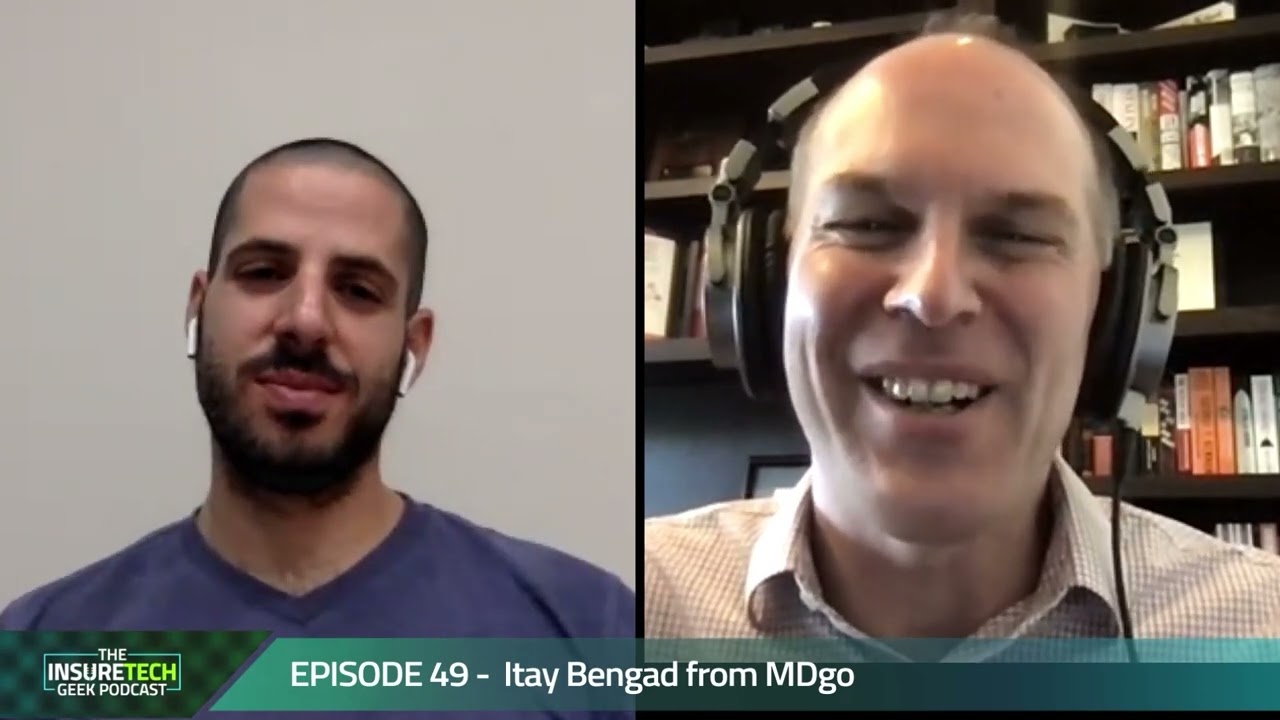
By February 2021, he was discussing accident detection and insurance on The InsurTech Geek Podcast with James Benham. The episode ran for 48 minutes. It is a small but useful marker in the chronology: a year before Sensa’s public US launch, Bengad was already taking the insurance implications of MDGo’s work into a longer conversation.
The sensor that minded its own business
A device attached to a windscreen can make a driver ask an entirely reasonable question: what, exactly, are you watching? Sensa’s answer was that its sensor activated in a collision, with no continuous collection or monitoring of driving behaviour. The hardware was meant to notice an exceptional event while leaving ordinary journeys alone.
Bengad took that question beyond the device specification. Asked at DIGIN how much customer data was too much, he answered, “It must be intuitively understandable.” He argued that a customer questioning the purpose of a request could signal an imbalance in who benefited. That is a practical test for an executive: try explaining the exchange without needing a second presentation.
“It must be intuitively understandable.”
Itay Bengad, on requesting customer data
Privacy was therefore part of how he described the product’s appeal. The customer had to see a reason for the information being collected. A company could have the technical ability to gather more and still make the commercial choice to gather less. In Bengad’s account, restraint helped explain why someone would accept the sensor in the first place.
The physical arrangement mattered too. Sensa described a policyholder-installed device with its cost included in the policy. The proposition had to survive contact with a windscreen and an ordinary customer’s willingness to fit something to it. A service can look wonderfully straightforward in a diagram; installation is where the diagram meets a person with other things to do.
The names behind the helpful voice
In February 2022, Sensa announced its partnership with Incline P&C Group. Sensa would operate as a managing general agent, distributing through appointed retail brokers and agents. Acrisure Re arranged the insurance and reinsurance support for the transaction. Bengad was assembling a service through specialist partners, with each organisation responsible for part of the financial and operational structure.
The arrangement gives his job a more concrete shape. Someone had to connect the sensor proposition to underwriting, distribution, and the organisations carrying the programme. Selling through agents also meant that the person introducing a customer to Sensa might work outside Sensa. The company’s promises would travel through other people’s conversations before reaching a driver.
In March, Sensa announced Sedgwick as its claims administration partner. That added claims handling, access to appraisers and repair shops, and roadside assistance to the operating picture. Bengad described the partnership as putting people first. Beneath that familiar language sat a specific requirement: information from an accident needed to become useful work across a network of providers.
This is the less photogenic part of founding a company. The sensor gets the illustration; the repair network gets a paragraph in an announcement. Yet the customer’s experience depends on both. Bengad was asking the business to make an early intervention, which meant arranging the people who could do something once the information arrived.
A bigger map required a different discipline
The expansion plan announced at launch included Texas, Indiana and Ohio. A home insurance offering was also proposed for later in 2022. Those were ambitions stated at the time. They should be read as ambitions, rather than as a checklist of completed launches. By September, Sensa publicly described its auto insurance operations in Illinois and Ohio.
That month the company announced Steven Brown as chief operating officer. Brown brought more than 35 years of property and casualty insurance experience, including work at Allstate and AAA. His background covered distribution, underwriting, pricing, claims and reinsurance. For a young company, those areas were the operating substance behind the word expansion.
The appointment fits the tension in Bengad’s early decision to halt unwanted business. A service needs enough customers to support it, while an insurance programme has to consider the obligations attached to each new policy. A rising sales total can be welcome and worrying at the same time. The arithmetic does not become friendlier because a founder has a persuasive idea.
Brown’s arrival put an experienced insurance operator alongside that idea. It also illustrated the kind of founder role Bengad was occupying: recruiting expertise, explaining the service, and making choices about what the company could afford to take on. The work extended well beyond showing that the underlying technology could detect an event.
Then came the letter to agents
By June 2023, agents were being asked to find replacement coverage for Sensa customers within 60 days. In a reported email, Bengad linked the market withdrawal to systems he had been unable to obtain and changes he had been unable to make with the board. Asked directly about the situation, he described a reduction in the independent agencies the company worked with.
The same account described halted device shipments and a warning that the accident service might not operate. Those details made the change more consequential than a smaller distribution network. The service Bengad had presented depended on a physical device reaching a customer and an organisation remaining ready to respond. A problem with either could reach all the way through the promise.
It is tempting to turn that ending into a tidy verdict on the founder. The sequence resists the convenience. His earlier willingness to interrupt sales showed one kind of discipline; the later withdrawal showed that discipline alone could not ensure the whole operation held together. A single decision can be sensible without settling the future of a company.
The revealing detail remains those three phone calls. They show Bengad doing a founder’s unglamorous work: telling colleagues, partners and an investor that attractive business had become business he did not want. His Sensa chapter leaves a question that is useful well beyond insurance. What does a company have to refuse today to remain capable of doing what it promised tomorrow?