The most revealing sentence on Isource Marketing's website is not about artificial intelligence. It is about plumbing: a pipeline that does not convert, the agency says, is merely a decorative funnel. You can picture the object - shiny, expensive, admired in a quarterly review - while every useful drop runs onto the floor.
This is how a broad marketing agency begins to sound like a maintenance crew. Isource calls its system the Pipeline Factory. Into one end go account lists, search traffic, event guests and cold prospects. In the middle sit content, direct outreach, HubSpot, lead scoring, nurture flows and sales enablement. The intended output is not attention. It is a smaller pile of people with a reason to buy.
The distinction matters because Isource has been around long enough to remember when a website and a social calendar could pass for a digital strategy. Florida records date the company to July 2005. Today, founder and CEO Ari Lisjak runs a privately held agency headquartered in Miami, with 11-50 employees listed on LinkedIn and a working footprint that stretches through major Latin American markets. Its customer is usually a technology company. Its problem is usually the untidy distance between marketing activity and a sale.
“A funnel packed with unqualified leads is just a factory of broken parts.”Isource Marketing, Pipeline Factory
The moment the clicks stopped being flattering
In September 2025, Isource published an unusually candid explanation for its repositioning. The old formulas had gone stale, it argued: traditional tactics, superficial metrics and campaigns optimized for volume rather than business results. Artificial intelligence changed the speed of the work. New channels changed how buyers behaved. Personalization raised expectations. The agency's response was to narrow its language around B2B technology and make revenue the organizing idea.
The old comfort
- Traffic without intent
- Leads without qualification
- Campaigns without a sales owner
- Impressions reported as progress
The Isource reset
- Named accounts and decision-makers
- Scoring, nurturing and direct follow-up
- CRM joined to marketing and service
- Revenue by channel, action and campaign
What failed first, then, was not a particular ad. It was the idea that more activity could conceal a broken handoff. Isource's public method now begins with immersion in the client's business, product, stage and sales cycle. It then connects inbound and outbound work, builds the tracking layer, and keeps revising. “We measure, tweak, and relaunch,” its startup page says. This is less cinematic than a rebrand. It is also more useful.
A road trip is also a spreadsheet
The agency gets more interesting when the factory leaves the browser. For CrowdStrike in Colombia, Isource designed a two-day drive from Bogotá to Villa de Leyva with electric Mercedes-AMG vehicles. C-level guests brought spouses. There were strategic stops, customized kits, food, a colonial hotel and a cocktail gathering. In the grammar of events, this was hospitality. In the grammar of account-based marketing, it was prolonged access to a carefully selected room.
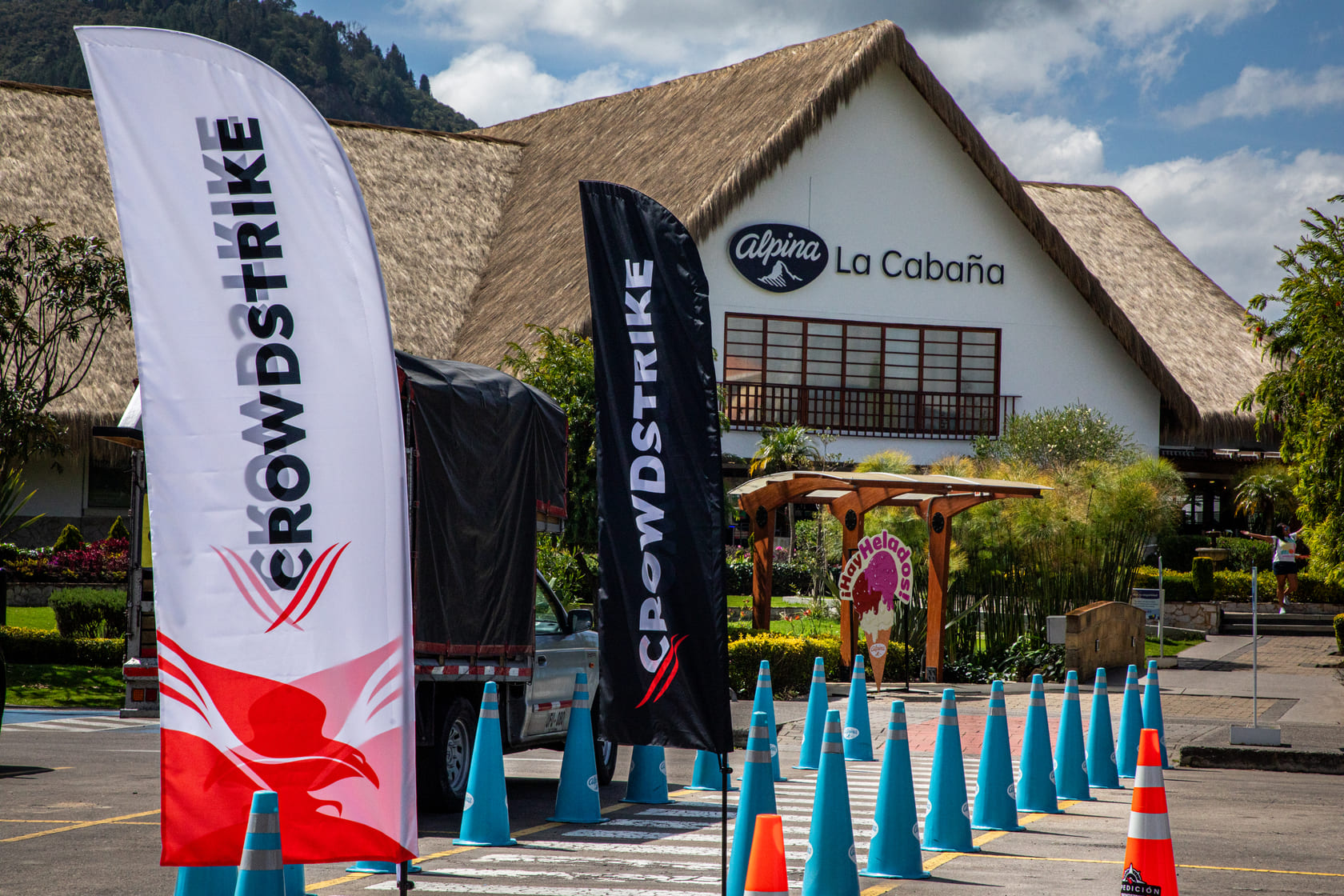
Isource reports 95 percent positive feedback for the experience and says a deal closed on site, with other opportunities in progress. Those are the agency's figures, not an independently audited result. Still, the case explains the model better than a list of services does: select the accounts, create enough relevance that they show up, give people time together, then connect the experience to commercial follow-up.
A second case, for Ingram Micro, shows the prosaic counterpart. The distributor wanted new resellers for premium enterprise hardware in Mexico, Colombia and Chile. Isource built a landing page, ran webinars, simplified registration and assigned inside sales representatives to make direct contact and clean the data. The phrase that deserves attention is “no bots or cold templates.” In a company now selling AI agents, the human caller remains part of the machinery.
Automation with an adult in the room
Isource's menu is wide: Pipeline Factory, Brand Experience, paid media, content, web and UX, public relations, HubSpot work and custom AI agents for marketing, prospecting and service. The coherent part is not the breadth. It is the attempt to connect the pieces. A CRM implementation is meant to align marketing, sales and service. An AI agent is meant to perform a bounded job. An event is meant to produce a next action. Creative work is tied to a customer journey rather than left to float as decoration.
That puts Isource between familiar market categories. It competes with demand-generation agencies for pipeline work, HubSpot partners for implementation, RevOps consultancies for process design, event firms for live production and in-house teams for all of the above. Its difference is geographic and operational: one bilingual partner offering both the system and the spectacle across the United States and Latin America.
The useful part to steal
A reader does not need to hire an agency to copy the cleanest piece of the method. Start by naming the commercial event that marketing must cause. Work backward to the buyer, the evidence of intent and the person responsible for follow-up. Put inbound and outbound activity in the same view. Refuse to call a name in a database a lead merely because the database permits it. Then shorten the interval between a signal and a human response.
This approach has conditions. It is best suited to B2B products with identifiable decision-makers, meaningful contract values and sales cycles long enough to reward nurturing. It is less convincing for a low-price consumer purchase, a business with no capacity to answer qualified demand, or a client unwilling to connect campaign data to sales outcomes. A factory cannot repair a product nobody wants. Nor can a CRM rescue a team that will not use it.
The best thing about Isource's metaphor is also its limit. Factories imply repeatability; markets remain disobedient. The agency's more durable idea is buried one layer below the branding: diagnose before buying tools, let evidence outrank activity, and keep a person near the moments where trust is formed. The funnel was never the business. The handoffs were.
Keep exploring