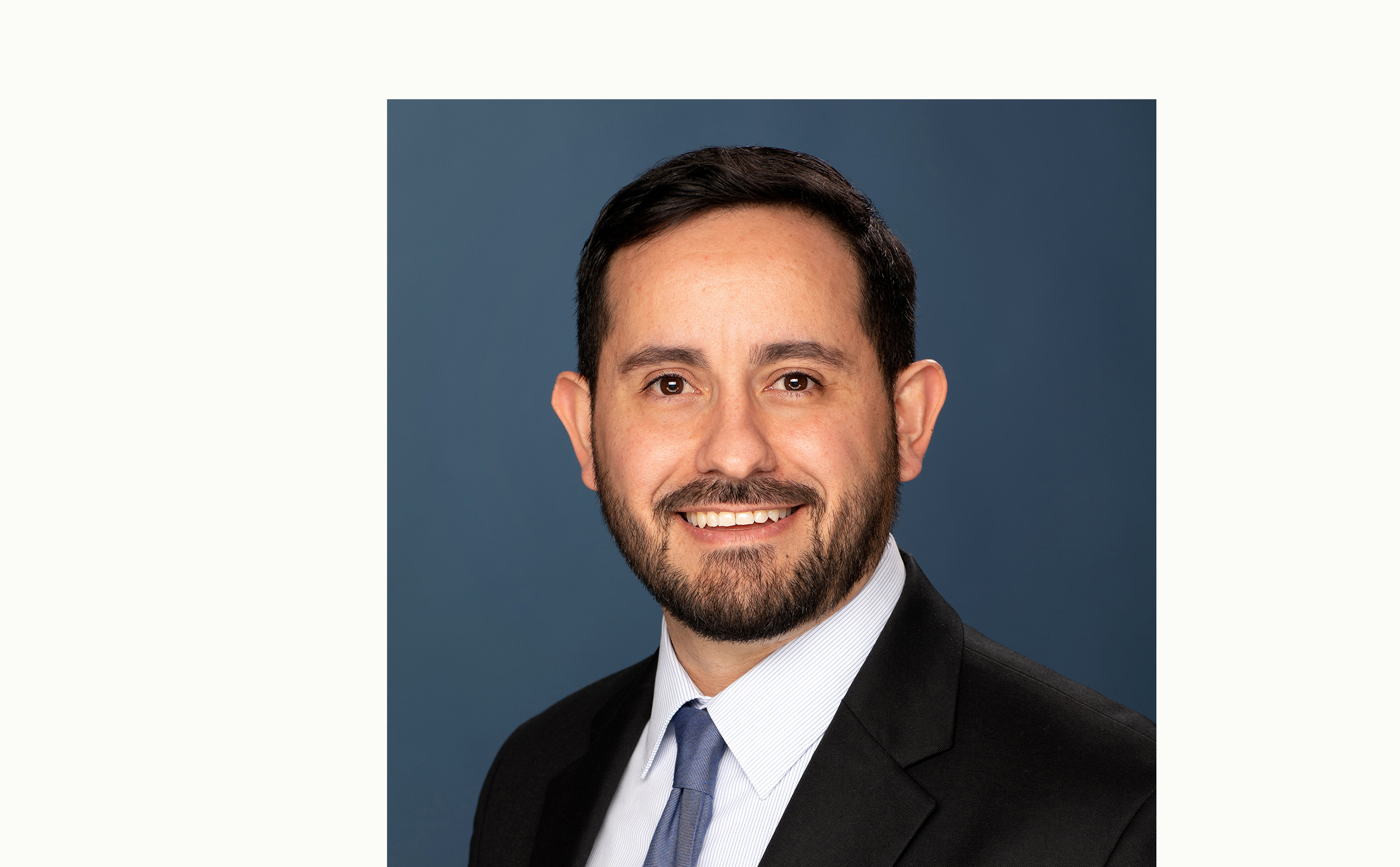
Isaac Roybal left Seclore in October 2024 with the graceful finality expected of an executive farewell. He thanked the marketing team, counted the five global theaters the work had carried him across, and told his network to stay tuned. The suspense lasted less than a year. By September 2025, Roybal was publicly back at the data-security company, reporting to a new chief executive and carrying a brief that sounded less like a homecoming than a renovation: help turn Seclore into an AI-native company from the ground up.
Returns invite questions. Had the company changed, or had he? In this case, Roybal supplied a practical answer. CEO Vishal Gauri had described a new chapter for Seclore, one built around modernizing data security for a world in which artificial intelligence consumes company information as readily as employees do. Roybal saw work he wanted to do. Familiarity with the company shortened the introduction; the altered mission made the role new.
His first move was revealingly unceremonious. The marketing team received a 90-day training plan. Every week, each person would share a useful AI win: an hour-long workflow compressed to minutes, an automated process, a new insight, a creative application. A show-and-tell for custom GPTs went on the calendar. The language of transformation can fill a ballroom. Roybal's version began with homework.
“Not as a side project, but as the operating system for how we plan, execute, and scale our operations.”Isaac Roybal on his AI mandate at Seclore
That phrase, operating system, suits him. Long before he was responsible for brands and demand generation, Roybal worked in IT systems engineering. His career began close to the machinery, and its public trail reaches back through Microsoft technical publishing, Windows Server, IIS, virtualization and private cloud. He spent ten years at Microsoft working on early private-cloud and virtualization initiatives. In 2009, a RunAs Radio episode carried the cheerful title “Isaac Roybal is on a Private Cloud!” The cloud was still novel enough to require an exclamation point.
The engineer stays in the room
Roybal later moved into product and cloud marketing, then into broader go-to-market leadership. His biographies trace roles through Cisco, NVIDIA, Splunk, ExtraHop, Qumulo, Highspot and aboutGOLF before Seclore. It is a tour through several generations of enterprise technology: operating systems, virtualization, data storage, network intelligence, sales software, sports technology and cybersecurity. The nouns change. The recurring job is translation.
Translation, in his case, does not mean removing the technical substance until only a slogan remains. At Seclore, when the company wanted to grow in the semiconductor market, Roybal argued that ordinary content production would not do. The audience was sophisticated, the product was specialized, and the company lacked the bandwidth to build a product-marketing function immediately. He brought in Fulcrum Group and its founder Ian Hameroff, a colleague from his Microsoft days, for subject-matter depth.
There is a modest but useful principle in that decision: some markets can tell when the writer has never touched the machine. Roybal's engineering past gives him a feel for the buyer who wants to know what happens after the diagram. At RSAC in 2024, he described Seclore's proposition in operational terms. Put granular controls on sensitive data itself. Let authorized people read, edit or print according to policy. Preserve the ability to change permissions after the file has left the building. Integrate with tools the customer already owns.
One career, two fluent languages
Roybal's record moves between systems engineering and go-to-market leadership. The combination helps explain why his public arguments tend to pair a technical mechanism with a business consequence.
The pitch can be understood without a security certification. Networks have edges; files have itineraries. Once a document travels to a supplier, a customer or a personal device, the old perimeter becomes a memory. Roybal's message is that the protection should travel too. He used the same frame at GITEX Global in 2023, emphasizing control over data whether it sat on premises, in the cloud or with a third party.
A product built from a remembered favor
The corporate chronology alone misses the most personal project in Roybal's record. He is a New Mexico native who graduated from New Mexico Highlands University in 2001 with a business administration degree emphasizing management information systems. As a student and work-study employee, he trained under Max Baca, then an IT leader at the university. Baca remembered an entrepreneurial student who led and collaborated well. Roybal remembered something even more durable: access to knowledge and mentorship.
In 2018, he took time away from work to establish ProMinute. The mobile app used short, asynchronous video exchanges to connect students with professors. A student could ask a question with facial expression and tone intact; a professor could answer when time allowed; the response could be saved and revisited before an exam. Roybal compared the ease of the interaction to familiar social-video behavior, but the idea came from an older institution: one person making time to guide another.
By August 2020, Carnegie Mellon University, the University of Texas at Austin and Highlands were piloting the tool. That was also the year remote education made the small rituals of contact newly precious. Roybal called ProMinute a passion project designed to give back to the next generation of leaders. The phrase can sound polished in isolation. Its origin makes it specific. A mentor had helped him enter technology, and he was building a mechanism to make that kind of help easier to reach.
“ProMinute focuses on humanizing the question and answer process through one-on-one short video exchanges.”Isaac Roybal, 2020
There is a straight line from ProMinute to his later work, though it does not run through industry categories. Both are concerned with what survives when information moves. In one case, a video keeps the expression that email loses. In the other, a protected file keeps the permissions that a network boundary loses. The technologies and stakes differ. The instinct is consistent: context should travel with the object.
Leaving, returning, learning in public
Seclore appointed Roybal chief marketing officer in August 2022, shortly after a $27 million Series C round. His remit covered demand generation, brand and product marketing, and go-to-market strategy and execution. Over the next two years, he worked across North America, Europe, the Middle East and India. A former colleague later credited him with helping launch Secure Email and Professional Services, expanding the marketing team, giving meaningful direction and sharing credit.
His October 2024 departure note was generous and geographically minded. Each market, he wrote, had brought different challenges and lessons in cross-cultural collaboration. The comments beneath it offered the informal residue of leadership: thanks, travel memories, and one colleague's lament that the “crazy one liners” would be missed. Executive biographies tend to preserve titles. Colleagues preserve the taxi ride, the bar conversation and the joke that survived a difficult week.
When Roybal returned, he did so publicly and with a measurement window. Ninety days is long enough for habits to form and short enough to prevent a transformation program from disappearing into committee fog. The weekly win created social proof inside the team. An experiment that saves one person 50 minutes becomes permission for someone else to try. The show-and-tell made private tinkering visible. None of this guarantees better marketing, but it does make adoption observable.
He also put his name to the company's evolving argument. In December 2025, he introduced a Data Security Intelligence Framework built around turning protected-file activity into actionable insight. In May 2026, he wrote that employees had already settled the debate over whether AI belonged in the enterprise by using it. The remaining question was whether company information was protected before it reached a model.
This is where Roybal's two careers meet. The systems engineer asks what the technology actually does. The marketer asks why a customer should care. The operator asks what the team will do on Monday. His AI program answers the third question with routines, while Seclore's market story tries to answer the first two with controls attached to the data itself.
The usefulness of a second beginning
A boomerang executive can be treated as a curiosity. Roybal's return is more instructive as a decision about timing. He knew Seclore's product, markets and people. He had also chosen to leave. Then a new CEO offered a different problem at the intersection of his technical past and marketing present. The return did not require pretending the departure had never happened. It required deciding that the next chapter was worth entering.
His career has included large companies, startups, technical media, a founder's side road and the peculiar theater of the CMO role. The connecting thread is less glamorous than vision and more useful: learn the system closely enough to explain it, then create a routine that helps other people use it. At Highlands, that routine was mentorship. At Microsoft, it was technical education. At ProMinute, it was a short video. At Seclore today, it is a weekly AI win brought back to the group.
Roybal ended his return announcement with a question for his network: what was working as they made their teams AI-native? It was both engagement bait and an honest operator's question. The tools will change, probably before the 90 days are up. The habit of comparing notes may last longer. In a field fond of announcing the future, that is a pleasantly workmanlike place to begin.