Before Anand Akela learned to sell complicated software, he learned to make it. He studied computer science, began his career as an engineer, managed engineering teams at HP and moved into product management. Marketing came later. That order is more than a biographical curiosity. It explains the economy of his public advice, the suspicion of empty adjectives, and the habit of treating a launch as a system with inputs and dependencies rather than a burst of confetti.
Akela is now chief marketing officer at Acalvio Technologies, a Santa Clara cybersecurity company that builds cyber-deception products. Deception is an oddly literary corner of security. Defenders place convincing but false credentials, systems or data in an environment. An intruder who touches the decoy reveals intent. The trap has to be credible, the signal has to be useful, and the explanation has to survive a skeptical buyer. Few assignments are better suited to a marketer who first learned to think in systems.
The translation chain
How it works
Who it serves
Why it matters
How it travels
The long apprenticeship in difficult products
His résumé traces much of enterprise technology’s recent history. At HP, Akela crossed the boundary from software development and product management into product marketing. He later led marketing work for Oracle Enterprise Manager, then held roles at CA Technologies and AppDynamics as cloud computing and DevOps changed how companies built and operated software. At Tricentis, he marketed continuous testing. At Nutanix, he led product and solution marketing as hybrid and multicloud infrastructure became a boardroom concern.
The industries changed their favorite vocabulary. The underlying job remained stubbornly human: locate the buyer’s costly problem, name the difference the product can make, and supply enough evidence that someone else can repeat the case. Akela’s advice to product marketers begins with documenting target personas, including their challenges and the communities they inhabit. Then comes a message aimed at those challenges, supported by proof. Segmentation follows, so marketing and sales spend their attention where it has a chance to return something.
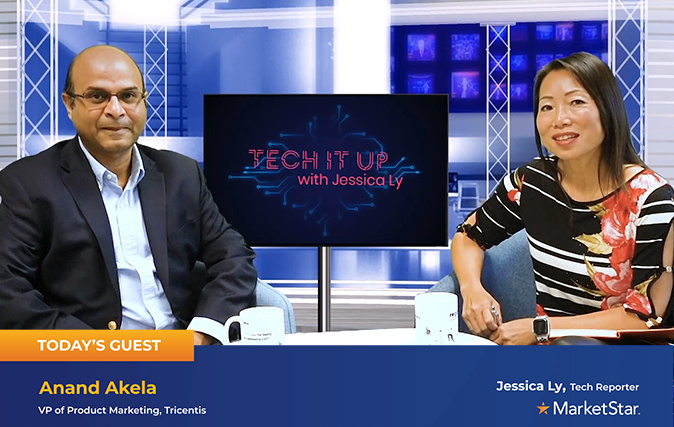
That sounds obvious until one watches a technical launch get buried under a pile of features. Enterprise software attracts nouns the way a dark suit attracts lint. Platforms acquire intelligence, observability, resilience and transformation. Akela’s method is less decorative. In a recent TiE session, founders were urged to make messaging simple, specific and credible: identify the problem, state the distinction, make belief reasonable. The adjectives must report for duty.
“Go-to-Market strategy is at the core of product marketing.”Anand Akela, on the work behind a launch
A launch is not the strategy
Akela describes go-to-market as an operating model. A launch requires product readiness, but it also needs stories for the press, briefings for analysts, content for campaigns and language the sales team can use without a translator standing nearby. Product marketing sits in the middle, which can make it either an excellent bridge or a very busy traffic island.
His career suggests that the bridge works best when the marketer understands both shores. Engineering supplies respect for constraints. Product management forces choices about users and priorities. Marketing tests whether those choices can be explained in a crowded market. Sales enablement determines whether the explanation travels. None of these disciplines can rescue a proposition that exists only in the slide deck.
When Acalvio appointed him in late 2022, the company was expanding its work in identity threat detection and response. Akela arrived after leading go-to-market and marketing programs at Nutanix. He described the moment as pivotal for cyber deception, a field built around turning an attacker’s curiosity into a defender’s early warning. His responsibility was not merely to make the category louder. It was to make the mechanism and its value legible.
The useful absurdity of a convincing fake
Traditional security tools often sift legitimate activity for signs of malice. A deceptive asset begins with a cleaner premise: no ordinary employee should touch it. Interaction therefore carries unusually high signal. In a market weary of alert overload, that is a compelling idea, but it creates its own questions. How broad is the coverage? How does the system scale across identity, cloud, information technology and operational technology? Can it adapt without becoming another maintenance project?
Akela’s current writing addresses those buying questions through architecture, automation, integrations and total cost. His webinar work places deception in the newer problem of AI-assisted attacks, where adversaries can vary tactics and move quickly. The language of marketing and the language of defense meet at the same word: signal. A useful system helps the right person notice the right event before the surrounding noise wins.
The category also rewards a distinction Akela has made throughout his marketing career: a feature list is not yet a market argument. Honeytokens, decoy credentials and mapped attack techniques describe parts of a product. A security leader still needs to know which risk becomes easier to see, how the alert reaches an existing workflow and what the team can do next. Translating the mechanism into an operational consequence is the real work. The buyer does not need mystery from the company selling deception. The trick belongs inside the defensive environment; the sales conversation must remain plain.
The decoy’s compact logic
A legitimate user ignores a false asset. An intruder investigates it. That touch converts hidden movement into a high-confidence alert, giving defenders context for containment and threat hunting.
The second office is a founder’s whiteboard
Akela’s work does not stop at Acalvio. He is a venture adviser to Z21 Ventures and has spent years in the TiE Silicon Valley network, including board service, conference leadership and startup screening. In founder office hours, he focuses on positioning, go-to-market choices and fundraising readiness. These are the places where a clever product meets a less accommodating fact: customers do not buy technical merit in isolation.
The relationship with TiE is unusually durable. Public career records place him as a charter member from 2004. He served on its Silicon Valley board and returned repeatedly to the unglamorous work of convening. In 2018, he was marketing chair for TiE Inflect. In 2026, he took the marketing-chair role for TiEcon under a theme about human-centered, AI-powered entrepreneurship. Between the conference stages are the smaller rooms, where founders receive twenty or thirty minutes to repair an ideal customer profile or explain why a pilot has not become a contract.
That is a revealing use of executive time. Akela’s own path was not a leap from computer science to the corner office. It was a sequence of adjacent translations, each one adding a new audience. Mentoring gives him a chance to shorten that learning curve for someone else.
Selected chapters · bar length shows time in role
When machines become the audience
In 2026, Akela began writing about a second consequence of AI, this time in marketing. Generative-engine optimization, or GEO, asks how brands are understood and recommended by answer engines. Search once directed a person toward a list of pages. An AI system may now digest those pages and present its own synthesis. The marketer is no longer communicating only with a potential buyer. A machine may become the first reader, editor and recommender.
Akela argues that GEO is becoming a core go-to-market capability. The observation fits his career almost too neatly. In cybersecurity, autonomous attacks push detection earlier in the sequence. In marketing, AI-mediated discovery pushes influence earlier too. In both cases, waiting for the final visible event means surrendering much of the field.
There is a pleasing loop here. The engineer became a marketer by learning to translate technology for humans. Now the marketer must also make the company intelligible to machines, while helping sell technology designed to catch machines and people behaving badly. Silicon Valley occasionally writes jokes too elaborate for a single punchline.
Proof points, with the volume turned down
Akela’s personal blog has ranged from programming languages and continuous delivery to augmented reality, AI and entrepreneurship. A 2016 post used Pokémon Go’s popularity to make a sober point about application readiness: success can produce punishing traffic, and teams should simulate the strain before users arrive. The example is playful; the instinct is consistent. Prepare the system before the moment exposes it.
That may be the cleanest summary of his work. Product marketing, cyber defense and founder advising all reward preparation conducted out of sight. Document the buyer before writing the claim. Build the launch machinery before announcing the date. Place a credible decoy before an attacker moves laterally. Pressure-test the startup story before the fundraising room.
Marketing is often accused of arriving after the invention with a bucket of shine. Akela’s career offers another model. The marketer can begin close to the code, carry the product’s constraints into the story and make every claim answer to evidence. The result is not quieter because ambition is absent. It is quieter because precision does not need to shout.