Money has become quick enough to create an illusion. Tap a screen, watch a balance change, and the distance between two accounts seems to collapse. Behind that neat little performance sits a fussy congress of banks, networks, message standards, fraud checks, settlement rules, and software. It is hard infrastructure dressed as a pleasant moment. Irit Gillath works on the difficult part of that illusion: explaining why the hidden machinery deserves attention before something goes wrong.
As chief marketing officer at Alacriti, Gillath leads the strategic planning and execution of marketing for a company that builds payment and money-movement technology. The vocabulary can become dense in a hurry: payment rails, orchestration, account validation, ISO 20022, real-time processing. Her career has prepared her for precisely this sort of thicket. She has moved from engineering to product management, from product management to business development, and from there to global marketing. Each step took her farther from the source code while keeping the logic of the system close.
That combination is the point. Plenty of people can decorate a complicated product with friendly adjectives. Gillath's path suggests a sterner and more useful discipline: understand the product deeply enough to locate the consequence. What becomes faster? What becomes safer? Which old frustration disappears? The story begins when the machinery meets a person.
The engineer arrives before the marketer
Gillath studied industrial engineering and management at the Technion - Israel Institute of Technology, then earned an MBA there with a focus on high-tech management and international marketing. The pairing reads like an early declaration of intent. One degree asks how the system works. The other asks how a market decides.
Her early work stayed close to products and partners. She held a strategic partner product-marketing role at NICE Systems, became a director of product management at Main.net Communications, and then spent roughly a decade at Telco Systems and its parent, BATM Networks. Across that period she took on product management, business development, and global marketing responsibilities. The ladder was not merely upward. It was outward, adding a new view of the same commercial machine.
There is an academic footnote from 2000 that fits the pattern. Gillath appears among the contributors to Managing New Product Development and Innovation, a microeconomic toolbox produced through the Samuel Neaman Institute at the Technion and Germany's Fraunhofer ISI. Long before “go-to-market” became a standard piece of startup dialect, her name was attached to a work about measuring and managing innovation.
A career in invisible products
In 2014, Gillath became vice president of marketing at Stackify, a company built around application monitoring and troubleshooting. It was another invisible product with visible consequences. Developers do not wake up longing for more dashboards. They want to find the error, understand the log, and keep the application from disappointing a customer. In one of her LinkedIn articles from that period, Gillath opened with a wry admission: “Not very often software solutions get exciting.” The sentence works because it does not pretend. It invites the reader to look for the drama in the problem.
She moved to Avantra, then known as Syslink Xandria, in late 2016. The assignment widened from product story to company identity. A former sales leader later credited her with playing a strategic role in the global rebrand to Avantra, a project that stretched across content, demand generation, technology, and the SAP partner ecosystem. Rebrands are often discussed as if they happen in a design file. This one had to travel through a whole organization.
At Pillir, where Gillath became CMO in 2021, the subject shifted to low-code applications and SAP modernization. She wrote steadily: about technical debt, mobile workforces, material management, asset management, and application-development strategy. Her author biography called her a tech-savvy digital marketer “obsessed with growing companies.” It is an unusually candid phrase, and the plural matters. Campaigns are episodes. Companies are systems.
A published agency case study from that period gives the obsession numbers: over six months, Pillir recorded a 1,215 percent rise in new users, along with gains in impressions, goal completions, and ranked pages. A case study is not a controlled experiment, and growth rarely belongs to one person. Gillath's own testimonial focused on the partnership and said the result had exceeded expectations. The more revealing detail is the method: audit, keyword strategy, content planning, tracking, and repetition. Growth arrived as a collection of ordinary jobs done in concert.
Payments, people, and the room
Gillath joined Alacriti in 2023. Her new category was both familiar and newly urgent. Real-time payment networks were moving from launch stories toward adoption stories. Financial institutions had to decide not only whether to connect, but how to handle fraud, exceptions, reconciliation, customer experience, and several rails at once. The marketer's challenge was to resist the glamorous word “instant” long enough to explain the institutional work around it.
Her public posts show where she looks for that story. At a U.S. Faster Payments Council meeting in 2023, Gillath noted that she had spent much of her technology career as the only woman, or one of few women, in the room. In this gathering of more than 200 payments professionals, she estimated that close to half were women. Her verdict was admirably brief: “Diversity wins.”
It was an observation about the composition of a conference, but it also showed a marketer's peripheral vision. The agenda tells you what an industry plans to discuss. The room tells you who believes they belong in the discussion. Gillath noticed both.
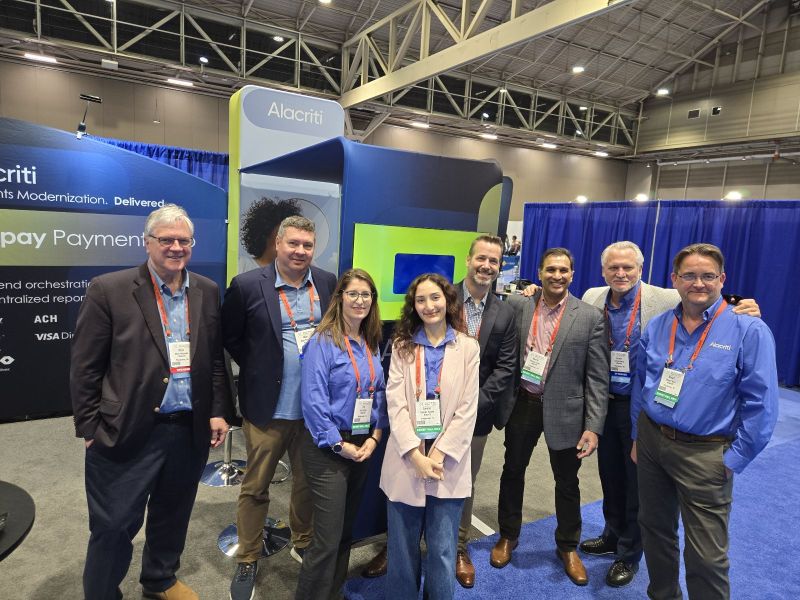
Her 2025 recap of the Nacha Smarter Faster Payments conference used the same people-first lens. She named colleagues, customers, prospective customers, partners, and the team working the booth. She highlighted a session in which representatives from three financial institutions described their first year with instant payments. The phrase “first year” contains the useful story. A launch is a moment. Adoption is a practice full of decisions, adjustments, and evidence.
The field notes worth keeping
Gillath has not published a grand unified theory of marketing. Her career offers something more practical: repeated choices across several technical categories. Follow the choices and a compact operating system appears.
Learn the machinery
Technical fluency lets a marketer simplify without becoming vague. Product knowledge is the route to a sharper human promise.
Find the consequence
Monitoring, SAP tools, and payment rails matter when they change uptime, work, risk, speed, or confidence.
Market with the ecosystem
Partners, sales teams, customers, engineers, and industry groups all carry part of a B2B story. Give them language they can reuse.
Notice the room
The market is not only a chart. It is a gathering of people deciding what belongs in the future and who gets to build it.
This may be why Gillath's route feels coherent even as the categories change. Networks, monitoring, enterprise applications, and payments all live below the surface of everyday experience. Each asks the marketer to respect complexity without worshipping it. Each punishes empty language. Buyers responsible for infrastructure have heard every promise. They want to know what connects, what changes, what breaks, and who will answer when it does.
The record also shows how early she treated the company website as part of the product experience. In 2012, during her Telco Systems tenure, telco.com received an Outstanding Website award from the Web Marketing Association. Two years later at Stackify, her writing drew a direct line from survey data to an uncomfortable operational truth: many developers were learning about application problems from user notifications. The statistic gave a technical feature an audience, a clock, and a consequence. Monitoring software stopped being a collection of functions and became a way to hear the alarm before the customer had to pull it.
That instinct survives in her conference work. A booth is useful, but a customer describing a first year on instant payments supplies what a product claim cannot: elapsed time, institutional context, and lessons earned after launch day. Gillath's recaps repeatedly distribute attention across the people who make adoption credible. It is good manners, certainly. It is also sound go-to-market design. Complex technology travels through networks of trust, and the customer voice often carries farther than the polished sentence.
Industrial engineering offered Gillath a way to see connected parts. Product management gave her a place to test what users need. Business development showed her the friction between companies. Marketing turned all of it into public language. More than two decades in, she is still working on systems that disappear when they work well.
That disappearance is the final paradox. Success makes infrastructure less visible, just as good translation makes complexity feel lighter than it is. The transfer arrives. The application stays up. The old process stops wasting an afternoon. Somebody still had to understand the machinery, find the consequence, and put the right words around it. Gillath made a career there.