An insurance startup can have a persuasive demonstration and still be missing the person who matters: someone inside an insurer prepared to use it. InsurTech Hub Munich has built its work around that distance. It brings technology companies into contact with insurance institutions, prepares both sides for the conversation and helps them discover whether there is a business worth doing together.
Consider XUND. The Austrian digital-health startup joined the hub’s H+ program in 2020. Its relationship with Generali Health Solutions later helped produce the Generali Mobile Health App, combining a health assistant with a route toward appropriate care. XUND co-founder and CEO Tamás Petrovics described Generali as our very first client in Germany
. For a company entering a new country, that is a rather more useful souvenir than a conference tote bag.
This is the proposition behind ITHM: an organized route from promising technology to a potential customer. Its current work covers AI, insurance distribution and digital identity. The common thread is making those subjects useful to the people who actually run insurance businesses.
Twelve insurers put a door in the wall
The hub’s origin helps explain its priorities. Twelve insurers backed the association’s founding in July 2017, including Allianz, Generali, Munich Re, Swiss Re and Versicherungskammer Bayern. Munich had been designated an insurance-technology location under the federal Digital Hub Initiative that May. This was an industry organizing access to new ideas, with public support behind it.
The geography was convenient. Munich already had insurance companies, research institutions and technology employers within reach of one another. The hub added a place and a process for meeting. In a 2019 interview, its team described an office overlooking the Werksviertel Ferris wheel and meetings that brought corporate representatives outside their usual surroundings. Even insurance innovation can benefit from a change of scenery.
Those early activities included W1 Forward, an eight-week accelerator teaching business fundamentals and pitch preparation. The 2019 cohort selected ten teams from more than 160 applicants. Today’s venture-client program places greater emphasis on industry needs and ventures with market access and growing demand. The chronology suggests an evolution from preparing young companies to helping commercially relevant solutions find an application.
Bavaria’s 2025 Mittelstandsbericht records activity across the period. Initiated collaborations are not a count of signed contracts or successful deployments.
The product is the work around the introduction
ITHM’s customers and participants sit on several sides of the same table. Insurance companies want access to technologies that address operating problems. Startups want market knowledge and conversations with relevant decision-makers. Established technology providers want partners for applying their tools. Universities and investors contribute research, expertise and a different view of what a young business might become.
The hub develops its venture-client priorities through discussions with insurance and technology partners and expert communities. That sequence matters: identify the business problem, then look for a company that can help. Its programs combine preparation, mentoring and business-development sessions. The aim is to make the eventual meeting specific enough that both parties can decide what to do next.
The membership offer extends that work through research, a Knowledge Hub and community events. An insurer can use it to compare ideas with peers; a startup can learn how a prospective customer describes its needs. The platform’s expertise lies in insurance context, technology scouting and arranging collaboration. Software vendors provide the underlying products.
- 01Name the needPartners identify an insurance problem.
- 02Find the fitScouting connects the problem to a venture.
- 03Prepare the meetingMentoring and business development add context.
- 04Explore a partnershipBuyer and startup work out the next step.
A health app makes the idea concrete
The Generali-XUND relationship shows why a specialist intermediary can matter. XUND brought a digital-health product and wanted to develop its insurance use cases and enter Germany. Generali Health Solutions wanted a service that could guide people beyond searching their symptoms online. Their needs were complementary before anyone described them as an ecosystem.
The federal Digital Hub Initiative’s annual report dates the collaboration to 2022 and describes the resulting Generali Mobile Health App. XUND’s health assistant supplied a core element; the application was subsequently developed with additional functions. The case illustrates a route by which a startup’s technology can reach customers through an established institution.
The transferable lesson is precise: arrive with a usable capability and a clear account of the customer problem. In this case, the application gave both organizations something concrete to build around. The hub’s role was to support access and development of the relationship; the companies still had to make the collaboration work.
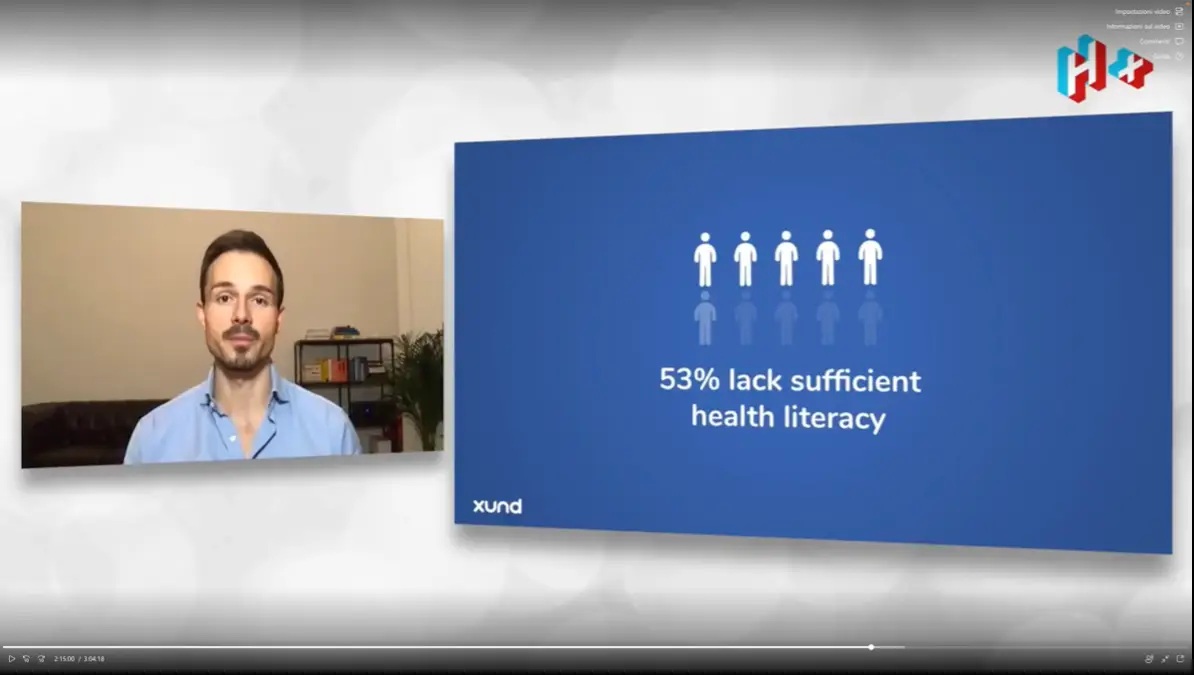
“our very first client in Germany”
Tamás Petrovics, XUND co-founder and CEO, on Generali
Free participation, publicly backed infrastructure
The economics operate at two levels. The association is supported by its corporate partners and public funding. A December 2023 announcement described a Bavarian grant of up to €1 million, available through October 2026, following €1.75 million of support during 2018–2023. Those amounts describe public support for the hub, not startup equity financing.
For selected companies in the 2024 SCALE AI cohort, the program itself was free of charge. It included mentoring, insurance-specific learning, networking and commercial introductions. Participation used a hybrid format with two in-person sessions: a September gathering in Munich and the November finale and Innovation Night. Founders still needed to make room in their schedules for the work.
This structure makes sense for a membership platform: institutions support a shared mechanism for discovering technology, while selected startups contribute the capabilities those institutions want to explore. The practical question for an applicant is whether a particular cohort reaches relevant buyers and whether its format fits the company’s stage.
AI has to survive the working day
SCALE AI launched in 2024 around customer experience, distribution and claims. Its stated ambition was to move beyond proofs of concept toward connected processes. NXT:LEVEL, the 2026 annual program, narrows the discussion to personalization, with two main subjects: AI-assisted sales and digital identity through the European Digital Identity Wallet.
The sales agenda includes lead prioritization, suggested next actions and preparation before and after advice sessions. Digital-identity work explores use cases and integration scenarios for verifying information across customer interactions. These are practical choices about how work flows through an insurer, even when the vocabulary sounds futuristic.
Recent research brings the constraints into view. A July 2026 paper with Deloitte examines AI agents in underwriting, including the importance of feeding claims information back into models. Its argument depends on data quality, governance and staff capability. Automation has to operate within an organization that understands its outputs and responsibilities.
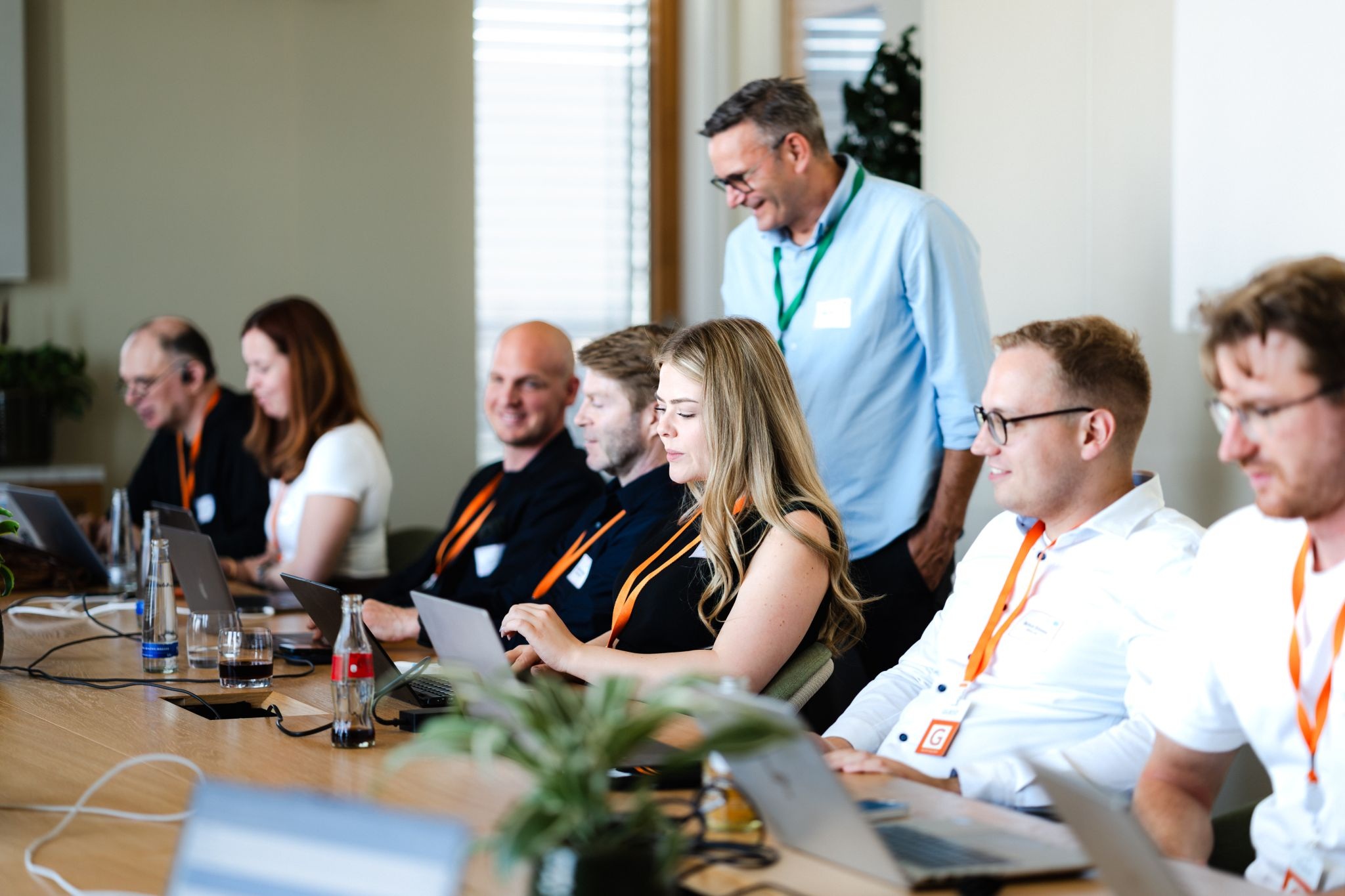
At a Salesforce hackathon reported in August, participants explored three roles for AI: predicting cancellation risk, generating relevant customer communications and automating follow-up processes. Salesforce expert Martin Ahlert put the limit neatly: Ein Agent ist ein Werkzeug, nicht das Interface
- an agent is a tool, not the interface. Trust and human judgment remained part of the discussion.
The obstacle moves from finding demand to earning trust
ITHM’s public record identifies two recurring difficulties. In 2019, it warned against building a product before establishing market relevance. Its recent work asks how organizations adopt tools after those tools become available. Read together, these accounts suggest that better technology changes the work of an innovation hub without removing the need for one.
A July 2026 project course with LMU’s Munich Risk and Insurance Center offers a useful example. Students worked with experts from LV 1871, Allianz and Provinzial on insurance sales. Their conclusions included a warning against assuming that all younger customers want the same digital experience. They also stressed explaining the technology and asking customers about their preferences.
The implication for anyone copying the hub’s approach is to involve users as well as sponsors. A persuasive business case still needs people willing to use the resulting service. Where demand is vague, data is unreliable or employees distrust the workflow, an introduction alone cannot carry a project into everyday use.
Who else gets through the door?
Access is also the theme of One Mission, the female-founder initiative integrated into ITHM in March 2023. It connects founders with experienced female leaders and promotes networking and visibility. For a platform whose value depends on introductions, attention to who receives them belongs close to the center of the business.
ITHM operates in a market with other routes to corporate collaboration. Cologne’s InsurLab Germany also offers insurance venture clienting. Plug and Play has an international corporate-startup platform and a history of working with the Munich hub. Companies can also build their own scouting relationships. ITHM’s distinguishing combination is an insurer-backed association, Bavarian support and a Munich base with international participation.
For a founder, the useful next step is to examine the current venture-client priorities and identify the insurance problem their product can address. For an insurer, it is to bring a specific need and people prepared to explore it. The promise becomes credible when the conversation can move from an interesting demonstration to a shared piece of work.
Follow the next introduction
Explore the official website, venture-client program, NXT:LEVEL and news and events. Follow ITHM on LinkedIn, X and Facebook, or explore One Mission.