Consider a coding competition in which writing good code earns seven points. Understanding whether anybody needs the thing earns six. At Cavista’s 2026 student hackathon, that was the published arithmetic. Design earned three points; presentation, four. The scorecard offers a useful introduction to a company whose work sits between technical ability and the decidedly untidy requirements of running a business.
- Cavista builds and supports software for organizations, including engineering work for healthcare technology partner Axxess.
- Its services cover consulting, custom applications, cloud migration, testing, security and analytics.
- Its student competitions evaluate business usefulness alongside engineering skill.
Cavista Technologies belongs to a familiar market: organizations need software, but often need help deciding, building and maintaining it. The Dallas-based company supplies that help through teams in Nigeria, India, the Philippines and Botswana. Its public materials describe a B2B services business. The customer brings an operational problem; Cavista supplies engineering and related expertise.
A healthcare platform needs people behind it
The clearest example is Axxess, the care-at-home technology company founded by Cavista founder and chairman Niyi John Olajide. Cavista calls Axxess a global partner. In an August 2026 account of its Nigerian operation, Cavista describes engineers contributing to the development and continuous improvement of Axxess software alongside colleagues in other countries.
The distinction matters. Axxess is the platform used by healthcare organizations. Cavista does engineering work that supports it. When Cavista’s article describes more than 9,000 care-at-home organizations serving over five million patients, it is describing Axxess’s reach. Those numbers explain the setting in which the engineers work; they are not Cavista’s direct customer count.
Healthcare gives the relationship a particular texture. Software must keep serving people after the presentation ends. Reliability, security and continuing development belong inside the assignment. Cavista’s service list includes quality assurance and cybersecurity alongside application development, an acknowledgment that delivering software involves more than producing its first working version.

The ordinary jobs that make software useful
Now exchange the healthcare workflow for a farm. On Cavista’s services page, Agbeyewa’s operations executive describes better tracking of farm operations and inventory. Glocient Hospitality describes streamlined booking and guest management. Matna describes digitized production and reporting. These are company-published testimonials, useful as descriptions of the work rather than independent measurements of its results.
What connects those assignments is visibility. An inventory record, a booking and a production report each help someone understand what is happening and decide what to do next. Cavista’s broader offer includes strategic consulting, IT planning, cloud services and migration, custom applications, and data analytics and AI. The breadth makes more sense when attached to these ordinary business tasks.
A buyer can use that same approach. Start with the process that needs improvement. Identify who uses it, what information is missing and which decision should become easier. Then discuss the application, infrastructure and support needed to change it. A request for a fashionable technology is a much less informative brief than a description of a booking that repeatedly goes wrong.
The buying decision also has an economic side. Custom development commits an organization to decisions about scope, migration and ongoing maintenance. A narrow assignment with a clear owner gives both sides something to evaluate. An inexpensive tool that already fits the workflow may be the better choice when little customization is needed.
Give the business problem six points
That brings us back to the competition. February 2026 reporting described about 200 students in the fourth Nigerian Cavista hackathon, with 47 teams competing. LASU’s Team ByteBros won the ₦2 million first prize. The theme concerned AI and preventive healthcare. Company leadership described the event as a way to identify and develop future technology talent.
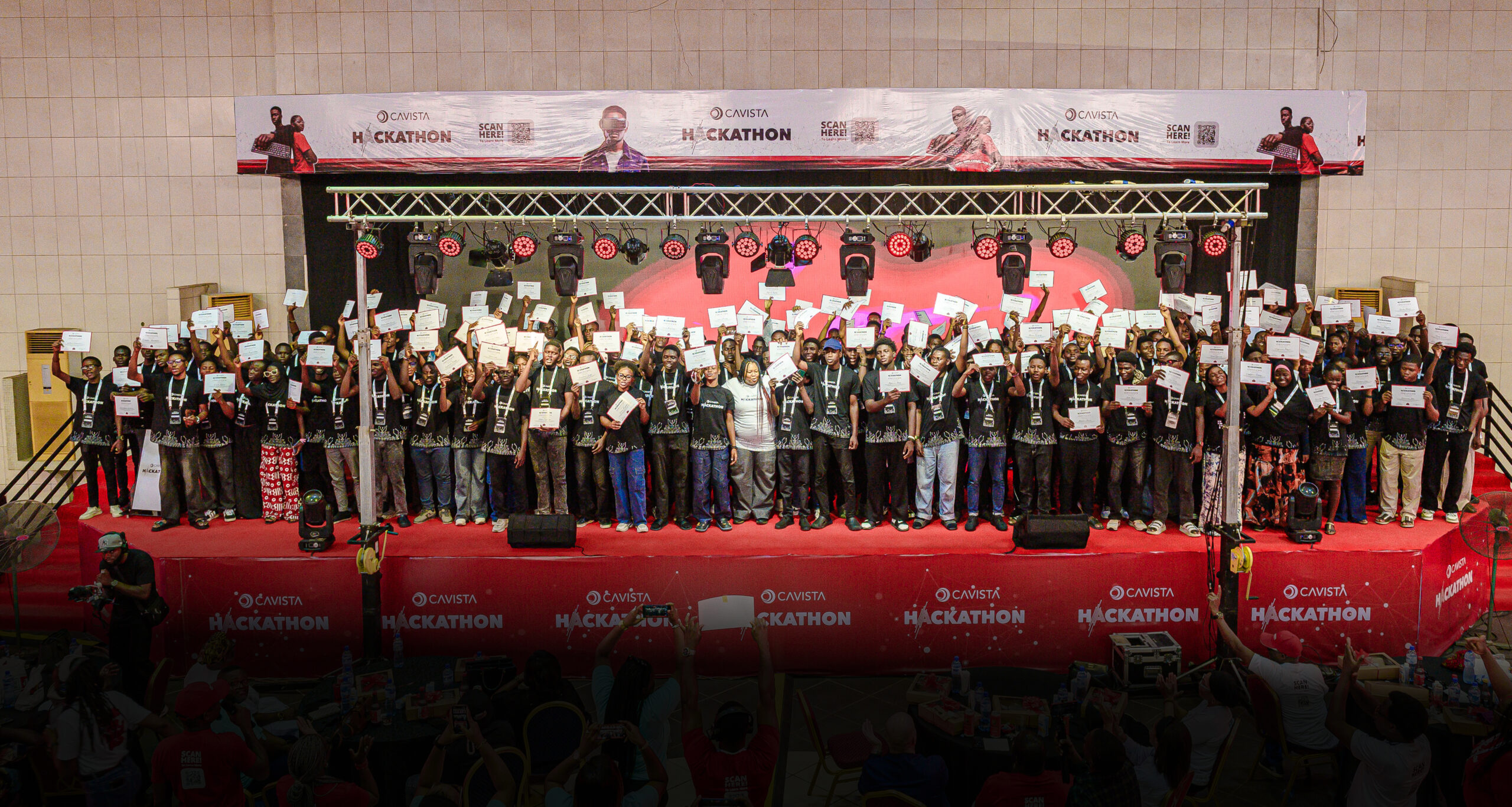
The published rules required public GitHub repositories and work completed during the event, with approved open-source libraries permitted. Students had to show their code and present their idea. That creates a more interesting assessment than a résumé alone: can a team collaborate, build something, explain it and connect it to a customer need?
The copyable idea is the scorecard. Make usefulness visible before the judging begins. Give it enough weight to influence what people build. A short competition can reveal promise and teamwork; it cannot establish clinical safety, durable demand or production reliability. Those require further work. The prize buys recognition for a performance under constraints, not proof that a healthcare product is ready.
Four countries still need a handoff
Cavista markets its distributed teams with the phrase “Cavista Never Sleeps.” Its location pages describe work across time zones and around-the-clock support. For customers, the potential attraction is continuity: work and assistance can extend beyond a single office’s day. For engineers, the arrangement connects local employment with projects used elsewhere.
Geography supplies the possibility. Coordination determines the result. A distributed engagement needs clear ownership, documentation and agreement about what counts as finished. For a buyer comparing Cavista with an internal team or another engineering supplier, those are sensible questions to ask. So are questions about testing, support responsibilities and who maintains the application after delivery.
“May the best idea win.”Cavista’s published workplace philosophy
The company calls its approach the Cavista Way, emphasizing respect and open collaboration. Its October 2026 Employee Engagement 2.0 article extends that account to AI, describing trust, literacy, human connection and manager development among its six pillars. These are statements of intended practice. Their interest lies in recognizing that new tools also demand changes in how people learn and work together.
Cavista’s position becomes clearest when the pieces are put together: client problems provide the work, international teams provide delivery capacity, and student competitions offer a route to discovering talent. The useful question for a prospective customer is specific: can this team understand my operation and support what it builds? The hackathon’s six-point business test is a reasonable place to begin.