In May 1982, a group of bankers and public officials met at Ditchley Park in England to discuss a problem that ought to have embarrassed a profession built on numbers. Banks were lending across borders without a sufficiently clear picture of the risks they shared. Each institution could see its own loans. The wider picture was patchy. The proposed remedy was an organization that would help them see more.
- The IIF combines financial research, industry advocacy and meetings.
- Institutions join; their employees use the benefits.
- Its reach now extends from sovereign debt to tokenized payments.
The information problem came first
The Institute of International Finance formally arrived in January 1983, founded by 38 banks. Its setting was the international debt crisis. Its practical task was less theatrical: improve the information available about sovereign borrowers. A contemporary account described data on loan exposure, maturities, reserves and debt service. For a smaller bank with little research capacity, this was a way to acquire a wider field of vision.
But the original constituency did not keep expanding indefinitely. Academic research records membership falling through the mid-1990s as syndicated lending to emerging markets stopped and bank mergers reduced the number of potential members. Nonbanks helped offset that decline. The lesson is fairly sharp: even a shared problem can stop supporting a business when the market around it changes.
One membership, several desks
Today, a member can approach the IIF through several doors. An economist might want country analysis. A portfolio team might follow emerging-market capital flows. A regulatory affairs team might contribute to a consultation response. An executive might attend a meeting with peers and public officials. These are different jobs, gathered inside one institutional relationship.
The research has recognizable products. The Global Debt Monitor examines borrowing and financing risks. The Capital Flows Tracker follows money moving into and out of emerging markets. Country work and downloadable data sit alongside expert briefings and investor trips. The attraction is partly the ability to ask a follow-up question of the people producing the analysis.
The commercial arrangement makes sense of this variety. Dues are annual and depend on an organization’s type and size. A prospective member requests a quote. Membership extends across the firm, rather than being sold as an individual subscription. Event sponsorship offers another commercial relationship, while professional development adds a further reason for employees to participate.
“IIF membership is for companies, giving all employees of that organization individual access to membership benefits.”The IIF’s membership FAQ
The implication for a buyer is practical. A membership used by research, policy and leadership teams can be a different purchase from one used by a single analyst. Before asking what the dues buy, ask who inside the organization will use them. Access sitting in an unread welcome email does very little work.
The room has a point of view
The IIF describes a mission that joins prudent risk management and sound industry practices with policies that support financial stability and sustainable growth. It also explicitly advocates in its members’ interests. Both belong in the picture. This is an industry association with an economic research operation, and its policy work has a constituency.
That makes it different from the IMF, an intergovernmental institution. It also gives it a different proposition from a commercial data service. A dataset can help a bank understand a rule’s consequences. An association can organize member discussion and present an industry position to the people writing the rule. The IIF works across capital, liquidity, resolution and other regulatory questions through submissions, dialogue and committees.
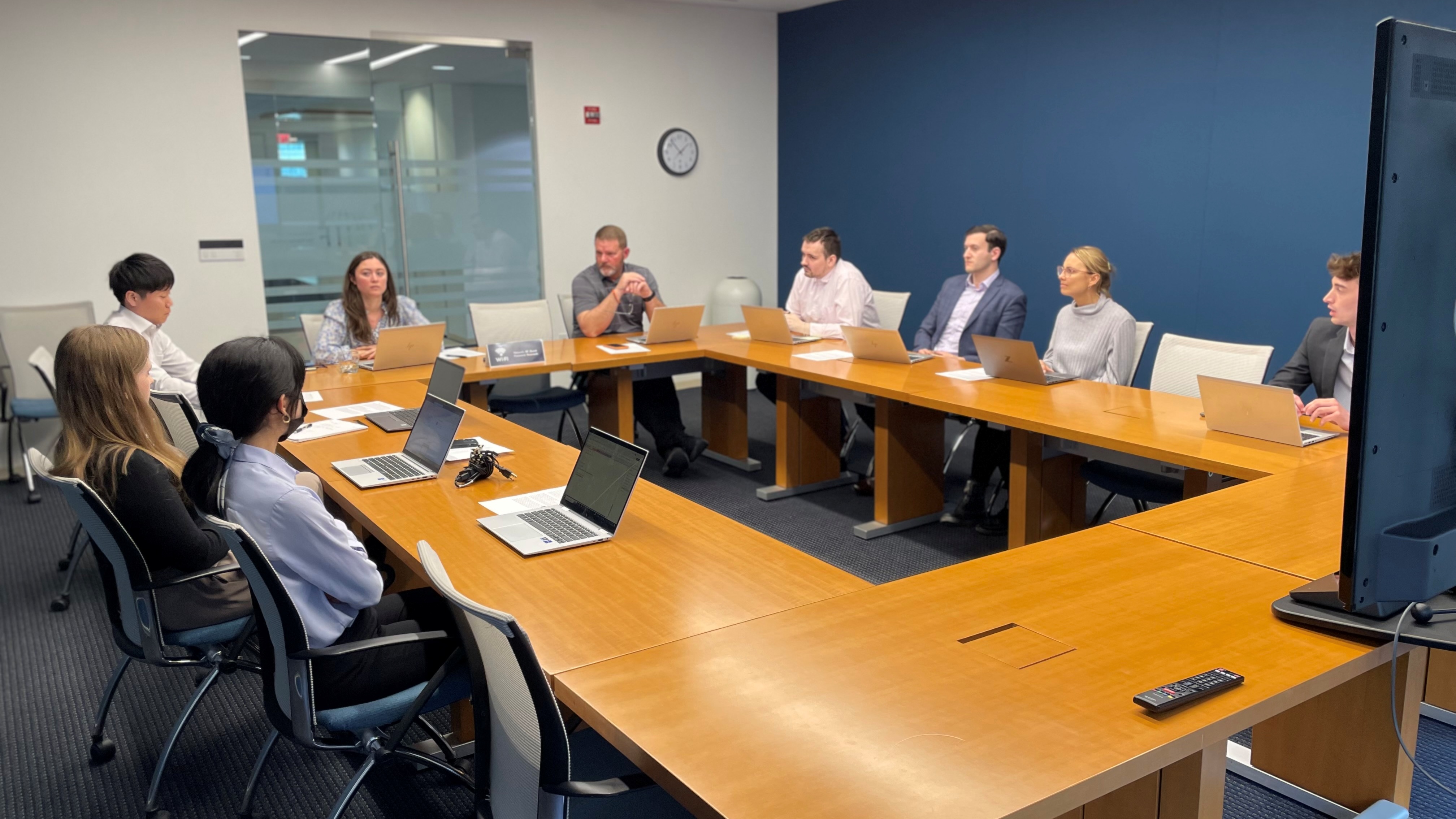
Its internal culture page offers a small, revealing counterpart to that external work. A Staff Advisory Committee contributes to engagement and internal programs; the organization also describes volunteering activities. Those are stated practices rather than a verdict on employee experience. Still, a committee is a fitting detail for an institution whose business depends on organizing collective work.
From a meeting to a payment
Project Agorá supplies a concrete example of that work beyond conferences. Launched in 2024, the collaboration brought together the Bank for International Settlements, central banks and private financial institutions convened by the IIF. The question was whether tokenized bank deposits and central bank reserves could improve wholesale cross-border payments on a shared programmable platform.
In May 2026, the partners reported a prototype demonstrating multi-currency settlement. The BIS subsequently reported July real-value tests involving 28 financial institutions and central banks, with transactions totaling approximately CHF 800,000. That figure describes money moved during testing, rather than the project’s development cost. A test with real money is useful evidence; operating a widely adopted payments network remains a larger undertaking.
The distinction matters. Technical feasibility does not settle every question of integration, governance or legal requirements. Agorá’s significance for understanding the IIF is more immediate: private institutions needed a convener for a complex public-private experiment, and the association supplied one. The research-and-meetings business could support practical collaboration.
A useful room still needs useful work
The same pattern appears in its recurring AI survey with EY, launched in 2018. The report published in January 2025 gathered views from 56 financial institutions on adoption, governance and related issues. Firms facing similar uncertainties could compare experience without pretending that every institution had reached the same answer.
There is something readers outside finance can copy here: establish shared evidence, keep a recurring forum, and bring people with different responsibilities into it. The conditions matter. Members need a reason to contribute, staff need time to participate, and a collective position cannot guarantee a regulator’s agreement. For firms working across borders, however, the IIF offers a durable service: making the next useful conversation easier to arrange.