In a Kenyan experiment, a loan had a name that sounded like a promise: Top Cash. The product was hypothetical. The decisions it provoked were useful. Participants borrowed money to complete tasks that could earn them money, while researchers changed the messages surrounding the offer. How much difference could the small print make?
- CGAP tests how finance works for people living in poverty.
- Its users are lenders, regulators, investors, and development organizations.
- Its research and practical tools are free to read and reuse.
CGAP, working with the Busara Center for Behavioral Economics and digital lender JUMO, was investigating a deceptively ordinary problem. A borrower could receive money quickly without understanding the bargain. In a financial system celebrated for removing friction, the moment of explanation had become easy to skip.
A nine-point lesson in the small print
A later CGAP report recorded a striking laboratory result: changing how costs were presented reduced defaults from 29 percent to 20 percent. The provider subsequently incorporated the changes into borrower messages. Making people actively decline a summary of terms also increased the proportion who viewed it, from 9 percent to 23 percent.
The distinction matters. These were controlled experimental results, not proof that a text edit would produce the same improvement across a national loan book. But the work offered a productive suspicion: before blaming customers for poor decisions, inspect the decisions the interface asks them to make.
That is a useful way into CGAP. It operates between the people who design financial systems and the people expected to live with them. Its expertise combines policy, behavioral research, provider economics, and customer experience. Sometimes the object of study is a regulatory framework. Sometimes it is a few words on a phone.
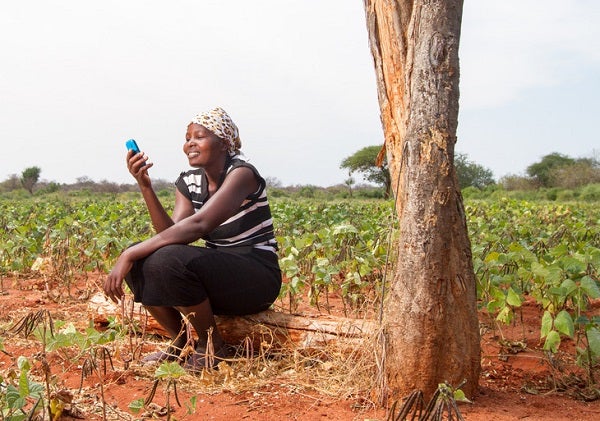
The account was never the whole job
Established in 1995 by the World Bank and donor organizations, CGAP emerged from the enthusiasm for microfinance. Its original institutional task included coordinating donors, improving practice, and learning how financial services could reach very poor people. It now describes itself as a global partnership of more than 40 development organizations.
The questions expanded as the industry changed. Microcredit widened into savings, payments, insurance, and digital finance. CGAP’s 2023-2028 strategy explicitly gives greater attention to utility: the practical benefits people receive from financial inclusion. Counting accounts remains useful. It cannot tell you whether someone can weather a shock or keep a business going.
The evidence also made the credit story harder to tell in a single sentence. In June 2026, CGAP synthesized 405 credit-focused studies alongside analysis of institutional borrower data. Its conclusion was conditional: results depend on the borrower, product design, purpose, context, and time horizon. A favorable average can conceal people who gain little or suffer harm.
“The same loan, routed differently, produced materially different outcomes.”CGAP’s June 2026 credit research
For a lender, that shifts attention toward repayment schedules, control over funds, and the realities of income. For a funder, it challenges the habit of treating distribution as impact. The useful question becomes which design helps which person, under which circumstances.
A research budget, not a loan book
CGAP’s immediate audience consists of institutions: financial providers, public authorities, investors, and development organizations. Low-income households and small enterprises are the intended beneficiaries. Its place in the market is upstream, shaping the decisions of organizations that supply finance or write its rules.
The operating model follows that position. Housed at the World Bank, CGAP receives donor support and publishes knowledge as a public good. Its FY2025 report recorded $29.7 million in operating expenses and $19.1 million in member contributions and associated funding. Those figures describe different flows; neither is a venture funding round or a customer subscription total.
The report lists pilots ranging from agricultural finance for women in Tanzania to heat insurance combined with other services in India. Its reach is evidence of activity, rather than a tally of people lifted out of poverty. That restraint is worth keeping when reading any development institution’s numbers.
Its peers include the Center for Financial Inclusion, UNCDF, and policymaker networks such as the Alliance for Financial Inclusion. These organizations frequently occupy complementary territory. CGAP’s particular combination is a donor partnership, a World Bank institutional home, and research that moves between provider experiments and public policy.
An evidence library with an exit door
The work becomes tangible through tools. Impact Pathfinder, introduced in February 2025, organizes research around development outcomes. A decision-maker can investigate the evidence behind an intervention before commissioning another pilot. FinDev Gateway provides a broader knowledge-sharing platform; FinEquity supports learning on women’s financial inclusion.
CGAP also publishes guidance on responsible digital credit and measurement of women’s economic empowerment. The latter asks institutions to look beyond access toward changes in women’s lives. In July 2025, CGAP became host and convenor of the Access to Insurance Initiative, working with insurance supervisors through IAIS.
Climate work extends the same logic. Its 2024 report, 8 Billion Reasons, connects inclusive finance with climate action. The household facing a damaged livelihood needs workable ways to save, invest, manage risk, and recover. The relevance of finance depends on the problem it helps that household solve.
Copy the test, then check the conditions
The portable lesson is procedural. Find a point where customers struggle. Change something specific. Compare outcomes. A clearer disclosure is testable; a promise to empower everyone is much harder to evaluate. CGAP’s research gives product teams and public agencies examples of how to make those questions concrete.
The conditions deserve equal attention. Clear wording cannot make an unaffordable loan affordable. A digital account offers limited help without connectivity or control over the money. Findings from one setting need testing in another. CGAP’s most useful contribution is permission to keep asking after the account opens: what, exactly, became better?
Keep the question going
Explore CGAP’s work, browse the blog and news, or open Impact Pathfinder and FinDev Gateway.
Watch the Impact Pathfinder launch discussion or visit CGAP on YouTube. Follow on LinkedIn, X, and Facebook.