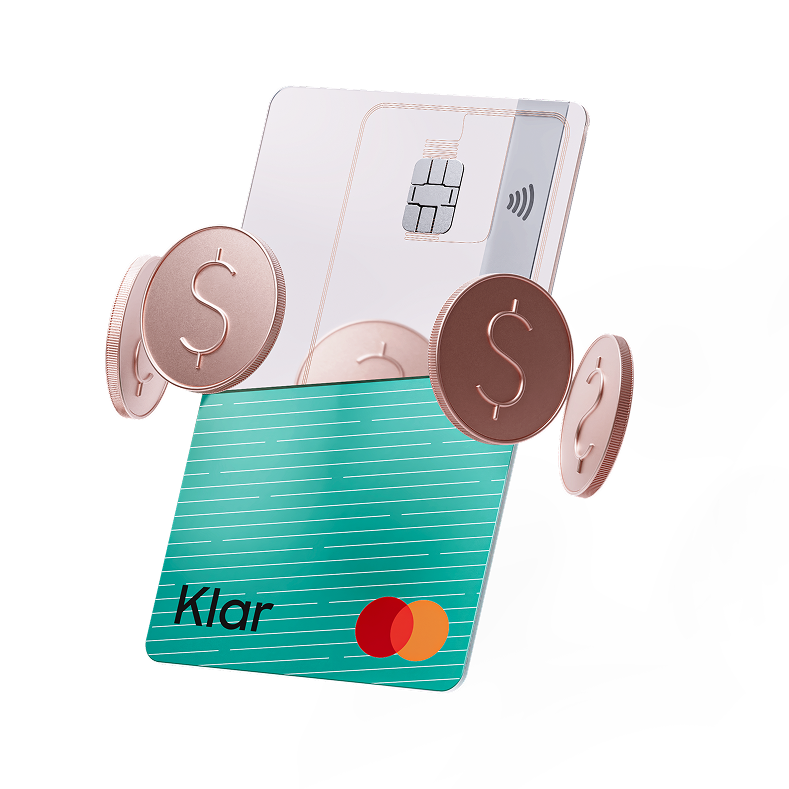
The awkward thing about a credit history is that you need credit to acquire one. A lender wants evidence that you repay. You want the opportunity to produce that evidence. Somewhere between those two reasonable requests, a person can disappear from the financial system. Klar’s deposit-backed card offers a practical way through: put money down as security, use the card, pay on time, begin making a record.
- Credit, payments and savings in Mexico.
- Seven million users reported in April 2026.
- Starting credit requires collateral and discipline.
- Next: business finance, Uber and housing.
A different answer.
This is an unusually revealing place to begin a company profile. A secured card is hardly a glamorous invention. It asks the customer to supply collateral. But Klar’s version lets that deposit earn interest and reports card activity to help build credit history. A customer may later qualify for conventional credit. The first product creates evidence for the next one.
Klar was founded in 2019 by Stefan Möller, Daniel Autrique and Gianluigi Davassi. Its early proposition paired debit and credit in an app for Mexican consumers. Möller led the company; Autrique was the founding finance chief; Davassi helped establish its technology. The ambition was to widen access to services that were cumbersome, costly or unavailable to many potential customers.

An anonymous customer in Quona Capital’s 2022 impact report described recommending Klar to an extended family of 50 people. That tells us something about its everyday usefulness. The report’s survey found that 49% of respondents were accessing a product or service like Klar for the first time. That is a clue about the problem being solved: participation itself.
Seven million invitations
Today, the invitation has several entrances. Customers can receive money, make transfers, pay bills, save and apply for credit through the app. Investment products advertise starting amounts of MXN100. A standard credit card sits alongside the secured card, personal loans and Platino, a premium metal card with travel benefits. The company now serves businesses as well as individuals.
Total users, not monthly active users.
In April 2026, Klar reported more than seven million users, up from 3.6 million in December 2024. Those are company figures, and a registered user is not necessarily a daily customer. Still, the breadth helps explain the strategy. Someone who arrives for a card can stay for savings. Someone who arrives to save can discover a useful payment account.
The expensive part of free
Klar competes with Nu, Ualá and traditional banks. An app and a card alone are familiar territory. Its particular combination spans people building credit, customers seeking rewards and business owners managing liquidity. The distinction is the range of relationships it can serve. Whether it wins an individual customer depends on the actual offer, service and price.
Price requires a pause. Klar’s standard credit card has no annual fee. Its published average CAT, Mexico’s annual total-cost comparison measure, is 187% excluding VAT, calculated in May 2026 and valid through November 1. That figure is not every borrower’s individual interest rate. It does make one point unmistakable: a card can be inexpensive to hold and expensive to borrow on.
*Excludes VAT. May 1 - November 1, 2026. Total-cost comparison, not an individual interest rate.
That is also part of the business model. Klar earns from lending and disclosed charges; card payments and premium products add other economics. Rewards encourage use, while accounts and savings encourage customers to keep money within the relationship. Inclusion still has to support a working lending business.
Follow the salary
In December 2024, Klar announced the acquisition of key Tribal assets in Mexico. The logic was more interesting than simply adding business customers. An employer pays salaries. An employee needs an account. A business account can therefore connect Klar to the consumer’s financial life before the consumer searches for another card. Payroll was an opportunity described in the announcement, rather than a guaranteed result.
Klar Empresarial now combines a business account, credit card, revolving credit and investments. For an owner, those tools address the unromantic problem of keeping money available between paying expenses and collecting revenue. For Klar, they widen the relationship beyond a household. Small-business finance also requires its own risk judgment; a consumer lending model cannot simply be enlarged and assumed to work.
- Business accountCompany money
- Payroll connectionProposed route
- Consumer accountEmployee finances
The expansion has required capital. Klar’s June 2025 financing comprised $170 million in equity and $20 million in venture debt, with General Atlantic leading. The company reported a valuation above $800 million and approximately $300 million in annualized revenue. Annualized revenue is a snapshot extrapolation, not an audited full-year result. Financing is fuel, rather than proof that every new product will succeed.
The queue moves inside the phone
A digital service can remove the branch queue while creating a support queue. Klar describes that pressure in its account of adopting AI. It reports handling more than 300,000 monthly chat conversations, with more than half of first-level inquiries resolved without human intervention. Its voice system uses OpenAI and Twilio, and routes complex cases to people. These are company-reported operational results.
“Out of 50 family members, I’ve recommended Klar to everyone.”
The staffing arrangement is international: Mexico City, Berlin and remote colleagues, with English used across the company. Klar’s stated values include ownership, inclusion and clear communication. The operational idea worth copying is modest: automate repeatable questions, keep an escalation route, and spend human attention where the financial consequences are difficult. A fast answer that misunderstands a debt problem is an expensive shortcut.

From groceries to front doors
The next moves stretch the relationship further. In May 2026, Klar and Uber announced a co-branded Mastercard for Mexican users, putting credit inside an existing spending habit. That month Klar also announced the acquisition of Yave, a digital mortgage platform, describing future integration. A housing loan would move it from daily transactions into a customer’s largest financial commitments.
Yave also illustrates a sensible limit to the app metaphor. The interface may be small; the financial decision is enormous. Mortgage expertise, collateral and repayment assessment must sit behind that screen. Klar’s acquisition approach brings specialized experience into the company rather than asking customers to assume that competence in cards automatically translates into competence in homes.
The useful lesson is to make the first step possible and earn the next one. The conditions matter: customers need digital access; a secured card needs spare cash; borrowing needs affordable repayments. Eligible Klar deposits have SOFIPO protection capped at 25,000 UDIS per depositor per institution. Each additional product creates another test of price, trust and execution. The first yes is only the beginning.