A YouTube channel can be an awkward thing to take to a bank. The audience is visible; the business underneath requires explanation. There may be advertising income, sponsorships, merchandise and people to pay. Sima Gandhi helped build Creative Juice around the proposition that this explanation ought to become easier. A creator should be able to spend less time proving that the work counts as a business and more time running it.
Gandhi came to that problem by a route that included tax law, the U.S. Treasury, American Express and Plaid. The résumé sounds rather buttoned up for the world of uploads and internet personalities. It also supplies a useful clue. She knew something about the institutions on the other side of the conversation. Much of her career had involved helping those institutions understand a financial activity that did not fit comfortably into an existing box.
A revealing part of her story is how often the assignment returns. Different customer, different technology, another conversation about what the system can recognize. Her later work on financial standards makes that pattern easier to see. The Creative Juice chapter sits inside a longer effort to give new businesses a language that established institutions can read.
Before the banks came the rules
Gandhi grew up in California, with parents from India. Her memories of the Bay Area include a time before Google and orchards down the street. It is an appealing detail in a career so closely associated with financial technology: the place existed before its shorthand became an industry. By 2003, she was interning in Senator Dianne Feinstein’s office. She belonged to Stanford’s class of 2004.
Years later, what she remembered about Feinstein was the quality of the team and the clarity of the expectations. “There was no drama,” Gandhi recalled. There is something pleasantly unfashionable about choosing that as a leadership compliment. The recollection gives a more personal measure of what she noticed in a powerful office: people with expertise, assembled to get work done.
At Stanford she studied engineering and earned a second undergraduate degree, with honors, in Science, Technology, and Society. New York University supplied a JD and an LLM in tax law. Engineering asks whether something works. Law asks what it means within a system of rules. Her subsequent jobs would require her to move between those questions, often while other people were still deciding which question mattered.
She began in corporate tax at Simpson Thacher. At Treasury, her work included the establishment of the Consumer Financial Protection Bureau and relationships with the White House and regulators. At American Express, she helped launch Bluebird with Walmart and worked on financial inclusion and lending products. These were different vantage points on financial access: drafting the rules, operating inside a large institution and bringing a product to customers.
- Public policyU.S. Treasury
- Banking productsAmerican Express
- Financial dataPlaid · joined 2015
- Creator businessesCreative Juice · launched 2021
- Shared standardsCFES · founded 2024
Employee No. 15 meets the institution
In 2015, Gandhi joined Plaid as employee No. 15. The technology connected financial applications with bank infrastructure. That made relationships with banks part of the company’s operating reality. An application could be elegantly designed and still depend on another institution’s willingness to work with it. Gandhi’s job involved making those relationships possible.
Her public reflections on that period describe the need to explain the company to institutions that could be skeptical of what it was doing. She also came to regard regulation as important to Plaid’s survival. For a young technology company, an established framework could provide a basis for continuing to operate. The rules were something to help shape, as well as something to navigate.
Looking back in 2023, she connected that work directly to Creative Juice. Plaid’s infrastructure had made a later generation of financial products possible, including her own company. That connection is more interesting than a simple change of employers. She had helped work on the financial plumbing, then become an operator whose product depended on it. The consequences of an infrastructure decision had become personal.
“It’s not what I do, it’s what my team does.”
Sima Gandhi, on leadership
Her management advice was similarly practical. In a growing company, the temptation to take over a struggling colleague’s work can be strong. Her preference was to help people do the work themselves. She also urged early teams to take diversity seriously while the team was still small. Read alongside the Feinstein recollection, these views suggest a consistent appreciation for capable people and clear conditions in which they can contribute.
The enterprise behind the upload
Creative Juice launched in 2021, co-founded with Ezra Cooperstein, then president of the creator management company Night. The partnership brought together financial services experience and proximity to the people making online media. Gandhi’s interest was in the business that accumulated around the creative work. A person could start with a camera and eventually need the sorts of financial services associated with a much more familiar small company.
Jimmy Donaldson, known as MrBeast, joined the early story as an investor and partner in a $2 million creator funding experiment. By April 2022, Creative Juice was announcing a $15 million Series A led by Acrew Capital, alongside a $50 million creator financing pool. The two figures describe different things. One concerned funding for Creative Juice itself; the other concerned money available for creator businesses.
“Juice grows as creators grow,” Gandhi said at the time. It was a compact expression of the company’s ambition. The practical offerings included banking tools and advances on YouTube advertising income. These products addressed a business problem that can look dull beside the content it supports: the timing and organization of money.
Her conversations about the creator economy returned to the need for business knowledge alongside the financial products. An audience opens possibilities. The creator still has to decide how to earn, how to organize expenses and how to make the enterprise last. Gandhi’s role in that conversation was to take those less photogenic tasks seriously. There are few glamorous ways to describe reconciling accounts. The glamour generally arrives after someone has done it.
A club for the business of creating
In June 2023, Creative Juice introduced Juice Club, combining community with bookkeeping tools, funding options and access to support. Gandhi described creators moving between numerous services to manage their money. The result could be a confusing view of a business whose income was already arriving from several directions.
The club addressed another problem she identified: isolation. A person can have an audience and still lack peers with whom to discuss running the business. The membership idea placed that need beside the accounting and funding tools. The company was making room for the conversations around the product, including the questions a creator might hesitate to ask in front of everyone who followed them.
Earlier that year, Creative Juice had announced a Black Creator Incubator, committing $25,000 across five selected creators and pairing the money with creative and financial education. Gandhi discussed differences in access to capital, business knowledge and support networks. The program’s design acknowledged that a payment and an explanation can do different jobs. Both may matter to someone trying to turn a growing audience into a more durable enterprise.
That attention to the surrounding support is a distinctive part of the Creative Juice story. The company was trying to serve people whose work could be highly visible while their business questions remained private. Bookkeeping, education and a place to compare notes gave Gandhi’s financial inclusion interests a specific audience.
A different kind of next chapter
Creative Juice was acquired in 2023. Gandhi’s subsequent work includes Alton Strategies, the advisory firm she leads, and a senior adviser role at FS Vector. Alton’s services span policy advice, business consulting and negotiation. The work covers decisions such as raising money, managing investors, building executive teams and negotiating commercial arrangements. These are familiar concerns for an operator who has worked both inside institutions and across from them.
There was also a personal reconsideration of what should come next. In a 2025 conversation, Gandhi described choosing more room for her husband and son, talking openly with trusted board members and considering writing a book. She noticed the expectation that selling a company would be followed by starting another. That expectation left little room for a different answer.
The detail matters because the founder title can make a career look more inevitable than it felt to the person living it. Gandhi had said that the product problem drew her into Creative Juice. Her later choices allow the same possibility in reverse: a person can remain interested in building things while changing the form, pace and setting of the work.
Fifty-four ways to make expectations clearer
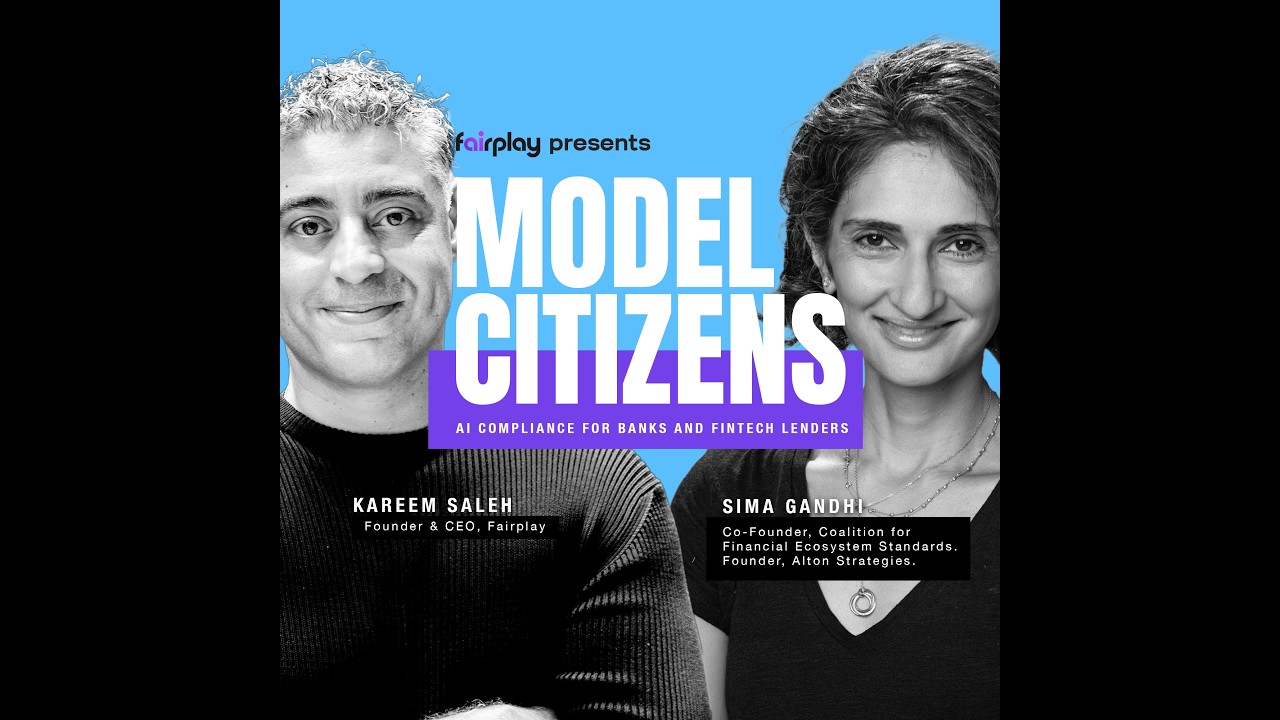
In 2024, she co-founded the Coalition for Financial Ecosystem Standards with FS Vector. CFES brought the old problem into another setting: banks and fintech companies needed clearer shared expectations for working together. Its founding membership included companies such as Block, Brex, Mercury, Relay, Rho and Stripe. The effort concerned risk management and compliance, subjects on which an ambiguous understanding can become expensive.
In March 2025, CFES released STARC, its Standardized Assessment for Risk Management and Compliance, with an initial set of 54 standards. They covered six areas, including operational risk, complaint handling and third-party risk management. An advisory board brought banking, fintech and consumer perspectives into the work. The project gave institutions something more concrete against which to discuss their practices.
March 2026 brought a Qualified Assessor Program. CrossCheck Compliance, FS Vector, FTI Consulting and Wipfli completed the requirements to conduct independent certifications against CFES standards. Training and quality management became part of the machinery. A shared expectation needs a way to be assessed if it is going to be useful beyond the meeting in which everyone agrees with it.
That is a useful place to find Gandhi now. The career that passed through a senator’s office, a bank-data startup and creator finance has arrived at the work of making expectations explicit. A creator trying to explain a business and a fintech trying to establish a bank partnership face different practical questions. Gandhi’s story keeps returning to the people who have to make themselves understood before they can get on with the work.
Continue the conversation
- Alton Strategies: Gandhi’s current work and biography ↗
- Sima Gandhi on LinkedIn ↗ · @simagoo on X ↗
- The early Plaid years and her approach to management ↗
- Creative Juice’s 2022 funding announcement ↗
- Gandhi on Juice Club ↗ · The Black Creator Incubator ↗
- Remembering Dianne Feinstein ↗
- Listen: Gandhi on the creator economy ↗
- CFES: the standards work ↗ · The 2026 assessor program ↗
- Watch: Model Citizens with Kareem Saleh ↗
- Watch or read: The Current with Ansel Parikh ↗