The most revealing thing INNOCEAN USA ever learned about hot dogs was that people did not dislike them. They misplaced them. In focus groups across New York, Dallas, San Francisco and Los Angeles, people spoke fondly of hot dogs - ball games, backyard grills, childhood - and then quietly admitted they rarely considered one for lunch or dinner. The product lived in memory, not in the meal plan.
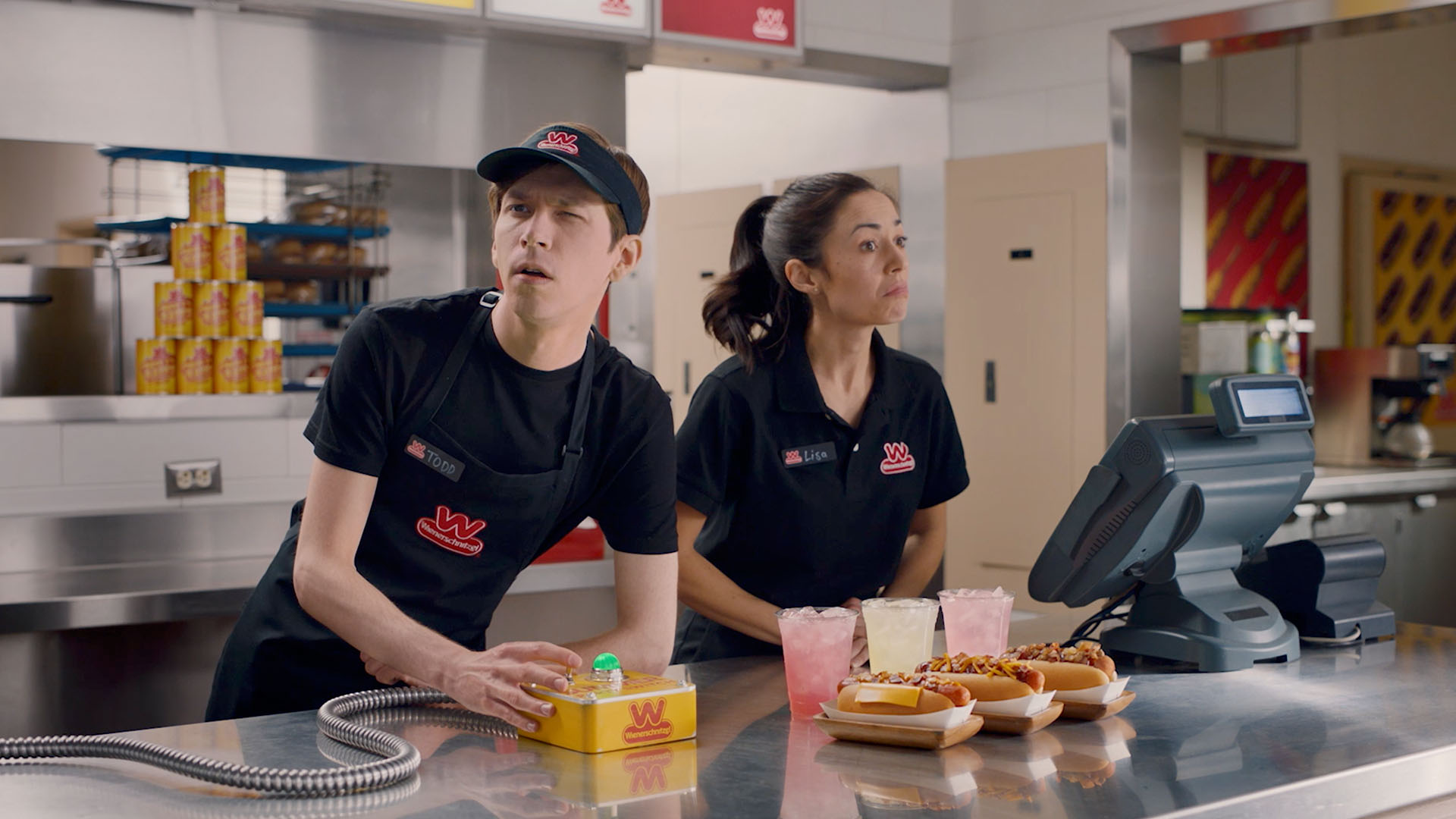
This was a peculiar problem for Wienerschnitzel, a chain built around a food Americans already knew. The first thing that failed was not the recipe. It was salience. Early-morning news placements were asking for attention at the precise hour when almost nobody was craving chili cheese fries. INNOCEAN's response was part anthropology, part scheduling: make the restaurant feel contemporary, give it two cheerful employees named Todd and Lisa, and move the advertising to the moments when hunger actually had a vote.
They called those moments “Hungry Hour.” The phrase sounds like something found on a diner napkin. The result did not: 86 consecutive weeks of same-store sales gains, 25% year-over-year same-store growth over two years, and a 21.1% rise in transactions even with dining rooms closed during the pandemic.
The excellent trap
INNOCEAN USA was established in Huntington Beach in 2009 as the American operation of the Seoul-born network. It became very good at a hard category. Cars require national storytelling, retail coordination, dealer politics, product launches, configurators, financing language, safety claims and media budgets large enough to punish casual thinking. Hyundai and Genesis gave the agency scale, continuity and a deep technical education.
They also gave it a label: the Hyundai agency. In advertising, expertise is praised right up until it resembles dependence. Competitors can frame a close client relationship as a gilded cage. Prospects wonder whether the agency understands their category. Talent wonders whether every road leads back to a vehicle launch.
INNOCEAN did not solve that perception problem by pretending its automotive history never happened. It made the history portable. The same machinery that could shepherd a car campaign from television to social to a dealer lot could be aimed at a restaurant daypart, a theme park, a golf brand or a public-space dispute. Today its public roster stretches from Hyundai, Genesis, Kia and Hankook to El Pollo Loco, Wienerschnitzel, SeaWorld, TaylorMade, Hoag and the Gilbert Baker Foundation.
“If it doesn't move people, it won't move business.”INNOCEAN's operating belief
That line risks becoming ordinary agency wallpaper until you look at the verbs in the work. Build a Genesis inside Instagram Stories. Add a Hyundai to an Amazon cart. Visit a restaurant during a newly named snack window. Plant a Pride flag in augmented reality where a physical flag has been banned. These are not merely messages. Each asks the audience to do something.
A method worth stealing
A flag nobody could remove
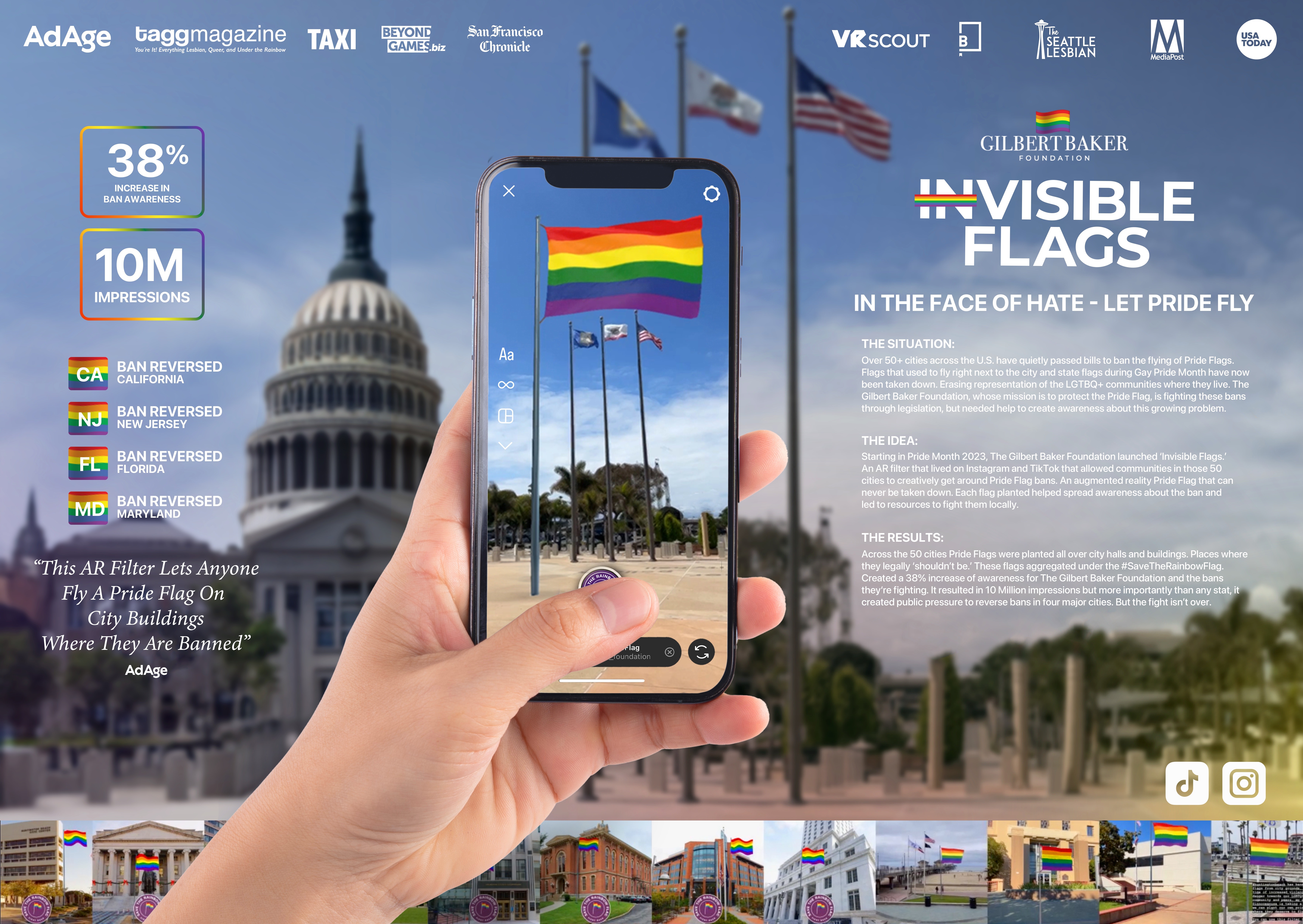
In 2023, the abstraction became local. Huntington Beach, INNOCEAN's hometown, was among more than 50 U.S. cities confronting restrictions on Pride flags in public places. The agency partnered with the Gilbert Baker Foundation, named for the flag's creator, and made an augmented-reality flag. Point a phone at the right place and the banned symbol returned to the landscape. A pole could be regulated. A layer of pixels was harder to police.
The campaign launched on Instagram on Flag Day and spread through TikTok, employees, agency contacts and influencers including The Old Gays. It drew more than 10 million impressions and a reported 38% increase in awareness. More consequentially, the project was associated with reversals of bans in California, Florida, New Jersey and Maryland. The Shorty Awards named it the winner for LGBTQ Community Engagement.
There is a useful boundary here. The tactic worked because the symbol, the medium and the restriction fit together neatly. An AR protest is less persuasive when the affected community lacks smartphone access, when the problem requires material aid, or when distribution stops at the agency's own followers. The transferable lesson is not “make a filter.” It is “choose a mechanism that exposes the absurdity of the obstacle.”
A Santa Fe in a cardboard box
Automotive expertise became newly useful when Hyundai became the first brand available through Amazon Autos. Buying a car online is not, in fact, like buying socks: trade-ins, financing, insurance, dealer participation and pickup still sit beneath the friendly interface. The communication task was to make the new behavior feel familiar without pretending the machinery had vanished.
INNOCEAN's “Add to Cart” campaign borrowed Amazon's visual grammar. In the film, ordinary products move through a warehouse until a Hyundai Santa Fe arrives inside a cardboard box and eventually shrinks into the little cart icon everybody recognizes. The full campaign crossed television, out-of-home, audio, search, web content and partner media; affiliated media shop Canvas coordinated the buys. At launch, the service covered 54 markets representing 71% of Hyundai's sales volume.
This is where INNOCEAN sits in the market now: neither a boutique creative shop nor merely the advertising department down the hall from an automaker. It is a full-service agency with strategy, creative, media, data, CRM, production and experiential capabilities, backed by a network with more than 30 global offices. The economic model is conventional - retainers, projects, production and media services - but the integration is the selling point. The client is buying fewer handoffs.

More than an auto agency - finally
By 2025, INNOCEAN USA reported approximately $460 million in revenue, up 7.7% year over year, and ranked second among Southern California agencies. In 2026 it entered the Ad Age A-List Top 10 for the first time. The leadership portrait marking the occasion is staged at the water's edge, executives perched on a blue sofa as the Pacific runs over their shoes. It is both absurd and exact. This is a company named from “innovation” and “ocean,” trying to show that institutional scale need not mean sitting safely indoors.
The agency still makes plenty of car advertising. It should. Specialization is valuable; captivity is the problem. The more interesting change is that the restaurant work, civic work and commerce work now alter how the automotive work is read. A TikTok-native Kia configurator no longer looks like a car agency dabbling in social. It looks like one expression of a habit: turn the channel into part of the idea.
What changed INNOCEAN's mind about its own range was not a grand theory. It was evidence. Consumers in four cities explained why hot dogs had slipped out of consideration. A local flag ban made a national civil-rights issue visible from the office. Amazon supplied a behavior millions already understood. Each case began with proximity to an ordinary friction. The creative leap came second.
That is the part another company can copy. Do not begin by announcing that you are innovative, integrated or transformed. Begin with the hour nobody is buying, the symbol somebody has removed, or the transaction people dread. Find the small obstruction. Give it a name. Then make the solution easy enough to explain over lunch - hot dog optional.