A customer sees an offer, decides it is worth a look, and reaches the checkout. To the customer, this is one errand. To the business, it can involve several systems, several suppliers, and several definitions of who that customer is. InCircl’s proposition starts in that gap. The company describes a partnership of businesses bringing customized payments and customer engagement together. Its interesting idea is that the machinery behind a sale should cooperate as naturally as the shopper expects it to.
- InCircl brings a payments-and-engagement pitch to merchants.
- Its structure is a partnership of specialist companies.
- A surprising early appearance: financial support for Oslo’s inaugural Nobel Peace Prize Forum.
The troublesome space between hello and paid
Consider an illustrative shop, rather than a claimed InCircl deployment. A regular customer receives a promotion, buys something, and expects the business to remember. The marketer sees a response. The payment system sees a transaction. The customer sees a relationship. If those views never meet, the next message may be spectacularly unhelpful: an invitation to buy the thing already bought, perhaps, or a discount that cannot be recognized at checkout.
This is a useful way to understand the market InCircl addresses. Its stated audience is businesses and merchants seeking customized financial technology and engagement solutions, with a global remit. The buyer is the business; the experience being improved belongs to that business’s customer. The work sits across commercial communication and the mechanics of paying. It is an awkward boundary, which makes it an interesting place to build a company.
The practical attraction is coordination. A merchant considering such a proposition should ask whether the engagement activity and the payment experience can be designed together. Does the offer make sense when money changes hands? Can staff explain it? Can the business tell whether the customer came back? These are questions for a demonstration, preferably using the merchant’s own ordinary transactions.
A company made of companies
There is a clue in InCircl’s own slogan: “Diverse companies. One goal.” It describes a partnership model, combining different specialties around a merchant’s needs. That makes the organizational design part of the product argument. The proposed benefit comes from getting specialists to work toward a shared commercial outcome.
As a business proposition, that points toward a tailored relationship with merchants. A buyer would evaluate the combined solution and the work needed to connect it to existing operations. The useful comparison is with assembling separate engagement and payment suppliers independently. InCircl’s claimed distinction is coordination through its partnership structure; whether that saves effort is something a buyer can test.
Its financial-services showcase lists mobile wallets, banking software, payments, real-time transactions and settlement, chip cards, and FedNow among its specialties. Read that list as a statement of focus. For a procurement team, each item should become a concrete question about the proposed implementation, supported systems, responsibilities, and commercial terms.
“Diverse companies. One goal.”
InCircl’s public company slogan
Then the story takes a turn toward Oslo
On December 11, 2016, Henry Kissinger and Zbigniew Brzezinski addressed the first Nobel Peace Prize Forum Oslo. The subject was America and world peace after the presidential election. The organizers credit financial support from InCircl and GoodXChange with helping make that inaugural gathering possible. For a company whose public profile centers on merchant technology, it is an unexpected entry in the record.
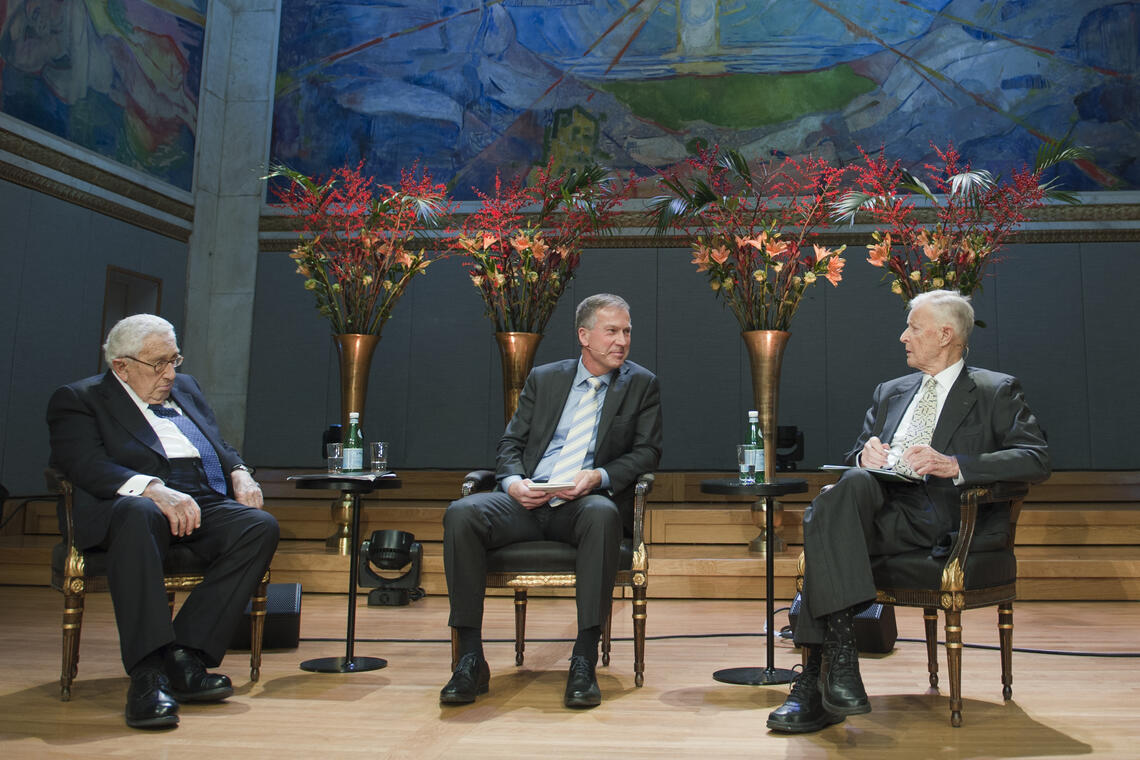
The event also had an engagement mechanism: an online broadcast, with questions and comments invited through social media and some audience questions carried into the discussion. That does not establish that InCircl supplied the technology. It does make the sponsorship an apt historical detail for a business concerned with connecting organizations and audiences. A gathering in a room could invite participation from people outside it.
The quieter evidence is in the meeting list
Three years later, a less theatrical document places InCircl in the payments conversation. The Faster Payments Council’s October 23, 2019, fall meeting attendee list names Jeff Sparrow as InCircl Inc’s CEO and Paul King as its CSO. It is a small, specific piece of evidence: two named executives representing the company at an industry gathering.
The same list includes people from banks, payment networks, retailers, and financial technology businesses. Attendance establishes participation in that setting. It also supplies a useful counterweight to broad marketing language: names, roles, a date, and a room full of people working on how payments move. Company directories separately identify Sparrow as a co-founder.
Take the handoff seriously
What can another business borrow from this proposition? Start by drawing the customer’s journey across departments. Pick one offer and follow it through recognition, communication, purchase, and the next visit. Assign someone to each transition. This is a practical exercise suggested by InCircl’s positioning, rather than a reported customer case study. It forces a wonderfully blunt question: where does the customer have to do the work of connecting your systems?
Then put money beside the diagram. Compare the full cost of connecting suppliers, maintaining those connections, training staff, and resolving exceptions. A partnership approach earns its place when coordination creates enough value to justify that work. For a merchant with a straightforward checkout and little need for continuing engagement, a broader arrangement may add complexity. For a business whose offer falls apart between departments, the handoff deserves attention before another campaign goes out.
That is the appeal of the InCircl idea. It invites merchants to judge the whole sequence from a customer’s point of view. A message can be relevant, a payment can be quick, and the overall experience can still feel clumsy. The useful test is whether those parts behave like they belong to the same business.