Before Ido Schoenberg committed to Amwell, he spent three months helping assemble a case against it. There were whiteboards, there were obstacles, and there was enough red ink to discourage a reasonably contented entrepreneur. Schoenberg had already run companies. He had participated in a sale. He had options. He and his fellow founders went ahead anyway.
That is a useful place to begin with a founder who has now spent two decades at the same company. The whiteboard episode contains both the attraction and the difficulty of his career: an appetite for complicated problems, accompanied by repeated discoveries that complicated means more complicated than expected. Even the pessimistic planning proved optimistic. An entrepreneur can fill a room with objections and still run out of wall before he runs out of surprises.
Today, Schoenberg is Amwell’s chairman and CEO, based in Boston. His story runs through his wife, his brother, an acquisition, a public offering, and a change in leadership that made the division of responsibilities rather less symmetrical. It is a story about staying with a business long enough for the work to change beneath you.
A partnership before the public company
In 1996, Schoenberg co-founded the enterprise software company iMDsoft with Phyllis Gotlib, his wife. Its installed base eventually extended across the United States, Europe, and East Asia. Five years later, he joined CareKey as chief executive. Roy Schoenberg, his brother, had founded that company. For Ido, working with people he knew well was already becoming a recurring arrangement.
CareKey led to a transaction with a larger software group. In November 2005, TriZetto signed a merger agreement providing for $60 million in cash at closing, with additional contingent consideration. The acquisition closed that December. Those terms describe a company transaction; they do not tell us what any individual founder took home.
The distinction matters in a career often reduced to a string of exits. An acquisition also changes the daily job. The founder who once answered for a whole company becomes part of somebody else’s organization, with a different set of colleagues and obligations. Schoenberg became TriZetto’s chief business strategy officer and left in the summer of 2006.
That same year, Ido and Roy co-founded American Well, the company now known as Amwell. The sequence is revealing without needing embellishment: build, join, sell, work inside the buyer, begin again. By the time this venture started, Schoenberg had experienced several versions of the executive’s chair.
Family familiarity has office hours
There is an easy version of the family business story in which trust settles every difficult question. Schoenberg’s own advice is less sentimental. He stresses explicit responsibilities and continuing conversations about who owns which decisions. Familiarity can make collaboration easier; it can also make it tempting to wander into somebody else’s assignment.
The practical implication is almost comically unromantic. Before the family can finish one another’s sentences, someone should finish the job descriptions. A shared surname supplies neither a reporting line nor a reliable method for deciding whether a target has been met. Schoenberg has argued for making those boundaries clear.
His humor travels in the same direction. Talking about iMDsoft, he joked that its sales trajectory made it possible to identify when he left and his wife took over as CEO. It is an unusually economical way for a founder to describe his contribution: invite the audience to admire the improvement after his departure.
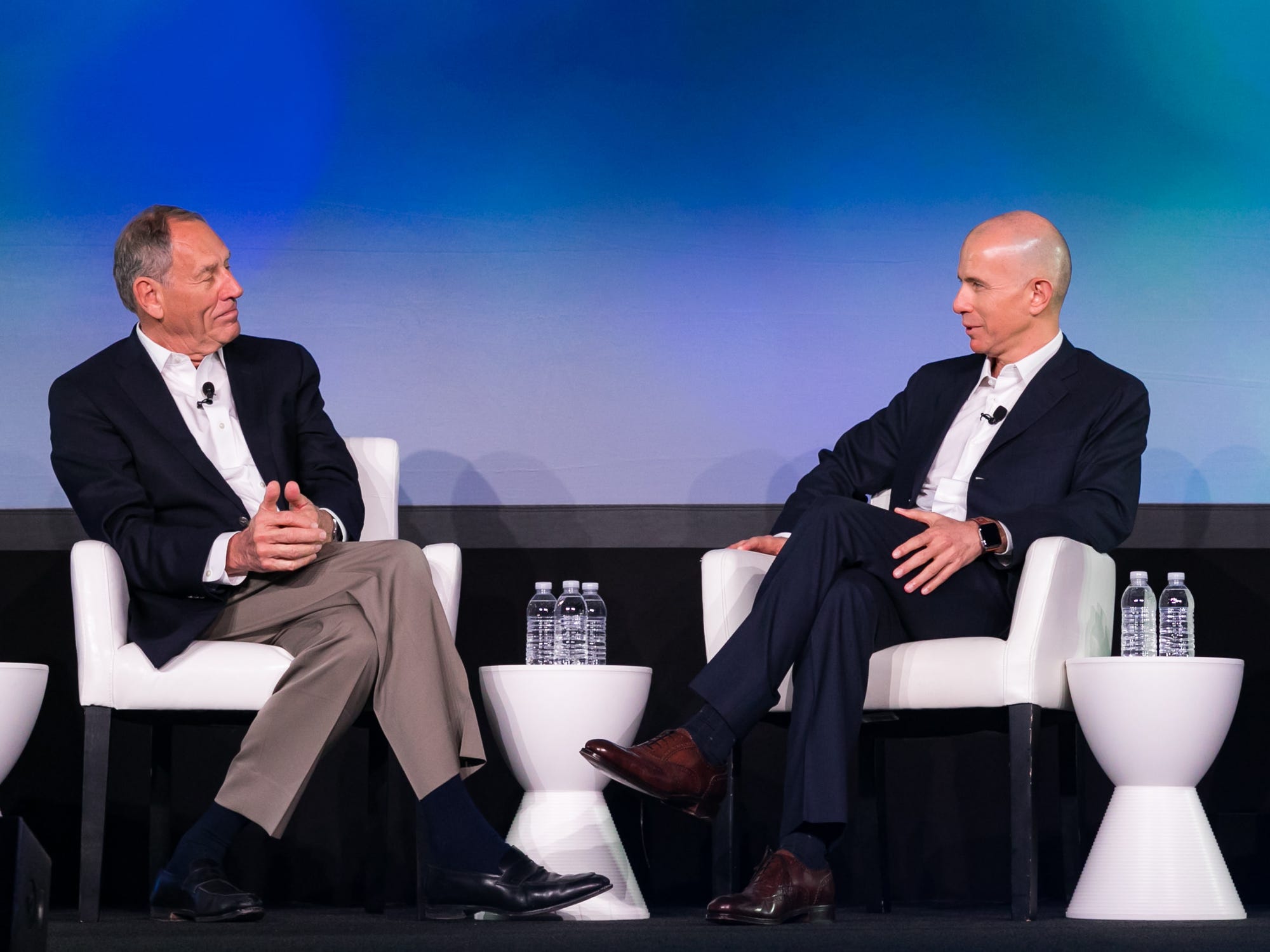
Boston, with a weather objection
When Schoenberg explains Boston, the business case and the personal case sit comfortably together. He has pointed to its universities, recruiting opportunities, prospective partners, and concentration of established organizations. A headquarters is a place from which a company hires and forms relationships. His choice of city reflects those ordinary, consequential needs.
Then the explanation becomes more personal. He likes Boston’s understated character and its relative proximity to family in Israel. He likes being in a cosmopolitan place where familiar faces turn up at events and where he knows restaurant chefs. His account makes the city sound large enough for ambition and small enough for recognition.
He did lodge one complaint: “The weather could be better, though.” Even a loyal Bostonian reserves the right to negotiate with February. The remark supplies a welcome scale correction to the language of corporate location strategy. A founder may choose among talent pools and strategic partners, but he still has to go outside.
Place, in this telling, is part of how relationships accumulate. The advantages become more specific with time: a person to recruit, a face to recognize, a partner to call. Boston is where much of Schoenberg’s professional network and personal life have had years to overlap.
The day a long project acquired a ticker
Amwell’s shares began trading on the New York Stock Exchange on September 17, 2020, under AMWL. The offering closed four days later. Including a concurrent $100 million Google investment and the underwriters’ option exercise, gross proceeds to the company came to approximately $922 million before fees and expenses.
A figure that large can swallow a biography. It looks conclusive on a page: the capital raised, the institution gained, the arrival announced. Yet an offering mostly changes the conditions under which the next chapter will be written. Money becomes available to spend, shareholders acquire expectations, and quarterly reporting starts arranging the calendar.
For a founder, the exchange also introduces a peculiarly direct form of feedback. A customer can decline a renewal; an employee can leave; a public shareholder can depart with a trade. The company now has an audience whose participation is voluntary every trading day.
Schoenberg resisted the idea that Amwell’s arrival had been sudden. From his vantage point, the work had already consumed roughly fifteen years. That correction is worth keeping alongside the offering figures. The event fit neatly into September. The effort behind it did not fit neatly into a news cycle.
“From my vantage point, it took 15 years.”
Ido Schoenberg, reflecting on Amwell’s rise, 2021
Two chief executives become one
In June 2024, Roy moved from president and co-CEO to executive vice chairman, and Ido became sole chief executive. The company described the transition as a shift from intensive research and development toward operating efficiency, cash flow, and profitable growth. The brothers’ titles were changing along with the company’s priorities.
There is a connection here to Ido’s earlier advice about working with relatives. Responsibilities have to remain discussable even after years of familiarity. A structure that has lasted a long time can still be revised. The announcement made the new assignment explicit: Ido would lead the business as its single CEO.
The work outlined in that announcement was demanding in an unglamorous way. Improving cash flow requires decisions that eventually appear as numbers. Efficiency has to survive contact with actual costs. Profitable growth requires both halves of the phrase to cooperate. The wording left little room to mistake a development milestone for a completed business model.
This is an interesting stage in a founder’s career because the original idea can remain recognizable while the job becomes quite different. The executive must keep the organization moving and account for what the movement costs. Experience supplies perspective; it does not remove the obligation to deliver.
The arithmetic arrives every quarter
By August 2026, the operating picture offered both progress and unfinished work. For the second quarter, Amwell reported $52 million in revenue, including $25.7 million in subscriptions. It also reported a $9.6 million net loss. Those figures belong together. Revenue describes activity; the loss describes the result after expenses.
Quarter ended June 30, 2026 · Company-reported figures
The company reiterated a goal of positive operating cash flow in the fourth quarter of 2026. As of this profile’s October publication date, that remained a target. A forecast can show what management is trying to achieve. The result will have to arrive separately, with its own date and its own numbers.
For Schoenberg, this is the current test of the long commitment. The business he helped start has access to customers and a public reporting history. It also has to turn its strategy into durable economics. Persistence brings a founder to this examination; persistence alone cannot mark the paper.
The next obstacle is being believed
In a September 2026 reflection on twenty years of building Amwell, Schoenberg put trust and adoption at the center of his argument. New technology, he wrote, was plentiful. Getting people to accept and use it required consistent experiences, reliable performance, and confidence earned over repeated interactions.
That observation offers an instructive companion to the room full of red ink. Early planning can identify barriers before a company starts. Years of operation reveal which barriers endure, which disappear, and which acquire new forms. The person who once had to make the case for beginning now has to explain how an established organization earns continued use.
It is a less photogenic ambition than unveiling something new. Reliability rarely gets a dramatic entrance. People tend to notice it when it fails, and take it for granted when it succeeds. Making a company dependable therefore involves a peculiar bargain: some of the work earns its reward by becoming less conspicuous.
Schoenberg’s career has kept returning to that human scale. A wife who became a business partner. A brother whose responsibilities changed. A city made familiar through years of encounters. An organization that must keep proving useful. After two decades at Amwell, he is still being asked to make the next set of promises hold.
Continue the conversation
- Amwell leadership ↗
- Ido on LinkedIn ↗
- 2021 founder conversation ↗
- Watch: Schoenberg on company culture ↗
- Why Boston? The interview ↗
- 2025 conversation with Charles Rhyee ↗
- Schoenberg’s September 2026 essay ↗
- 2024 leadership announcement ↗
- 2026 second-quarter results ↗
- 2020 offering announcement ↗
- Amwell company profile ↗