Matt Stevens used to have his priorities in order. Customers came first. Products came second. The team came third, there to support the other two. It was a perfectly respectable arrangement, the sort of thing an executive could put on a slide and expect nobody to question. Becoming a chief executive made him question it. He came to believe he had the first and third positions reversed.
That reversal is a useful place to begin with Stevens, a technology founder whose career runs from security software to network monitoring to the systems retailers use to develop and source products. The industries change. His public reflections keep returning to the people expected to make the machinery work, and to the mistakes a technically capable leader can make about them.
Today he leads Bamboo Rose. Before that, he co-founded AppNeta, became its president and CEO, and led it through its acquisition by Broadcom. Those are the clean lines of the résumé. The more revealing story concerns vacant leadership jobs, distant colleagues, a Friday taken off, and the discovery that knowing how a product works leaves quite a lot still to learn.
The engineer gets a larger problem
Stevens arrived at AppNeta with experience in technology, sales and marketing at Harris Corporation, Solbourne Computer and NetApp. He had also co-founded Network Intelligence, serving as president and CTO. Its acquisition by EMC took him into RSA, where he became CTO of the information and event management business and participated in EMC’s Office of the CTO.
The work gave him a view across both products and the organizations selling them. Security software had to make complicated activity intelligible. Network performance monitoring posed a related challenge: a business could depend on a connection without having a useful view of what happened along it. Moving software into the cloud made that problem harder to dismiss with a reassuring glance at equipment in the office.
AppNeta launched in 2011. Stevens was a founder, initially focused on technology and product. On July 31, 2014, the company announced that he would succeed Jim Melvin as CEO. He had already been president and CTO and had led its expansion into web application performance monitoring. The new job added responsibility for corporate and business operations worldwide. There was considerably more to debug.
The transition brought a leadership team that needed rebuilding. Stevens later described resisting the temptation to fill positions quickly simply to have somebody occupying them. He took time over the appointments, finding the process slow and difficult. It is an unglamorous founder anecdote, which is part of its appeal. An empty chair is conspicuous; the cost of putting the wrong person in it can take longer to show.
Boston, Vancouver, and the missing commute
AppNeta’s own organization offered a practical test of its ideas about connection. By 2019, it had more than 120 people, bases in Boston and Vancouver, and seven satellite offices. Geography could have narrowed its hiring choices. Stevens preferred to accept the complications of distance in exchange for access to people who would otherwise be out of reach.
That choice required explicit expectations. The company organized work around individual and team goals, with accountability for delivery and room for people to decide how to get there. Fixed daily start and finish times lost their importance. Communication had to be deliberate. A dispersed team cannot rely on everyone absorbing the same conversation simply because they happen to share a corridor.
There is a pleasing symmetry here. AppNeta helped businesses understand performance across distributed networks. Its leadership was also trying to make a distributed human organization function. The parallel has limits: colleagues are entitled to opinions, and occasionally to lunch. But in both cases, a central office provided an incomplete picture of what was happening elsewhere.
Stevens carried that argument into his thinking about management itself. In 2021, he predicted that the ability to lead remote teams would become increasingly important at every management level. An executive’s physical presence in an office, in his view, would be a poor substitute for the skills required to direct people working apart. The implication was awkward for any organization still treating visibility as a proxy for contribution.
Clear goals. Room to choose the route.THE MANAGEMENT IDEA IN PRACTICE
The Friday that tested the promise
AppNeta put flexibility into a particularly concrete form: a “10-in-9” arrangement that gave employees every other Friday off. The expectation remained two weeks of results. Staff had nine business days in which to organize the work. A calendar, usually the office instrument most resistant to persuasion, had been persuaded to yield a little.
Stevens also pointed to time wasted coordinating calendars so that all the relevant people could be present. Some projects could move through asynchronous work instead. That observation makes the shorter fortnight more interesting than a perk in a recruitment advert. It asks whether the familiar arrangement is consuming time merely because nobody has challenged it. The answer has consequences for how managers plan and delegate.
Two weeks of expected results. Nine business days to deliver them.
Remote hiring brought another adjustment. AppNeta added empathy to the qualities it explored with candidates. Stevens described discussing how applicants understood it, when they had demonstrated it, and when they had benefited from it. The concern was practical: a colleague’s manner on a call might conceal difficulty that a manager needed to notice.
The company already emphasized transparency, performance and trust. Empathy added a demand on the person doing the managing. Giving people discretion still required paying attention to them. Stevens’s account of the change suggests a willingness to revise his own management assumptions while keeping expectations for the work intact.
What the acquisition did, and did not, finish
AppNeta’s commercial task was to show network performance from the user’s perspective, including across connections beyond a company’s own boundaries. A network could look orderly from headquarters while an employee elsewhere struggled with a business application. That gap became central to Broadcom’s rationale for adding AppNeta to its network monitoring offering.
Broadcom announced its intention to acquire the business in December 2021; the sale completed in January 2022. For Stevens, the announcement prompted a public thank-you to former and current AppNetians. He emphasized the way they had worked together and the friendships made along the journey. The language was expansive and grateful, with the occasional acknowledgement that other people had put up with him.
He had also been frank about errors. Reflecting on AppNeta, he credited lessons learned with difficulty, including the need for sales and marketing leaders to work together on a predictable commercial operation. The admission matters because it gives his team-first philosophy some friction. Cooperation was something he had learned to build into the business, rather than a benefit that automatically arrived with talented hires.
A seat at the retailers’ table
In December 2022, Bamboo Rose announced Stevens as CEO and chairman, succeeding founder Sue Welch. Mike Mattei, previously AppNeta’s chief revenue officer, joined as CRO. Stevens was entering a different software market with at least one familiar colleague. The assignment covered growth, product development and the expansion of a platform serving retailers, brands and suppliers.
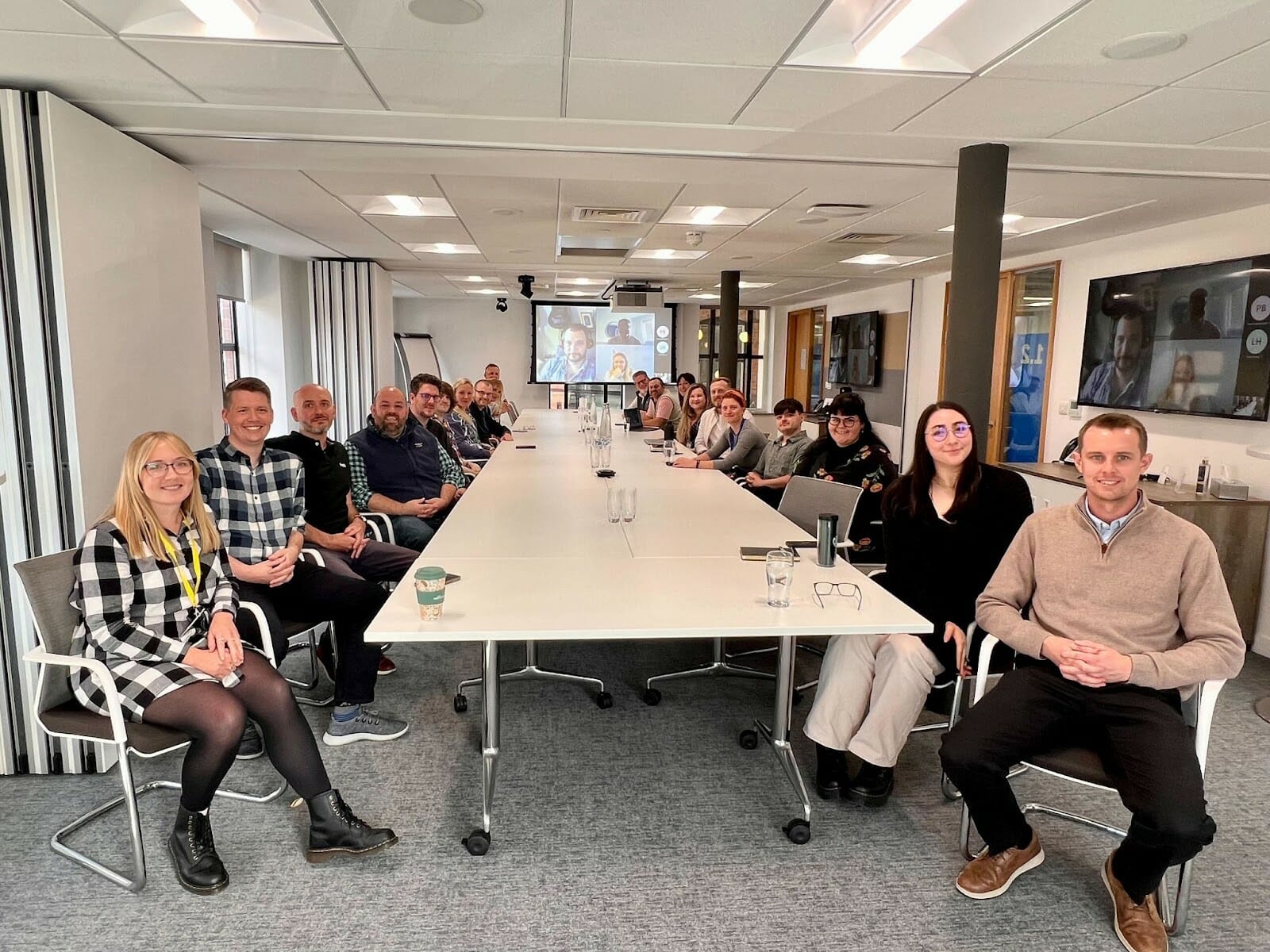
During 2023, Bamboo Rose added Backbone PLM and Supply Pilot. The latter brought supplier engagement and collaboration capabilities. Stevens visited the Supply Pilot team in Nottingham, describing meetings and time spent getting to know the people. His account lingered on the team joining the business, alongside what the acquisition would add for customers.
A Walmart project made the scale of the work tangible. Bamboo Rose was preparing software to connect buyers and product developers with suppliers across Walmart and Sam’s Club. Stevens described building a substantial operation inside the business to support it. He also acknowledged the less photogenic preparation: unwinding customer-specific projects that would be difficult to scale.
The episode complicates the easy version of growth. Winning a large customer creates delivery obligations, organizational demands and product decisions. Stevens described the preparation as difficult while saying the affected customers had stayed. His earlier concern about assembling the right leadership team had acquired a new setting, with purchase orders and global sourcing replacing application performance as the immediate business problem.
The order he wants to keep
By 2025, Bamboo Rose was extending its product into AI-supported decision-making through an agreement to acquire Verteego. Stevens’s argument centered on using customer data across connected workflows, rather than attaching isolated AI functions to separate tasks. In March 2026, the business added Steve Gordon to lead planning and analytics, another appointment directed at expanding the platform’s reach.
In October 2026, cycling apparel brand MAAP adopted TotalPLM. Its product changes had required updates across three software platforms and several spreadsheets. Bamboo Rose’s assignment was to bring planning, design, sourcing and order management together. The example puts an ordinary working problem underneath the software vocabulary: people repeatedly entering information that their colleagues need elsewhere.
Stevens’s stated ambition is growth that includes existing customers expanding their use of the product. He also wants new customers to keep the business exposed to fresh demands. His explanation of how to get there is disarmingly short: “If you have the team right, anything’s possible.” It carries the optimism of a founder, tempered by years spent discovering how much work belongs inside that “if.”
For a technologist, it is an interesting place to arrive. Products still matter. Customers still decide whether a business deserves to continue. But the first task on Stevens’s revised list is choosing, supporting and directing the people who must serve them. Somewhere between his CTO desk and the CEO’s chair, the organization itself became the problem he wanted to solve.
Follow the work
- Matt Stevens on LinkedIn ↗Public profile and personal career reflections
- Bamboo Rose ↗Current company and leadership team
- Watch Stevens on working at Bamboo Rose ↗Company video · Wistia
- The 2014 appointment ↗AppNeta’s transition from CTO to CEO
- AppNeta’s distributed team ↗An interview about managing across locations
- The Bamboo Rose conversation ↗Leadership and supplier relationships
- The Walmart assignment ↗A closer look at the sourcing platform project
- The MAAP announcement ↗October 2026 · retail workflows