Before there was an international licensing agreement, there was a bill to pay. Ebrahim S. Delpassand founded RadioMedix in Houston in January 2006. For the first stretch of its life, from 2006 to 2011, he paid for the research himself. The money came from his other professional work. He was financing the possibility that the company could become something larger.
That is a revealing place to begin a founder’s story. There is no ceremonial cheque, no photograph of two executives shaking hands, no pleasingly round valuation. There is an established professional choosing to spend earnings on a venture whose future remains unsettled. The commitment has a recurring cost. Optimism, in this arrangement, comes with invoices.
Twenty years later, Delpassand remains RadioMedix’s founder, chairman and chief executive. Its business now includes manufacturing infrastructure and international partnerships. Follow the decisions between those two points and a particular kind of entrepreneur emerges: someone willing to build substantial capabilities, then invite other organisations to supply the capabilities his company needs next.
A Houston education in staying power
Houston runs through Delpassand’s professional life. He completed postgraduate training at Baylor College of Medicine in 1991, subsequently held academic and departmental leadership appointments, and built his entrepreneurial career in the same city. RadioMedix’s headquarters remain there. The geography supplies some continuity to a career that has crossed institutional and commercial boundaries.
By the time he established RadioMedix, he had already spent years inside large organisations. His earlier appointments included associate professor and deputy chairman. Those titles bring a different perspective to the founding date. January 2006 was a new company’s beginning within a much longer working life, with experience already accumulated and professional standing already established.
That matters to the way the story reads. The familiar founder narrative tends to rush toward the leap: leave something secure, start something uncertain, discover whether the idea survives. Delpassand’s record invites attention to the experience carried across. Building a company meant putting an existing career behind another set of responsibilities, including the unglamorous responsibility of paying for the work.
- 2006RadioMedix founded in Houston
- 2024Sanofi licensing agreement announced
- 2026Twenty years in business
At the family table
There is another, more personal account of how he got started. Delpassand has recalled that he and his wife had exited an earlier company, giving them some financial room to pursue the venture. He describes a supportive family, including three daughters. One of them, Ayda, later worked with him at RadioMedix, helping establish quality assurance before moving into other company responsibilities.
Asked about the difficulties of working with relatives, he acknowledged differences in approach. His response was to describe a process: listen to the people who care about the company, discuss the alternatives, gather their views, and then make a decision the group can support. The account is more interesting for allowing disagreement into the picture. A supportive family can still have quite a lot to say.
His advice to aspiring founders is similarly practical. Begin with a sound legal structure and get experienced legal oversight of agreements. It is an unexpectedly administrative opening to a conversation about following an ambition. The dream, apparently, should have a competent lawyer.
The factory enters the plot
A company can be described through its ideas, its agreements, or the square footage it has to keep running. In Delpassand’s case, the third description deserves space. RadioMedix developed the SPICA Center in the Houston area, creating a manufacturing operation that supports its own work and offers services to academic and industry partners.
The company describes capabilities that include analytical method development, process validation, manufacturing and testing. Its facilities contain dedicated production rooms and quality-control laboratories. These are practical commitments, with consequences for staffing, maintenance, scheduling and cost. A laboratory may begin with an interesting question; a manufacturing operation must also answer the question of how the work gets repeated reliably.
That makes SPICA a useful part of this personal story. Delpassand’s role reaches beyond choosing what RadioMedix should investigate. The business he leads also maintains the means to carry out work for other organisations. Research and production sit inside the same company, with outside customers entering the picture alongside internal projects.
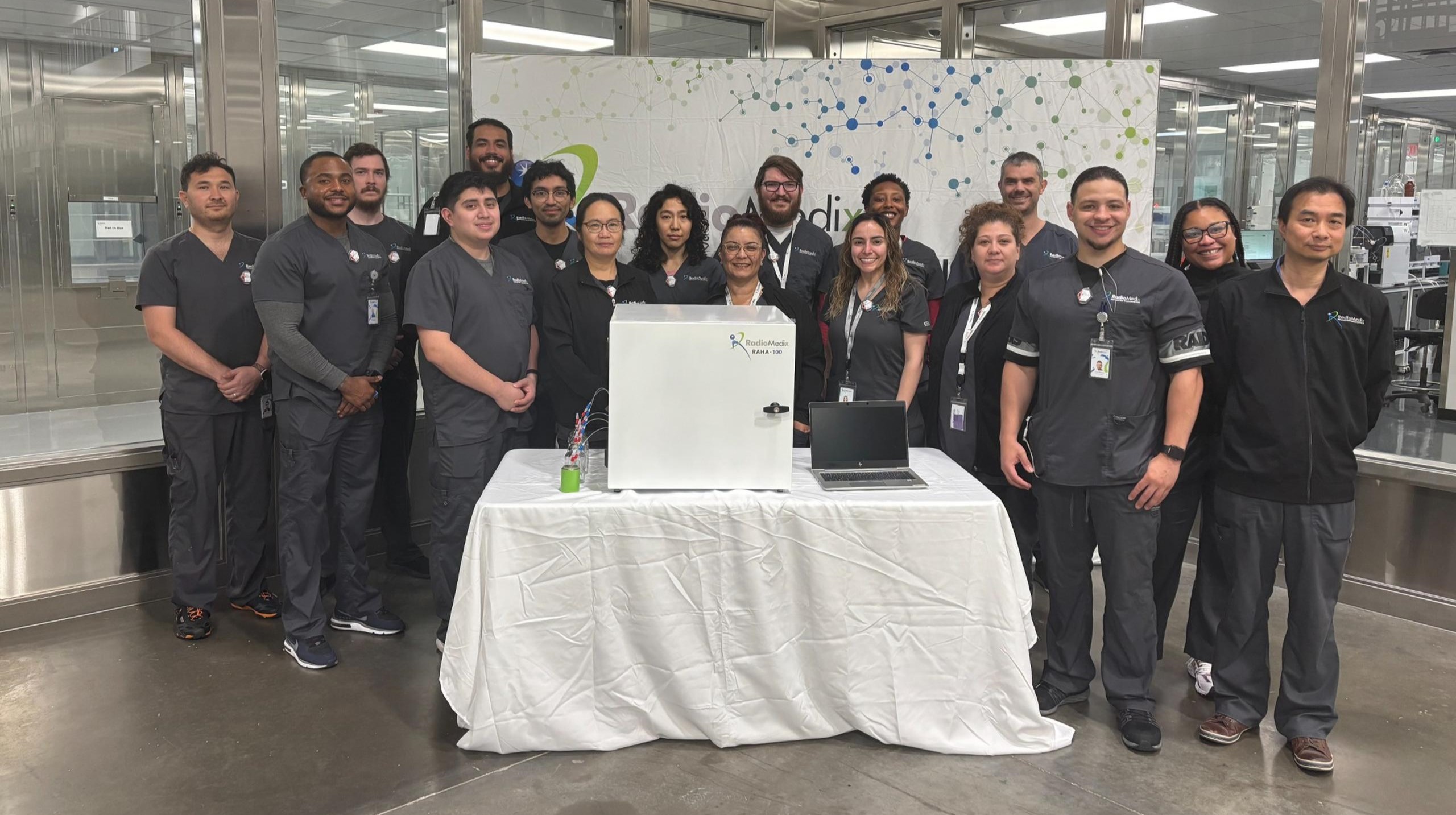
In the team photograph, the equipment occupies the centre and the people gather around it. It is a pleasantly literal picture of the enterprise. The machine has a name. The work requires a group.
The useful art of asking for help
Building substantial infrastructure might suggest a founder determined to do everything internally. Delpassand’s account of commercial partnerships adds another dimension. When RadioMedix considered bringing its first approved product to market, he recognised that the company needed a partner with experience it did not have at the same scale.
He explained the decision plainly: “we thought we would need to partner with a big company”. Curium brought manufacturing resources and experience with commercial launches. For RadioMedix, the attraction was specific expertise, already assembled elsewhere. A partner could take responsibility for work that would otherwise demand another large organisational undertaking.
This is the useful distinction in his approach. There are capabilities the company has chosen to own and capabilities it has chosen to obtain through agreement. The existence of a manufacturing centre does not settle every future commercial question. Each project still requires decisions about who can do which part of the job.
There is a modesty in the business logic, even when the ambitions are substantial. Knowing how to develop something does not automatically confer a distribution network, a launch team, or experience negotiating a new set of commercial relationships. Delpassand’s explanation gives those other skills their due. Asking for help can be a considered act of management.
none of us is as smart as all of usEbrahim S. Delpassand, on listening before deciding.
Read the small print, then the big number
On September 12, 2024, RadioMedix and Orano Med announced an exclusive licensing agreement with Sanofi. The terms included an upfront payment of €100 million to RadioMedix and Orano Med together, up to €220 million in sales milestones, and eligibility for tiered royalties. It was a transaction with an international cast and carefully divided responsibilities.
Sanofi would take responsibility for global commercialisation of the licensed project. Orano Med would handle manufacturing through its industrial platform. The allocation is as revealing as the price: an agreement becomes useful when the parties know what they are expected to deliver. Delpassand’s company was participating in a structure built around different organisations’ capabilities.
The figures require their own discipline. The upfront payment was shared between two companies. The milestone amount depended on future sales conditions. The royalty provision was another component again. Put them together without their labels and the announcement becomes a much less accurate story. None of those figures is a statement of Delpassand’s personal wealth.
After the early years of personally financed research, the agreement marks a change in scale. It also demonstrates the continuing role of partnership in the business. The founder who had paid for work inside his own company was now working through a contract that assigned major responsibilities beyond it.
Sales milestones are contingent. Tiered royalties are additional. Bars compare the two announced amounts; they do not show revenue received.
A machine, a supplier, a calendar
During 2025, another piece of RadioMedix’s business became visible: RAHA-100, a platform combining a generator with an automated synthesising system. Its commercial offering includes installation, consumables and initial servicing. Those details put the company on the other side of the equipment relationship, supplying a platform for other organisations to operate.
Automation carries a straightforward promise here: reduce the amount of manual manipulation required from the end user. The company’s own description emphasises built-in protocols. As a business proposition, the machine and its supporting arrangements belong together. Delivery includes the practical provisions that help a customer get started and keep the unit in service.
Then came a longer view of supply. On December 4, 2025, RadioMedix and Norway’s Thor Medical announced a five-year framework agreement. Deliveries were scheduled to begin in 2026, with volumes increasing alongside production at Thor Medical’s AlphaOne facility. The arrangement connected RadioMedix’s plans to an external supplier’s expanding capacity.
For a founder, that is a different kind of calendar from the next presentation or announcement. Five years introduces questions of continuity and dependable inputs. The machine needs material; the material needs a supplier; the supplier needs capacity. Follow the chain and Delpassand’s company appears as one participant in a much wider industrial undertaking.
A bigger table for the next chapter
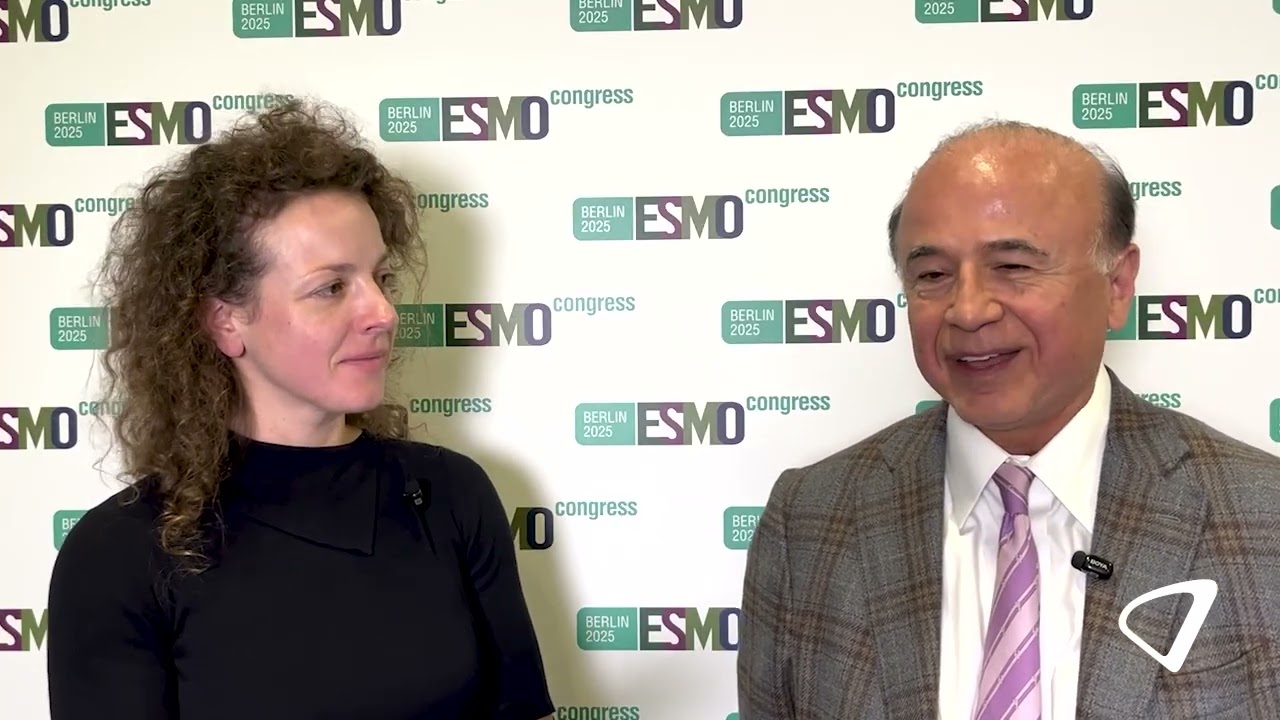
RadioMedix marked its twentieth anniversary in 2026. Its announcement placed the occasion alongside conference participation by Delpassand and co-founder Izabela Tworowska. The pairing gives the anniversary a working setting: people representing the company, discussing its work, and continuing the professional exchanges that have accompanied its growth.
The company also added experience around its board table. Brian A. Markison joined as its second independent director, effective July 1, 2026. A former chief executive of Lantheus, Markison brought a career spanning commercial leadership, transactions and governance. Delpassand’s comments on the appointment singled out commercial strategy, mergers and acquisitions, and corporate governance as useful to RadioMedix’s growth plans.
Read alongside the earlier Curium decision, the appointment suggests a continuing management habit: identify experience that can help with the next stage, then bring it closer to the company. The organisational form changes. A licensing partner and a board director have different responsibilities. Both decisions recognise that a founder’s own knowledge is only part of what a growing enterprise requires.
At twenty, RadioMedix contains more than its original research proposition. There are facilities, staff, suppliers, agreements and a board. Delpassand still carries the same three titles. The responsibilities beneath them have expanded. The early personal funding is one memorable detail in that longer story; the company’s present structure shows how much has been built since.
Continue the conversation
VISIT · WATCH · READ
- RadioMedix website ↗
- Delpassand on LinkedIn ↗
- Watch: Business of Biotech conversation · 54 min ↗
- Watch: the Berlin interview · 15 min ↗
- Read: the commercial partnership discussion ↗
- Read: September 2024 licensing announcement ↗
- Read: December 2025 supply agreement ↗
- Read: July 2026 board appointment ↗
- Read: Delpassand’s 2026 career interview ↗
- Explore: the Excel organisational blog ↗