In the folklore of power electronics, silicon is the material you are supposed to leave behind. For a decade the field's most-repeated story has been that the big efficiency gains now live in exotic compounds - gallium nitride, silicon carbide - and that ordinary silicon, the workhorse behind roughly 95% of the world's chips, has run out of tricks. iDEAL Semiconductor, a fabless startup working out of Bethlehem, Pennsylvania, built its entire existence on the opposite hunch.
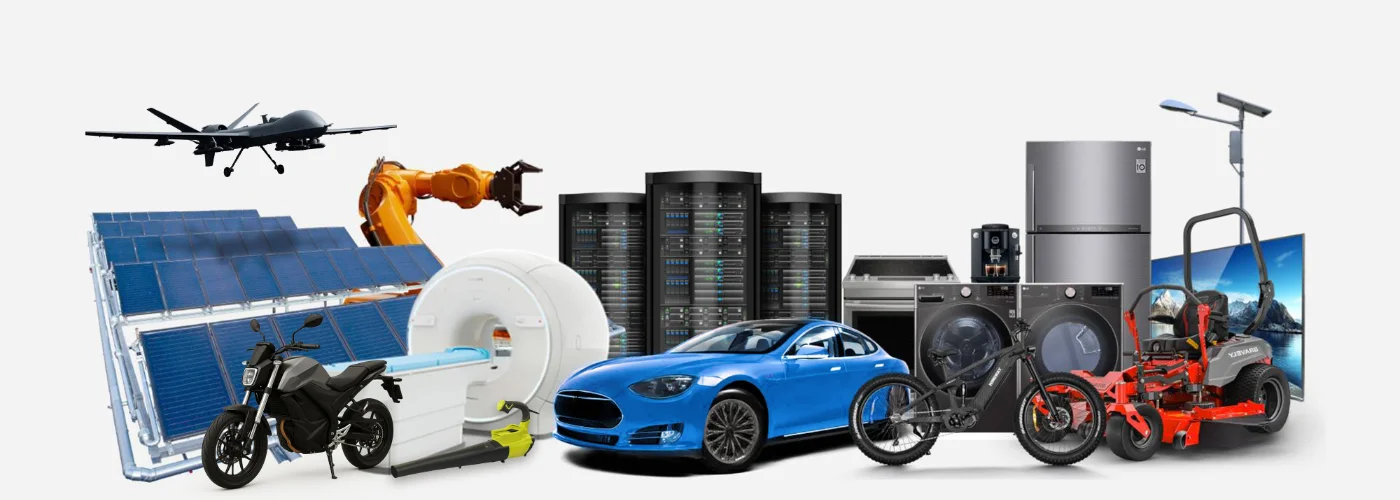
The company designs power transistors: the small, unglamorous switches that sit inside a laptop charger, a solar inverter, an electric-vehicle drivetrain or a data-center power shelf, quietly turning one voltage into another and losing a little energy as heat every time they do. Multiply that loss across every server rack and every EV on the road and it becomes one of the largest hidden taxes in the electrified economy. iDEAL's argument is that you can shrink the tax without abandoning silicon - you just have to redesign the transistor.
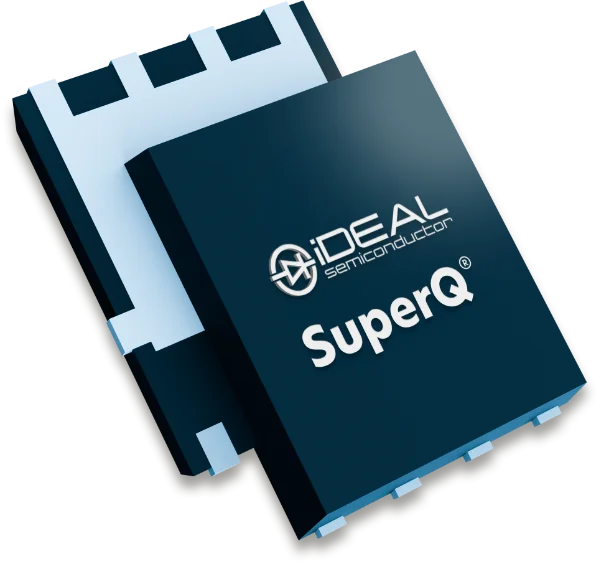
Its answer is a patented architecture called SuperQ, and the pitch is refreshingly concrete: better efficiency, at silicon cost, made in America.
01 / The ProblemWhy a good transistor wastes half its silicon
To see what iDEAL is doing, it helps to know the dirty secret of a conventional power MOSFET. In a typical device, only about half of the silicon die actually carries current when the switch is on. The rest is structural - regions that hold off voltage when the switch is off but do little useful work otherwise. Engineers have spent 25 years chipping away at this with an approach called RESURF, or Reduced Surface Field, and its best-known form, Superjunction. Those designs were a genuine leap in their day. But their performance has, by most accounts, plateaued.
A power transistor lives and dies by two numbers: how much it resists current while conducting (on-resistance), and how much energy it burns each time it flips on and off (switching loss). Lower both and every downstream system - the server, the car, the panel - runs cooler and wastes less. SuperQ's core move is to rework the internal geometry so that far more of the die conducts.
Infographic - Where the current flows
Share of the silicon die actively conducting current. Higher is better; it is where lower resistance hides.
The mechanism is a deep, narrow, high-aspect-ratio trench lined with nanometer-thin dielectric films, arranged asymmetrically so the conducting region expands toward the full width of the device. It is intricate physics, but the important part for a buyer is what it is not: it is not a new material. SuperQ is built with the same CMOS-compatible steps - deep trench etch, atomic layer deposition - that high-voltage silicon fabs already run.
For the past quarter-century, the industry has relied on RESURF technologies like Superjunction, but these architectures' performance has plateaued.Mark Granahan, Co-Founder & CEO
02 / The OriginA retired chip executive who couldn't leave silicon alone
iDEAL's founding has the shape of a good second act. Mark Granahan had already built and sold a power-chip company - Ciclon Semiconductor, acquired by Texas Instruments - and had retired from TI in 2014. Retirement did not take. He kept turning over a research paper he'd read, one rooted in photovoltaics and thin high-k dielectric films, and became convinced the same ideas could rewrite the silicon power transistor. By his own telling, there was no single flash of insight.
There wasn't this aha moment. There was this learning process that I had to go through to get us to the starting point.Mark Granahan, on the path to SuperQ
In 2017 he co-founded iDEAL Semiconductor with David Jauregui, who serves as chief technology officer, and Michael Burns, the executive chairman, whose background runs through finance and engineering at the University of Pennsylvania and Wharton. The three set up in the Lehigh Valley, near Lehigh University, and did early work in university nanofabrication labs. What followed was the least glamorous part of any hardware story: years of quiet iteration, on a shoestring, toward a device that could actually be manufactured.

Granahan is candid about the arithmetic of doing this as a startup rather than inside a giant like his former employer.
If you've got time and money, it solves a lot of things. As a startup, time and money - those are the two things you don't have enough of, ever.Mark Granahan, Co-Founder & CEO
03 / The ProductFrom lab claim to a part number you can buy
The line between a research demo and a business is a data sheet, and iDEAL crossed it in 2025. It moved SuperQ into full production with two families - 150 V and 200 V MOSFETs - each aimed at the high-efficiency power conversion that shows up in data centers, telecom, industrial systems and battery protection. These are real, orderable parts in standard packages: PDFN, TO-220, D2PAK-7L, TOLL. On the 200 V family, iDEAL makes the eyebrow-raising claim of lower resistance than not just existing silicon but, on some figures of merit, gallium nitride - the very material it declined to switch to.
Graph - Relative on-resistance (illustrative)
Directional comparison based on the company's public claims. Shorter bars are better; exact numbers vary by voltage class and part.
The claims come with real-world texture. In a converter test the company cites, a SuperQ part ran up to 14°C cooler at peak and nudged efficiency higher against an incumbent device. In motor-drive inverters it points to power-loss reductions as high as 50%. And in October 2025 it cleared AEC-Q101 - the automotive qualification that turns a promising component into one a carmaker will design in - launching a 200 V automotive MOSFET rated to a 175°C junction.
04 / The ModelFabless, made in America, sold through the channel
iDEAL is fabless: it designs the devices and the process, then has them built by a foundry, and sells the finished parts through distribution. The elegance of SuperQ running on standard CMOS equipment is that it does not require a bespoke, exotic-material supply chain - in principle, existing high-voltage silicon fabs can make it. That widens the manufacturing options and keeps the door open to licensing the process as a platform, not just shipping discrete chips.
In September 2025 the company named Polar Semiconductor as its manufacturing partner, putting SuperQ into production on a 200mm line in Bloomington, Minnesota - a majority-U.S.-owned foundry with a long automotive heritage. A month earlier, iDEAL had signed a global distribution deal with Mouser Electronics, the route most engineers use to sample a new part. The made-in-America angle is not incidental branding. iDEAL is an IEEE Spectrum case study on the CHIPS Act, and its founders have logged dozens of Congressional meetings advocating for domestic semiconductor R&D.
iDEAL Semiconductor is one of the only companies focused on both process and architecture for building power devices.Mark Granahan, Co-Founder & CEO
05 / The MoneyPatient capital, and a strategic tell
Hardware this deep does not get built on a seed round and a demo day. iDEAL raised across three rounds over roughly six years, reaching about $75 million in total. The Series A of around $6.9 million dates to 2017; a Series B near $11.8 million followed in 2021; and in 2023 the company closed a $40 million Series C alongside the public launch of SuperQ.
The most interesting name on the cap table is Applied Ventures, the venture arm of Applied Materials - the company that makes the manufacturing equipment on which chips like SuperQ are built. When your investor also builds the tools your process depends on, that is a signal about credibility, not just capital.
iDEAL's SuperQ Technology has the potential to bring an exciting innovation similar to what we saw with Super Junction Technology 20 years ago.Michael Stewart, Applied Ventures
06 / The MarketA big, boring, essential category
Power semiconductors are a market measured in the tens of billions of dollars and growing with every trend that matters - AI data centers that guzzle power, electric vehicles, rooftop and utility solar, industrial automation. The incumbents are formidable: Infineon, onsemi, STMicroelectronics and Toshiba in silicon; Navitas, EPC and others in gallium nitride; a field of silicon-carbide suppliers above them. iDEAL is a small company in a room full of giants.
Its wedge is positioning, not scale. Rather than argue GaN versus SiC on the incumbents' terms, iDEAL changes the axis: keep silicon's cost and manufacturability, but redraw the transistor so the efficiency gap narrows or closes. For a system designer weighing a bill of materials, "cheaper, familiar, made here, and nearly as good or better" is a genuinely different sentence than "exotic and premium." Whether that wedge widens into meaningful share is the open question - but the parts are shipping, the fab is running, and the first automotive qualification is in hand.
iDEAL Semiconductor - Key Facts
- Founded2017, Bethlehem (Lehigh Valley), Pennsylvania
- FoundersMark Granahan (CEO), David Jauregui (CTO), Michael Burns (Exec Chairman)
- WhatFabless power semiconductors built on the SuperQ silicon MOSFET architecture
- Products150 V & 200 V SuperQ MOSFETs, incl. an AEC-Q101 automotive part
- Made inPolar Semiconductor's 200mm fab, Bloomington, Minnesota
- Funding~$75M (Series A-C); Series C $40M in 2023 with Applied Ventures
- Team~58 employees
07 / The TakeawayWhat a founder can actually steal from this
Strip away the physics and iDEAL is a case study in a specific kind of contrarianism: not inventing a new thing, but noticing that everyone had quietly written off an old one. The field agreed silicon was finished. iDEAL asked why a silicon device wastes half its die and treated the plateau as an opening rather than a wall. That is a portable move - find the assumption an industry stopped questioning, and check whether it's still true.
The second lesson is that manufacturability can be the strategy. SuperQ's most valuable property may not be its raw numbers but that it runs on equipment fabs already own. Distribution beats novelty; a slightly-less-radical idea that anyone can build often outruns a brilliant one that needs a new supply chain. Of course, the whole thesis rests on the performance claims holding up in customers' systems, at volume, against incumbents who will not stand still - and on a small company executing a long, capital-hungry ramp. But iDEAL has done the hard, unshowy work of turning a research insight into a part number, and the parts are on the truck.