The first obstacle was volume. In 2015, the research that became Huue needed about 18 liters of microbial culture to make enough indigo for one pair of jeans. A pair of jeans is an ordinary thing; 18 liters is a rather extravagant way to turn it blue. By 2019, cofounder Tammy Hsu said the figure was roughly five liters. This improvement did not turn a lab experiment into a denim supplier overnight. It did, however, make the next question worth asking: could the dye survive a factory?
- Huue uses engineered microbes and sugar to make indigo pigment.
- The buyer is a denim manufacturer, not the person shopping for jeans.
- Its powder is designed for equipment mills already operate.
- A 2019 pilot and a 2023 AGI Denim collaboration tested that idea in practice.
Conventional indigo gives denim its familiar color. Its manufacture has long relied on petrochemical feedstocks and hazardous chemical steps. Huue’s proposal is specific: make the indigo molecule by a biological route, purify it, and hand mills a pigment they can use in standard processes. The blue is familiar. The route to the blue is the invention.
A laboratory question finds a denim buyer
Hsu was studying bioengineering at the University of California, Berkeley when she began looking at how plants make indigo. She identified the relevant natural pathway, then engineered microbes to do the work. The logic resembles brewing: feed a living system sugar and collect what it makes. Here the desired output is a pigment, not a drink. Getting a microbe to make a blue molecule was the scientific achievement. Getting it to make enough, consistently, was the industrial assignment.
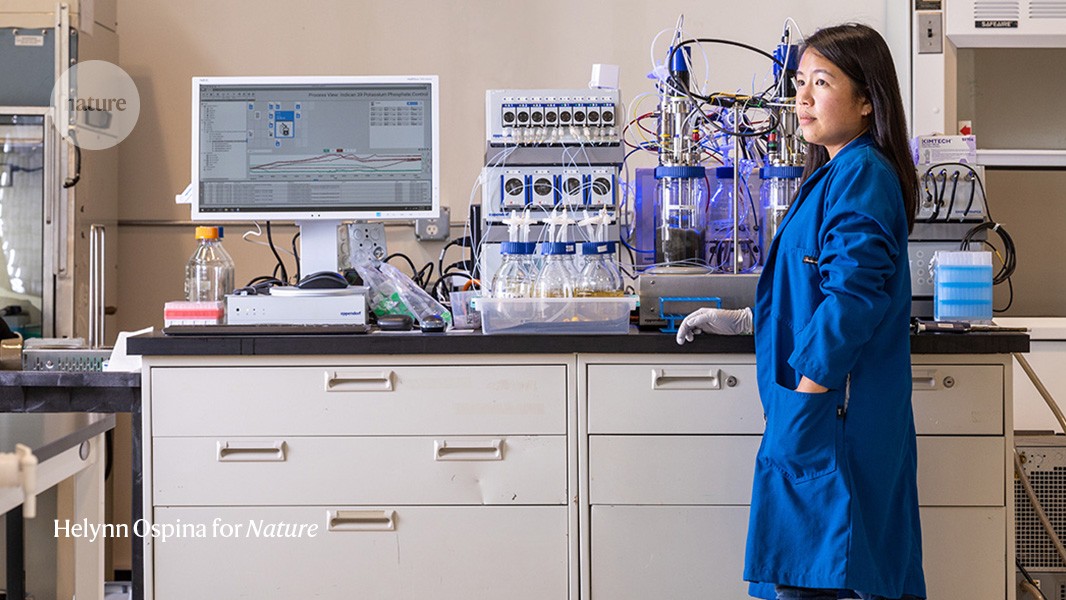
The company did not begin with a grand declaration that every color should be reinvented. Denim brands began calling Hsu’s lab to ask about the research. Hsu later told Chemical & Engineering News that she had not imagined herself an entrepreneur. IndieBio, the biotech accelerator she approached, pressed her to find a cofounder. Michelle Zhu, whose family worked in apparel and who had seen pollution around garment factories during visits to China, brought a view of the industry Hsu hoped to change. The pair founded Huue in 2019; the business originally went by Tinctorium.
Estimated culture needed for enough indigo to dye one pair of jeans
The test was a piece of yarn
In February 2019, Huue approached the Advanced Biofuels and Bioproducts Process Development Unit at Lawrence Berkeley National Laboratory. The deadline was an IndieBio demo in June. The work was less theatrical than the final pitch: contracts, batch records, a 300 liter bioreactor, purification, and then dyeing. By late May the lab had delivered the pigment. By June, Huue had blue cotton yarn run through pilot scale industrial dyeing equipment. The prototype had crossed a small but important border: it had left the flask.
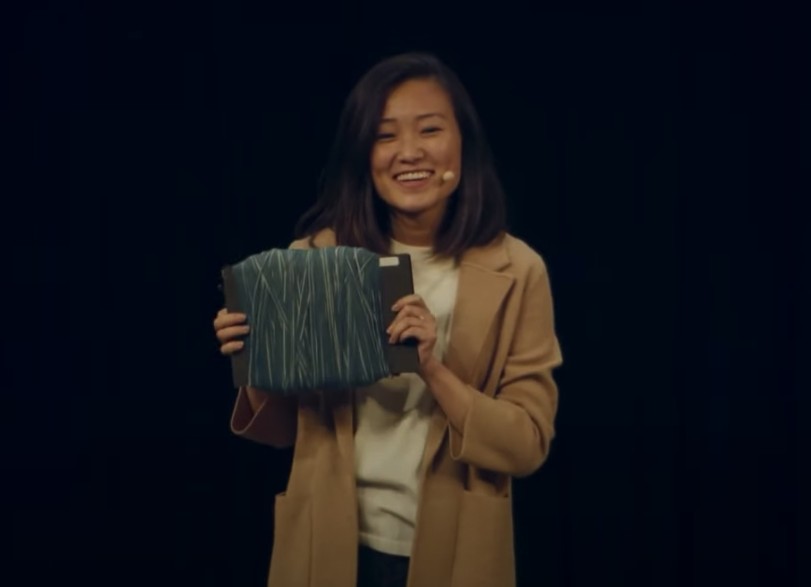
That demonstration also exposed the right constraint. A denim mill does not buy a story about microbes. It buys a dye that meets color, purity, throughput, and price requirements, and runs on equipment already installed. Huue’s dye is purified into indigo powder. A 2024 industry review described it as suitable for established rope and slasher dyeing as well as newer foam and electrochemical methods. This is the distinction behind the phrase “drop in”: a cleaner input can enter an existing line without asking the buyer to rebuild the factory first.
We made enough indigo dye to run through pilot-scale industrial dyeing equipment and generate blue denim yarn, all in time for Demo Day.Tammy Hsu, Berkeley Lab case study
Selling a familiar molecule made differently
Huue sells into the business-to-business dye supply chain. Its direct conversation is with manufacturers and the brands that commission them; shoppers may never see Huue’s name on a garment label. The conventional alternative is petrochemical indigo. Plant-derived indigo is another option. Other biotechnology companies, including Colorifix and Pili, also work on cleaner textile color, though they use different methods. Huue’s particular argument is a bio-identical indigo input with low friction for denim mills.
The financial bet followed the technical one. Huue announced a $14.6 million Series A in July 2022, led by Material Impact, to scale production and launch commercial pilots. It had previously partnered with Ginkgo Bioworks to improve its microbial strains. Neither arrangement solved the economics by itself. Hsu had said in 2019 that the company’s dye cost more than the industry process at the time. A unit price for today’s dye has not been published. Her point then was that dye is a small slice of the total cost of jeans, giving a more expensive pigment some room to compete. That is a business hypothesis, not a promise of parity.
In October 2023, AGI Denim, a manufacturer in Pakistan, announced a collaboration using Huue Indigo and presented it at the Kingpins denim trade show in Amsterdam. The maker described it as commercially available. That is stronger evidence than a laboratory swatch, but it does not disclose annual volume, the number of brands using it, or the price mills pay. The company’s own website now lists Corinna Chen as CEO; its founding CEO, Zhu, remains central to the origin of this approach.
Why blue comes first
Indigo is a sensible opening move because denim production is enormous and the customer’s requirements are unusually clear. The company can ask a direct question of each potential buyer: will this pigment behave like the indigo you already use? If yes, Huue can focus on making enough of it at acceptable cost and quality. If no, a greener production story will not rescue the dye from a mill’s reject pile.
Huue says indigo is a beginning. An industry report described work on disperse and acid dye applications for other fibers. Those colors will face their own chemistry and manufacturing tests; success with denim does not automatically carry over. This is why the instructive part of Huue’s story is less “use microbes” than “design for the buyer’s line.” It first improved a thin, costly lab output; then it proved yarn could be dyed on pilot equipment; then it found a manufacturer willing to introduce the material commercially. The sequence is available to copy, even when the biology is not.
The ordinary-looking pair of jeans is therefore the ambitious end state. No blue miracle is visible from the street. The point is that the mill can make a familiar garment with a pigment whose origin is less dependent on the old chemical route. For a company trying to change an industrial input, invisibility may be the most persuasive result.