In the old household electricity bargain, the power company knew what you had used and you found out weeks later. The bill was a verdict, delivered after the evidence had gone cold. Encored’s early product, Enertalk, challenged that timing. A device at the electrical panel sent live readings to an app, which estimated appliance use and the next bill. The question was almost embarrassingly simple: what if people could see the meter while there was still time to do something?
- Then: Enertalk made household electricity use visible in real time.
- Now: iDERMS connects renewable plants to forecasts, market bids, control, and settlement.
- Scale: Encored reports 3.5 GW monitored and controlled, with 2.2 GW in VPP trading workflows.
- The lesson: Useful energy data has to arrive before the decision, in a form that can change it.
The household experiment was not small. When SoftBank invested in the company and its Japanese venture in 2017, it said Enertalk’s real-time energy platform served about 100,000 households worldwide. SoftBank took 50.1% of Encored Japan; Encored held 49.9%. The original ambition extended beyond a smaller bill. The partners described an app that could connect energy advice, appliance diagnosis, and other home services. A plug-in meter had become a window onto everyday behavior.
But there is a second, less domestic use for knowing what electricity is doing now. A renewable power plant must forecast tomorrow’s output, report today’s output, obey control signals, and make the numbers match when payment comes due. A thousand plants turn that bookkeeping into an orchestra. Encored’s present business sits in the conductor’s chair.
The plant that is really a collection
Encored calls its enterprise platform iDERMS. One branch, iDERMS VPP, handles the awkward itinerary of a virtual power plant: connect equipment at a site, forecast solar or wind generation, calculate a market bid, control output, and settle the resulting revenue for each generator. “Virtual” sounds weightless. The work is stubbornly physical. Inverters, breakers, batteries, weather sensors, and meters must all supply reliable data; some must accept a command back.
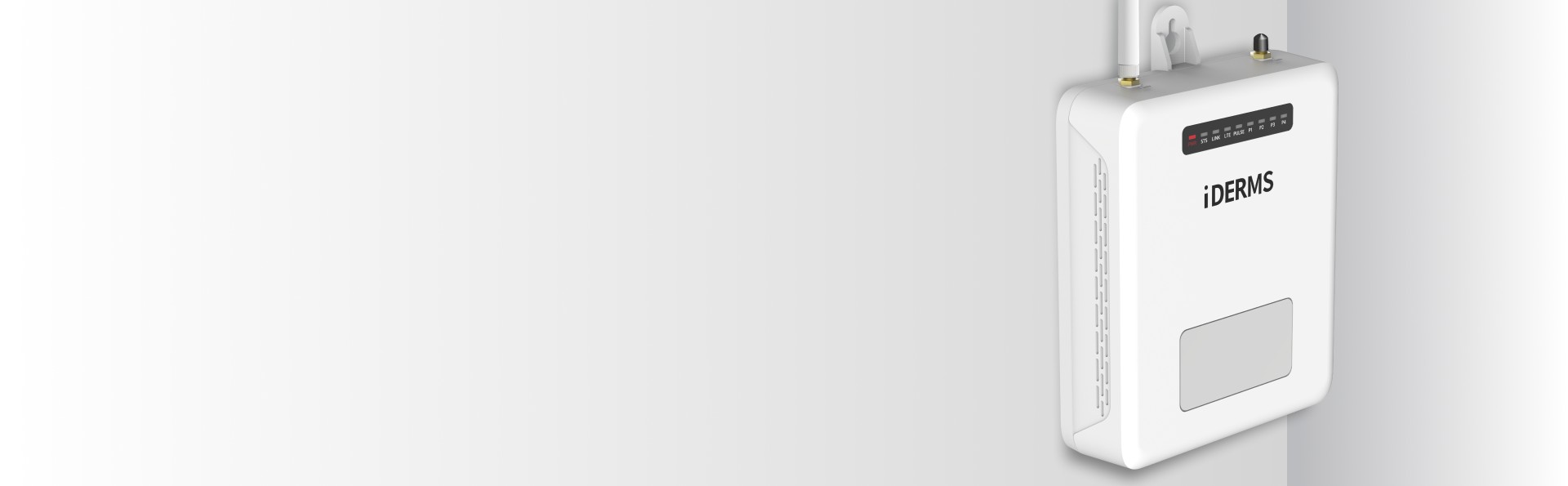
The company makes an edge device, the iDERMS RTU, to translate that mixed company of machines into a common stream. Its published specifications describe links to inverters, energy storage, sensors, and other equipment, with remote monitoring and control. For a plant operator, the payoff is fewer separate site systems. For an aggregator, standardized readings make a portfolio possible. The interesting product is not the box alone, nor the cloud dashboard alone; it is the line that runs through both.
Encored says its systems monitor and control 3.5 GW of renewable power, while its forecasting and bidding tools cover more than 1,300 plants totaling 2.2 GW. These are company-reported capacity figures, not a count of electricity actually delivered. Still, they show what sort of problem the company chose. It is working where a forecast can become a bid and a bid can become a physical instruction.
The unromantic part is the moat
Many firms can draw a handsome chart of a solar plant. Fewer want to reconcile market rules with machinery at a remote site and invoices at month’s end. Encored has built products for each of those seams. iDERMS PPC monitors and controls plants through a site RTU and a subscription web service, reducing the need for a separate energy management server at every location. Its VPP product adds forecasting, bids, and settlement. Its RE100/PPA tools track contract terms, meter data, and payments across portfolios of plants and buyers.
That is a practical distinction from a generic analytics dashboard. The customer is not buying a prettier description of yesterday. A generator wants to trade today, an operator wants to know which inverter needs attention, and a corporate buyer wants to know whether its renewable purchase agreement will settle correctly. A mistake in any one of those jobs has a different price.
“Helping Energy Learn and Optimize from AI and Data.”John Choe, founder and CEO, on Encored’s stated mission
The phrase is lofty; the implementation is quite specific. Encored’s site says roughly 64% of its staff work in research and development. Its products combine weather forecasting, device communications, cloud software, and market operations. Encored Japan, created with SoftBank, shows one route for carrying those skills into another market. The company also sells microgrid software that coordinates solar, batteries, and diesel generators, and a tool for power purchase agreement analysis. Those products address different customers, but each asks the same question: when should a machine act on an energy reading?
What does it cost to make a crowd?
The public answer is a set of buying models, not a universal price tag. Encored lists both a SaaS subscription and an on-premise deployment for iDERMS VPP. It says SaaS lowers upfront work and can be deployed in as little as a week; on-premise starts with higher initial cost but can suit buyers that need dedicated infrastructure or expect to add many resources. The RTU and related metering hardware are additional physical parts of the system. Enterprise buyers must request a quote.
Count sites, equipment types, communications links, market obligations, and people doing manual settlement. A software subscription has little value if the field data is late or the contract logic is wrong. Encored’s own product pages make the dependencies plain: compatible hardware, dependable connectivity, and the market rules for the place where the power is sold.
The original consumer proposition had a more ordinary price. Enertalk’s Korean product page listed a built-in meter at 79,000 won and an Enertalk Pro at 299,000 won when that page was published; those are historical listed prices, not a current enterprise quotation. The contrast is useful. A household might buy an answer to “what used the power?” An aggregator pays for a system that can act on the answer before a market deadline.
A better copy than “use AI”
There is a method here worth borrowing. Start with a costly delay in information: a bill weeks late, an inverter fault found on a site visit, a settlement assembled by hand. Put the measurement as close as possible to the event. Standardize it so it can travel. Then attach it to the decision someone already has to make. Encored’s progression from Enertalk to iDERMS follows that sequence, even as the user changed from a person at home to the operator of a portfolio.
That method is conditional. A virtual power plant needs control rights, working meters, communications, and a market that permits aggregation or bidding. A PPA platform needs legible contracts and trusted meter data. A microgrid forecast only helps when the equipment can respond. These are operational facts, not wrinkles to be smoothed away by a slogan. The company’s broad product shelf suggests that the hardest parts of energy software lie at the joins between sites, markets, and accounting.
Encored’s founder John Choe began in 2013 with a company interested in what an electric meter could reveal. The present company is still asking that question, only at a stranger scale. One home produced a live reading. More than a thousand plants produce a crowd of readings, each with a deadline and a bill of its own. Making that crowd behave is less glamorous than inventing a new source of power. It may be just as necessary to use the sources we have.