In 1995, while studying in Ireland, Chris Sacca exchanged a notebook of questions with a girl across the aisle. One asked what he wanted to do with his life. Years later, he and his wife Crystal found the notebook. His answer had sketched out a risky career, time in the mountains, and a change of course around 40. This is the sort of story that sounds suspiciously neat when told backward. Yet the next two decades did give it a remarkable outline: a leap out of Google, early bets on the companies that would define an internet era, then a decision to walk away from new startup investing at 41.
The last part is the one that makes the first two interesting. Sacca had reached No. 2 on the Forbes Midas List in 2017. Lowercase Capital, the firm he co-founded with Crystal, had backed Twitter, Uber, Instagram, Twilio, Stripe and Blue Bottle Coffee. He had the visibility of a television regular and a wardrobe memorable enough to earn a place on GQ’s worst dressed list. There was still money to be made following the familiar script. Instead, he set it down.
The seventh grader in a college math class
Long before the venture funds, Sacca was a child in the Buffalo area taking college mathematics courses at the State University of New York at Buffalo. He began in seventh grade and kept going for years. His own account makes the scene pleasingly unglamorous: thick glasses, braces, and a fascination with computers. The habit of getting ahead of the syllabus would later become a professional one. His career has repeatedly placed him close to things that seemed too early, too technical, or too awkward for a standard pitch.
He studied at Georgetown’s School of Foreign Service, spending time at universities in Ecuador, Ireland and Spain. Crystal English was a classmate. Sacca likes to note that she still reminds him her undergraduate GPA was 0.02 higher than his. He followed the degree with Georgetown Law and work at Silicon Valley firm Fenwick & West, handling technology transactions. A stint in executive roles at Speedera Networks came before Google. In a conventional biography, each stop might look like preparation for the next. In practice, it gave him a useful combination: comfort with technical systems, contracts, and the people trying to build companies.
At Google, his assignment stretched well beyond anything a simple job title could contain. As Head of Special Initiatives, he founded and co-led the Access division. His work touched wireless spectrum, data centers, fiber networks and business development. Google recognized him with its Founders’ Award. He also began writing early checks into startups, including Twitter, and helped lead Google’s seed investment in Meraki. The scale of Google’s projects was immense; the proximity to early founders was what tugged at him.
“It may be lucky, but it’s never an accident.”Chris Sacca
An exit without a map
In the fall of 2007, Sacca told Google’s Larry Page, Sergey Brin and Eric Schmidt he was leaving to work with startups. In his telling, he had neither a polished plan nor enough money to make a profession of investing. He soon worried he had made an enormous mistake. That anxiety sits oddly beside the tidy legend of the early-stage investor, the figure who supposedly sees the future before anyone else. His own account is more human: a person following the work he liked while wondering how he would pay for the decision.
The work was intensely social. Early investing was a way to be beside founders as companies were still taking shape. Lowercase Capital, established in 2010, made that approach visible. Its portfolio came to include a startling roll call of internet businesses, from Twitter and Uber to Instagram and Stripe. The names are so familiar now that they can make the original decisions look safe. They were young companies when he committed. They also required the kind of practical attention that sits outside a checkbook: introductions, advice, arguments and help with the details founders did not yet have a department to handle.
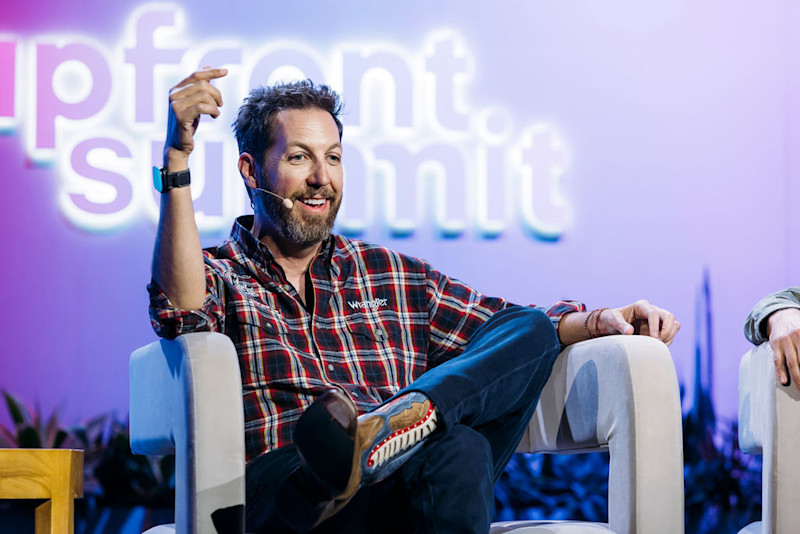
Sacca’s public persona could obscure that patience. The embroidered cowboy shirts were hard to miss on Shark Tank, where he appeared for two seasons and sparred with other investors. He has joked that GQ’s verdict on his clothes was his favorite listing. The joke works because it leaves the impression of a man untroubled by the rituals of venture capital. Yet the investing itself was demanding and personal. When he later explained why he stopped, he described the work as a long relationship with a founder, one that can run for 15 years. It is a useful corrective to television’s quick deals.
What happens after enough?
By 2017, Sacca said he no longer wanted to take on new broad-based startup investments. He left Shark Tank as well. He told Axios he could not treat investing as a casual occupation; he felt a duty to give founders the time and attention the relationship required. Crystal and he also found that another dating app or gaming platform did not summon the enthusiasm needed for that long commitment. The notebook from Ireland resurfaced around this time. It did not make the choice for him, but it gave the moment an eerie sense of recognition.
The years away from broad venture investing were never a retreat from public life. Sacca had long spoken openly about politics and criminal justice reform, and his own site describes work with Crystal on those causes. He appeared on screen beyond Shark Tank, including as himself in Billions and Alex, Inc. He had a family in Montana, a fondness for skiing, and a tendency to collect pursuits rather than simplify them. The point of leaving a successful career was evidently to spend his attention more deliberately.
Climate technology became the answer to where that attention would go. With Crystal Sacca and Clay Dumas, he built Lowercarbon Capital. The firm backs companies across clean energy, industrial materials, transportation, carbon removal and manufacturing. Its first outside fundraising, reported in 2021, brought in $800 million. The move gave Sacca a new set of founders and a much longer list of physical constraints. A software product can be revised overnight. An industrial process has to contend with factories, supply chains, permits and customers who measure the bill.
“When you invest, it’s a 15-year relationship, it’s like a marriage.”Chris Sacca
The romance of a cheaper electron
Sacca’s climate pitch is unusually explicit about commerce. He has said he wants technologies that can cut emissions at scale and earn strong returns. In a 2025 interview in Tokyo, he described himself plainly as a capitalist. The claim is that a cleaner product becomes consequential when it can beat an incumbent on cost and performance. It is an ambition, not a guarantee. Every one of those markets has its own technical and commercial obstacles. The firm’s name may make its purpose obvious; the hard part is proving the business case company by company.
Fusion energy offers a vivid example. Lowercarbon launched a $250 million fund called Q>1 in 2022, dedicated to the field. Sacca has described visiting laboratories and finding a collaborative community of researchers and entrepreneurs. He argues that fusion is an industry with several possible applications and technical routes, which is why the firm invests across approaches and supply chains. There is no single machine on which the entire thesis rests. In his account, the decisive milestone will be a commercial one: long-term power purchase agreements that show buyers are prepared to pay for the electricity.
In November 2025, he said Lowercarbon was raising a second fusion-focused fund. At the Upfront Summit in March 2026, he returned to the larger question of how builders can make climate progress at scale. These appearances show the familiar Sacca habit of arguing in public, now with reactors and industrial economics in place of social networks. They also put him alongside the scientists, engineers and founders whose work cannot be reduced to an investor’s vision. His role is to help them find time, capital and customers.
The scale of the ambition can tempt a biography into treating outcomes as settled. They are not. Twitter and Uber can be named as established chapters; the result of any particular climate investment is still being written. What can be said is that Sacca chose a field where technical difficulty and financial opportunity collide, and he has stayed with the kind of founders who want to work inside that collision. The pattern from his Google years is visible again: access, infrastructure and systems that become invisible only after they work.
A second kind of early
There is a comic neatness to a man in cowboy shirts moving from Silicon Valley’s software boom to the prospect of fusion reactors. Yet the through line is less theatrical. Sacca has long preferred being close to a consequential change before it feels inevitable. As a child, that meant slipping into college math classes. At Google, it meant wireless access and new networks. At Lowercase, it meant founders trying to change how people communicate, move and buy. At Lowercarbon, the underlying systems are heavier, slower and harder to photograph.
The notebook from Ireland still makes a good opening, but it cannot provide an ending. A young Sacca imagined a change of direction; the older one made it, then discovered that changing direction did not mean losing his appetite for risk. The question now is whether that appetite can help make cleaner technologies ordinary enough to disappear into daily life. If it can, the second act will be measured less in famous company names than in things that work, cost less, and quietly replace what came before.